Bill Gross started Idealab, the original venture studio, back in 1996, and has launched more than 175 companies – including big names like Coinbase. He calls his latest endeavor the culmination of his life’s work: idealab.ai. It’s an AI-driven catalog of more than 1.2 million free business ideas, distilled from Bill’s unique approach to entrepreneurship, and launched with partners like Cloudflare and ASU. Host Rana el Kaliouby sat down with Bill onsite at Masters of Scale Summit in San Francisco to talk about the range of ideas on offer – from energy to AI to healthcare – and how Bill himself chooses what to develop.
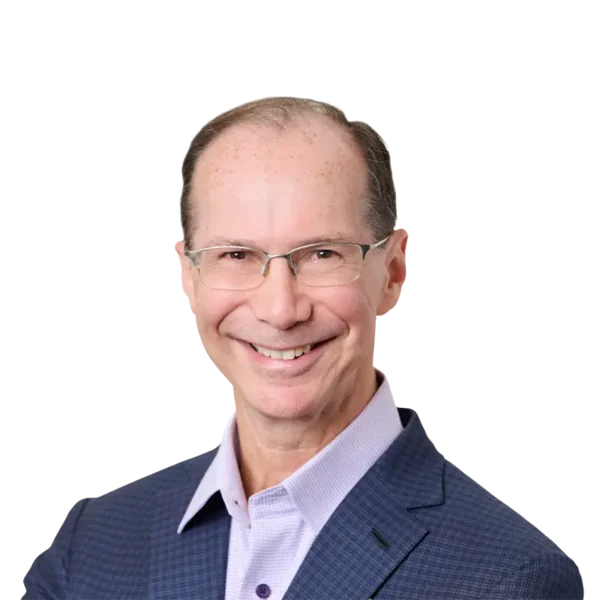
About Bill
- Started 150+ companies; 50+ IPOs/M&A and 10+ unicorns
- Invented pay-per-click search tech; licensed by Google, acquired by Yahoo
- Pioneered the startup studio/incubator model with Idealab
- Built 20 climate-related companies
Table of Contents:
- Bill Gross' origin story
- How Idealab started by launching 12 companies
- How AI can generate scalable start-up ideas
- Reimagining education through AI-powered entrepreneurship
- From vibe coding to running a real company
- Balancing AI optimism with safety and fairness
- What founders get wrong about boldness and timing
- How investors spot adaptable and resilient founders
- Episode Takeaways
Transcript:
Lessons from launching 175 start-ups
Note: Transcripts are automatically generated from episode audio, and are not fully corrected for spelling, grammar, and formatting.
RANA EL KALIOUBY: What are your top concerns for AI?
BILL GROSS: Well, I’m terrified and optimistic at the same time. I think most people are. I’m terrified of no boundaries on AI. I’m terrified of what agents could do when they’re let loose, but I’m also wildly optimistic about how much this can help society. Mike Tyson has this great quote, which I think is so funny to bring to the business world, but it’s, “Everybody has a plan until they get punched in the face.” I think business punches you in the face all the time.
EL KALIOUBY: I first met Bill Gross a couple of years ago. He and I really connected over our vision of technology and AI. Yes, AI is creating massive economic opportunity, but it also has the potential to create so much good in the world. Bill has been an entrepreneur and an investor for several decades. In many ways, he created the OG venture studio. He founded Idealab in 1996 and has since launched over 100 companies. His latest company, Idealab.ai, is really a culmination of his life’s work. I got to sit down with Bill while we were both at Masters of Scale Summit in San Francisco. I always find Bill so inspiring, and I hope you do, too. I’m Rana El Kaliouby, and this is Pioneers of AI, a podcast taking you behind the scenes of the AI revolution. Thank you, Bill, for joining me. I’m so excited for this conversation.
GROSS: Thank you so much.
EL KALIOUBY: Really, it’s a privilege. All right, so you started the OG venture studio. You founded Idealab in 1996.
GROSS: Yes.
EL KALIOUBY: At this point, you’ve helped launch, I don’t know, 150-plus companies.
GROSS: Now 175.
EL KALIOUBY: 175 companies, with more than 50 IPOs.
GROSS: And acquisitions.
Copy LinkBill Gross’ origin story
EL KALIOUBY: And acquisitions. Incredible. For people who don’t know your story, how did you first become interested in entrepreneurship?
GROSS: I think when I was a teenager, I got very excited about finding ways to make money. I was living during the energy crisis in 1973, and there was an oil shortage because of the embargo. I got really excited about renewable energy and alternative energy. It was way ahead of its time, but I read about it in Popular Science magazine. I read about it in the library after school, and I started making little solar devices. I made plans and kits for them and sold them in the back of Popular Science magazine. I sold the plans for $4, and I sold 10,000 of them.
EL KALIOUBY: Wow.
GROSS: So I paid my way through college with that. That really gave me the bug. I was really excited by that. When I got to college, I made loudspeakers to pay my way through the rest of college, and everybody on campus bought speakers from me. When I graduated, the PC came out, and that revolution was incredible. I just loved the idea of seeing problems in the world, finding technology that could address them, building something to do that, and making people happy with it. That got me fully bitten by it.
EL KALIOUBY: What I always find so incredibly fascinating every time we interact is that a lot of people see problems in the world and whine about them, but you see opportunity. How do you cultivate that mindset?
GROSS: I really think I just like making people happy. So I try to figure out what problem they’re having and what I could do to address it in a way that would make them thrilled. That’s one great thing about business. There are many ways to impact people in the world. You can be a teacher, and you can impact people that way. You can be a lawyer and make laws. You can be a politician. I love entrepreneurship because you can get people to pull the solution from you. You don’t have to push it on them. It’s a great way of coming up with something that people actually want, and you solve their problem in a way they want. That’s just very exciting to me.
Copy LinkHow Idealab started by launching 12 companies
EL KALIOUBY: Yeah. What were some of the early challenges in starting Idealab?
GROSS: I had sold a company called Knowledge Adventure in 1995. The internet was taking off. Netscape had its IPO in 1995. There were, funnily enough, 90 million people online.
EL KALIOUBY: Oh, wow.
GROSS: Think about how small that number seems now. But I remember that number being, wow, 90 million people online. So I was trying to think about what businesses I wanted to bring online, and I had 12 ideas for companies to start. I was trying to pick one, and after not being able to choose, I decided to start all 12.
EL KALIOUBY: Okay.
GROSS: That was actually the idea for Idealab. The way I started all 12, though, was to make a place called Idealab. I actually modeled it after Thomas Edison’s lab.
EL KALIOUBY: In what way?
GROSS: Thomas Edison’s lab in New Jersey worked on multiple things at once, and he would spin out each promising idea into a separate company. A lot of people don’t know this. The movie projector was a separate company.
EL KALIOUBY: I had no idea.
GROSS: Yeah. The light bulb was a separate company.
EL KALIOUBY: Okay.
GROSS: General Electric. So my idea was to bring these companies under one roof and try them out. If they worked, I’d spin them out into separate companies. Those first 12 companies, I spun each one of them out. I found a separate CEO for all 12, gave each one of them $250,000 to start, and then helped them grow. That was very exciting to me. It gave me a chance to have more impact and also solved the problem of having to choose which one to start.
EL KALIOUBY: Right.
GROSS: After starting 12 of them and seeing how gratifying it was to help multiple people run their companies, I continued that. We were lucky, too. Some of those companies were successful, which gave us the funding to continue. We’ve now been doing it for 30 years — 1996 to 2026, 30 years later, 175 companies. It’s just been so gratifying to do this at scale, and now with this new thing, I get to do it at an even bigger scale.
Copy LinkHow AI can generate scalable start-up ideas
EL KALIOUBY: Well, let’s talk about the new thing. You launched your newest company, Idealab AI, which I’m a proud investor in through Blue Shield Ventures.
GROSS: Yes. I’m so glad.
EL KALIOUBY: It is so cool.
GROSS: Yeah, I’m so excited about it.
EL KALIOUBY: So tell us what it is.
GROSS: Idealab.ai is a list of more than one million great business ideas that are free for entrepreneurs everywhere. What’s so exciting about this is the way we came up with them. How do you come up with a million ideas? I can’t come up with a million ideas. What I was able to do, though, was take my process for coming up with ideas and bring it to AI. So what’s my process for coming up with ideas? I’ve come up with 31 different ways that I come up with a company idea.
Over the last 30 years, I’ve looked back at what I did to come up with a particular idea. Sometimes it’s connecting a new technology to an old problem. Sometimes it’s taking an old problem whose timing wasn’t right, but doing it now. I programmed all those different approaches into AI, and then I said to AI, “Read the news, read patents, read problem statements, extract them, and now apply this methodology.” And it generates incredible ideas.
EL KALIOUBY: Can you give us an example?
GROSS: One of them, for example, shocked me just from reading the news. It came back with this: “I’ve been reading the news. There’s a war in Iran. The Strait of Hormuz is closed. Gas prices keep going up.”
EL KALIOUBY: Yep.
GROSS: More than 100 million people in China, U.S., and Europe are complaining about that. They’re worried about what’s gas going to cost next week. And its solution, which it put together on its own, was: “How about making a mobile app where people pay $5 a month, it locks in today’s gas price for them so they have no worries about it increasing, you take the accumulated $5 payments, you hedge gasoline on the New York Mercantile Exchange, and you effectively bring airline-level hedging to consumers?” My mind was blown when I saw that because I knew what hedging was, but I never thought about connecting that. It’s almost like AI has perfect lateral thinking, that it can look in two different directions and pull two things together. That’s a great aspect of a good idea. And there are a million more like that in every category. It could be in climate, agriculture, energy, gasoline, or biotech. There are ideas in there for everybody. So we made the database searchable. We made it so people can type in, “What are my skills? What are my passions? What do I care about?” And it works.
EL KALIOUBY: Are you able to track whether some ideas are bubbling to the top that everybody wants to build?
GROSS: I haven’t seen that yet, but we are allowing two people who find the same idea to connect.
EL KALIOUBY: Oh, I love that.
GROSS: We really love the idea that maybe co-founders will join. Or what about this: one person wants to do an idea in Egypt, another person wants to do it in Venezuela. They could collaborate but build a product for each of their separate markets. So I’m really excited about how people might use this to benefit society.
EL KALIOUBY: Yeah. Are you worried that some of the ideas in the database could be nefarious or dangerous?
GROSS: We screened for that.
EL KALIOUBY: Okay.
GROSS: So we generated more than one million ideas. Then we did a pass and removed 200,000 that possibly could be dangerous. So we went through and tried to make sure that everything we’re proposing for people is for good.
Copy LinkReimagining education through AI-powered entrepreneurship
EL KALIOUBY: So one of your visions for Idealab.ai is to use it as a vehicle for reimagining what higher education looks like. Tell us more about that.
GROSS: Well, I really think there are a lot of schools where students who are graduating are worried about, “What are my early opportunities after I graduate? With AI changing everything, are there entry-level opportunities for me?” But what if AI could help you come up with an idea so you could start something yourself? You don’t have to rely on an entry-level job. You can make your own. So I’m talking to a whole bunch of colleges about integrating this into their curriculum. For example, ASU has a vision of telling students, “Apply to ASU, pick an idea from this database. Instead of paying, we’ll pay you to come to college and give you capital to start your idea.” If we can make more of that happen, just think of how many students might start something they’re really passionate about. Even if they don’t start that company after they graduate, the learning experience of practicing it while they’re in school could be incredible. I want to give more people a chance at entrepreneurship. By the way, entrepreneurship’s not for everybody. But if we lower the bar so we can narrow the gap between “I wish” and “I can,” that would be huge. That would be huge for society.
EL KALIOUBY: I remember seeing an early prototype of the database, and you’re able to parameterize, basically, when you’re searching and querying. You’re able to say, “OK, I want a company that’s in climate, in Egypt,” and also one that requires whatever amount of funding you can afford.
GROSS: Yeah.
EL KALIOUBY: And I thought that was really clever.
GROSS: We’re so excited. You can say, “I want a company that takes less than $50,000 to start,” or, “I want a company that’s designed for a solo founder or a team of two to five.” And then, of course, the idea is just a starting point. We do need to help people get the capital, and I want people to apply for capital. We’ll try to connect them to people with funding, and I want to help people actually execute their business. That’s where we have this periodic table of business functions, because you need the mechanics to run your business, too. If you’re an early founder and you haven’t run a business before, you need a lot of help, and I want to try to give that help.
Copy LinkFrom vibe coding to running a real company
EL KALIOUBY: Yeah, I want to talk about that because AI has lowered the barrier to vibe coding. You can vibe-code any idea you want over a weekend.
GROSS: Yes.
EL KALIOUBY: But that’s not enough to launch a business, right?
GROSS: Yes.
EL KALIOUBY: So how do you go from idea to actually launching a business? And tell us about this periodic table.
GROSS: The periodic table of business functions is the 118 functions that we’ve derived to cover everything you might ever need to do in a business.
EL KALIOUBY: What’s an example?
GROSS: Starting from the idea: the app, your advertising, your website, demand creation, demand validation.
EL KALIOUBY: Incorporating, legal stuff.
GROSS: Absolutely.
EL KALIOUBY: Right.
GROSS: Your QuickBooks, your finance, payables, receivables, payroll, everything. We were able to group those into 118 things. For each of those things, there are many companies that provide services. For some of those things, nobody provides services, and nobody provides a connector to all of them. So we want to make a layer, kind of like an agentic OS layer, to run your company so that you don’t have to know how to start QuickBooks or link to it or get it going. It’s just natively in your business from the beginning because of this agentic OS, and that’s going to help people a lot.
If, over time, autonomy grows, then the human running your business is really just there for judgment, not for the mechanics. There’s no reason I need to know the mechanics of how to optimize my Facebook campaign. I just need to be able to say, “I’d like to run a Facebook campaign. I want to target this audience. I’d like to spend $1,000. Go optimize it and run it for me.” That’s the way business is going to grow. That’s the way business is going to migrate because it allows a smaller entrepreneur to compete with a bigger company when they have the same tools that big company has integrated for them, without having to learn how to use them.
EL KALIOUBY: And is the vision that, as the complexity of the business increases, as they hopefully grow and become more and more successful, they’ll be able to swap in and out some of these tools?
GROSS: Yes. You might start out with a very simple customer relationship management software angle and then graduate to Salesforce. In every single area, there will be multiple drivers. Think of it like an app store, where you can get a simple calculator or a complex calculator or a paid calculator. There might be different levels. At different times, you need a different function. We want to make all of it available.
EL KALIOUBY: Yeah, so incredible. You’ve said that this is the culmination of your life’s work and your legacy. To me, this is a great example of a company that has incredible financial upside and opportunity, and also incredible societal impact. Tell us more about how you see this.
GROSS: I feel like my whole life I’ve been trying to start businesses that make a difference, have a more positive impact, and help more entrepreneurs succeed. This allows me to magnify that at a scale I never could have imagined. But I also feel it can be both wildly philanthropic, like giving away the ideas to people and helping them, and also a great business.
So how is it a great business? Large companies also have an innovation problem. Large companies that make hundreds of millions of dollars a year, or spend hundreds of millions of dollars a year on R&D, have many patents, technologies, IP, and trade secrets that they’re not monetizing right now. So I want to license them my whole system, not just the periodic table, not just the ideas we have, but a system to generate new ideas for them.
EL KALIOUBY: Based on their own IP.
GROSS: And that, I think, they’ll pay for. I think that can make this a great business that helps support the effort of giving away the other ideas for free to entrepreneurs.
EL KALIOUBY: We will be right back after a short break.
[AD BREAK]
Copy LinkBalancing AI optimism with safety and fairness
I would love to know how you’re feeling about AI in general. What opportunities do you see, obviously with IDEO Lab, but also with the many other ideas in the venture studio version of IDEO Lab that you’re continuing to incubate? And what are your top concerns for AI?
GROSS: Well, I’m terrified and optimistic at the same time. I think most people are. I’m terrified of no boundaries on AI. I’m terrified of what agents could do when let loose, but I’m also wildly optimistic about how much this can help society.
So I guess what I feel I can do in that equation is as much as I can on the positive side. I think with every technology, there’s good and bad. How do we make the good outweigh the bad? More people should focus on that. I would just love to have more people focused on things that can make AI better for society. And by the way, in those million ideas, there are a lot of company ideas that can address the negatives, too, and I hope people start them.
EL KALIOUBY: What’s an example?
GROSS: Probably a company around AI safety, or other ways to put boundaries on AI, or ways to prevent hacking. There are whole companies that should be built to handle those issues. Some of them are already being built, but some of them are in our database, and I would love to find someone who cares about that to take that company forward. I want to help them take it forward.
One more thing: Out of the million ideas, probably 10 percent are nonprofits. There are a lot of things in the world that need solving where a business isn’t the right way to solve it, but a nonprofit is. So if you have a passion in a given area to make a difference, you can still go into our system, find that great nonprofit, and we’ll help you design it, help you get the funding for it, and help you take it forward. So helping humanity can be done in many different ways, and I feel like AI can be a great tool to make that possible.
EL KALIOUBY: Another start-up you founded is called ProRata, and it’s basically about paying people for their contributions to AI-generated answers. Why did you feel it was so important to build this company and do it right now?
GROSS: ProRata is very much aligned with the same mission I’m pursuing with IdeaLab AI. I’m looking at places in the world where I can make a positive impact and saying, “I’ve got to do something about it if no one else is doing it.” We heard about Maria Ressa and how people are stealing her content and causing her great expense because they crawl her site, and she has to pay for that while they’re stealing her work. After The New York Times sued OpenAI — and the lawsuit hasn’t progressed yet, so The New York Times hasn’t won the lawsuit yet. I hope they do. We’ll see what happens. But I felt the right way to resolve this content being stolen isn’t only with lawsuits; it’s with a fair business model. So I think a fair business model is a 50/50 revenue share when your content is used, very similar to the way YouTube shares revenue with creators. If YouTube were stealing everybody’s content and paying nothing from the advertising revenue it was making, content creators would dry up. You would lose everything that’s there. So I feel the same thing should happen with AI. I felt very passionate about that, and I felt no one was doing anything about it. So that was an opening for me to try to make a business model around it. We started ProRata to do that. We’ve signed up 1,600 publications, all of which agree that a 50/50 revenue share is the right method.
EL KALIOUBY: Amazing.
GROSS: We have the technology to compute the revenue share, to take the output of AI—
EL KALIOUBY: Because you kind of have to reverse-engineer the output—
GROSS: Yes.
EL KALIOUBY: The answer, the AI answer—
GROSS: Yes.
EL KALIOUBY: You kind of have to trace back where the data came from, right?
GROSS: Yeah. You have to take a look at whatever the AI answer is and say, “Who contributed to that, and in what percentage?” And you don’t have to be exact; you just have to be close. You can be plus or minus 5 percent and still make all the publications very happy. So they’ve all agreed to our methodology.
EL KALIOUBY: Incredible.
GROSS: Now we have to convince the AI companies to pay. So how’s that going to happen? One, they might lose their lawsuits. Two, there could be more pressure from journalism. Three, they’re going public. They’ll have a lot more capital. Maybe they’ll agree, “Hey, you know what? Maybe it’s fair.” It’s very ironic that some of the AI companies are complaining that the Chinese companies distilled their output when they themselves stole all the content to make theirs.
EL KALIOUBY: All the content.
GROSS: So maybe the AI companies, with enough capital, will decide, “You know, we can share some of the revenue with the publications from which we’re getting content,” and that will also get us better content. I’ll give you one example. When YouTube first came out, it actually was stealing everything. There was no advertising model. There was no revenue share. And every day after Google acquired them, they would get takedown notices from NBC and ABC, and they would take the content down. Then YouTube said, “Hey, you know what? We’ll pay you 50/50 if you put the content on.” And they all said, “Absolutely.” That made YouTube flourish, so the content got better when they shared revenue. So I feel like the AI companies will also come to a point where they say, “If we want to welcome all data from everybody, let’s just share the revenue.” So hopefully that time will come within the next year. We’ll see what happens, but that’s my mission: to try to make that happen.
Copy LinkWhat founders get wrong about boldness and timing
EL KALIOUBY: Yeah. We’ll see how that happens. I’m an investor, and we have so many founders who listen to the show. I would love to unpack what you’ve learned from starting more than 175 companies.
GROSS: All right. Well, there are a lot of lessons learned. My favorite one is: Be bold.
EL KALIOUBY: Be bold.
GROSS: Because when you’re bold, you definitely scare people and often scare yourself. But it’s almost equally hard to build a bold company as it is to build a meek company, and you’re a small company trying to go up against bigger competitors, so boldness is your weapon. I feel that the companies we started that were trying to move the status quo forward only a small amount didn’t do as well as the companies that were trying to be bold. Now, you do get some arrows in your back along the way if you’re trying to be bold, but I definitely feel that’s one lesson.
Another lesson, a very important one, is timing. From doing so many companies, when I look back on the ones that failed, both my own and others, timing played a much bigger role than I realized. It played a bigger role than the management team. It played a bigger role than how much money you raised. It played a bigger role than the business model. It played a bigger role than almost everything.
EL KALIOUBY: And it’s timing the market?
GROSS: Yes. It’s: Is the world ready for what you have, and is everything in place that you need to succeed? I’ll give you an example. We started an entertainment company about the same time Reed Hastings did. We were trying to be online when he was still mailing discs, and we were too early. Broadband penetration was only about 10 percent. I’d signed Chris Rock and Adam Sandler. I’d given them equity in the company.
EL KALIOUBY: Wow.
GROSS: We had raised $10 million. It was called Z.com in 2001, and we had great entertainment content, but nobody could watch it. The browser couldn’t show it yet. The bandwidth was too slow. People still had dial-up modems. Broadband penetration was too low. If we had only survived about three or four years — I spent all our money in two years trying to grow faster — if we had just waited until YouTube came out, we would’ve made it. We didn’t know YouTube was going to come out. The timing error we made was that our product was right. The world was going to do this. We were right on every count. We had the money. We had a great team. I had hired people from Disney. Like I said, we got Adam Sandler and Chris Rock, but the world wasn’t quite ready yet.
EL KALIOUBY: The enabling technology and infrastructure.
GROSS: Yeah, exactly.
GROSS: I started another company that failed called My Life. I had an idea for a band that would measure your vitals and try to help you predict disease.
EL KALIOUBY: Okay.
GROSS: It was 2002. There was no wearable of any kind. People just weren’t ready for that, and it was too hard to shift the public to that view. It was going to take longer. But take a company like Uber. If that had come out before GPS was on every phone, it wouldn’t have worked. They didn’t invent GPS. They couldn’t make GPS be on every phone, but they came out after that was there, so that was an example of the technology being in place.
You can also get lucky on timing. Take the Uber example as well. Uber came out right during the recession, and they needed drivers. A lot of people were laid off, and it was very inexpensive to recruit drivers. They had a two-sided marketplace. They needed to get riders and drivers. Because they could get drivers so easily, that business took off at the right place at the right time. Sometimes you can’t even control things. You get lucky. What I urge people to do is look at the things that are happening in the world at that moment and ask: Is everything in place to be ready for your idea? I find that has a much bigger impact than other things I realized.
EL KALIOUBY: Yeah. That’s incredible. Okay, one more.
GROSS: Okay, one more. The next really big one is that you have to have a complementary team. I didn’t learn this until I was 35. I wish I’d learned it sooner. I started hiring people like me: very entrepreneurial, big thinkers, always moving to the next thing, always looking for the most exciting thing. I needed more people to balance me. I needed people who were more administrators.
EL KALIOUBY: On the ground.
GROSS: On the ground. If you look at four different personality types, there’s the E type, the entrepreneur, always dreaming. There’s the P type, the producer, who gets things done, ships a product, sells it. There’s the administrator type, who keeps the books clear, makes payroll, makes rent payments, all that. And there’s the integrator type, who makes all those people work together. Normally, in the extreme, all those people hate each other’s guts.
EL KALIOUBY: Right.
GROSS: So a company is in balance when it has harmony between all those skills, and I didn’t know that. I wasn’t trying to hire people who complemented me. I was trying to hire people more like me. When I finally learned that, it was really incredible. I’ll give you a great example of those four different personality types. Let’s say we’re in this room here, and we see something on the window over there, like a little scratch on the window. The P-type person would say, “There’s a scratch on the window. Let’s go take care of that right after this meeting.” The administrative person would look at that and say, “Let’s write down everything that’s wrong. We’ll put it in order, and we’ll tackle each one of them one by one.”
EL KALIOUBY: Okay.
GROSS: The E-type person would look at that and say, “In that parking lot over there, what are we going to put over there? What new business are we going to start across the street?”
EL KALIOUBY: Right.
GROSS: They wouldn’t even see the scratch. They wouldn’t see the window. And the I-type person would say, “I wonder what those three people are thinking.” Think about how those four personality styles look at the exact same thing completely differently, and you need all of those in a company. It’s so valuable if you can get that. It’s very hard, but if you have harmony like that, you can do unbelievable things because you can see every problem from multiple perspectives. I really urge companies to do that. Like I said, it’s not easy, and I don’t always follow it, but it’s really valuable.
EL KALIOUBY: Yeah, if you’re starting a company and you’re thinking about your co-founding team, right?
GROSS: Yes.
EL KALIOUBY: Apply that framework. It’s super—
GROSS: And understand that there are other people different than you looking at the exact same thing—
EL KALIOUBY: And seeing something totally different.
GROSS: Yeah, so embracing that, as opposed to being afraid of that, is very valuable.
Copy LinkHow investors spot adaptable and resilient founders
EL KALIOUBY: Do you have advice for me as an investor? What should I be looking for, or what should I be screening out?
GROSS: So I think, for success, you need to have unbelievable passion and dedication and stick-to-itiveness in the face of difficult challenges. Things are going to go wrong. So if you can look for entrepreneurs who have that heart — who care about the mission so much that they’re going to stick with it even in the bad times — I think you know that, of course. But the next thing I would say you need to look for at the same time is: Are they adaptive? Are they willing to change and go with the punches? Mike Tyson has this great quote, which I think is so funny to bring from the boxing world to the business world: “Everybody has a plan until they get punched in the face.”
EL KALIOUBY: I love that quote.
GROSS: And I think that business punches you in the face all the time. Your customers punch you in the face. Not literally, metaphorically. They punch you in the face by saying, “I don’t want to buy that.” They punch you in the face by saying, “That price is wrong.” They punch you in the face by saying, “I need that feature.” If you can have an entrepreneur who understands that’s life, you’re going to get punched in the face all the time. You need to get up, listen to the punch, listen to why you got punched, and figure out what to do to adapt to it. Because of that, you need to iterate and evolve. I called it Idealab because I love ideas. I called it Idealab because I wanted it to be a lab modeled after Thomas Edison’s lab. But I really should’ve called it Iterate Lab, because it really is more about the iteration. You need entrepreneurs who iterate. Every single company of ours that stuck to its exact initial mission probably failed. Every single company that pivoted — or maybe not pivoted, but wound its way to success by varying and adjusting and adapting — succeeded. I think adaptation matters. We heard that today on the stage, how much adaptation matters. If you’re dogmatic about your original idea, I don’t think you’re going to make it.
EL KALIOUBY: Yeah. And as an investor, kind of appreciate that the idea might change, right?
GROSS: Yes.
EL KALIOUBY: So it’s like, what is the bigger problem that wants to be solved here, and is this the right team that’s going to be adaptive—
GROSS: Yes.
EL KALIOUBY: And passionate enough—
GROSS: Yes.
EL KALIOUBY: To take us there?
GROSS: And you don’t want to just shift willy-nilly. You want to keep your original vision and mission in place. It just might be that the way you solve it is different. I have to give you one more example of that.
EL KALIOUBY: Great.
GROSS: So I started a company called Knowledge Adventure. This was my company before Idealab. I sold it for $90 million in 1995.
EL KALIOUBY: Amazing.
GROSS: I started it because I wanted to help kids fall in love with learning. I called it Knowledge Adventure for exactly that reason. I was competing against products like Math Blaster and Reader Rabbit. Those products were skill-and-drill products. To me, they were boring. They didn’t really get kids to fall in love with learning, but they were killing it in the market. My product wasn’t selling, and I couldn’t figure out why. When I went into stores and watched people pick up my box — this is back in the packaged-software days, in 1995 — I was trying to figure out why that mom was putting it back down. I see the kids in her cart at CompUSA. It’s perfect for them. But my product didn’t explain why it was going to benefit them.
So I took the exact same product I was making, and I repackaged it and told a different story. I called it JumpStart Kindergarten: Give Your Kids a Head Start on Kindergarten.
EL KALIOUBY: Boom.
GROSS: And all of a sudden—
EL KALIOUBY: Right.
GROSS: Parents knew, if I have a 4- or 5-year-old, this is the right thing for them.
EL KALIOUBY: Yeah.
GROSS: Then I made JumpStart First Grade for first graders, then I made JumpStart Second Grade for second graders. So I kept the same mission I had — to make kids fall in love with learning — but changed the way I told the story about it. It completely changed the company. So that was our adaptation.
EL KALIOUBY: Well, storytelling is also so key.
GROSS: It’s crucial.
EL KALIOUBY: Yeah.
GROSS: You have to make something that feels inevitable. “Jumpstart Kindergarten: Give Your Kids a Head Start on Kindergarten” just sounds like the right thing that people want. “Idealab.ai: Find an Idea for You.” It’s very important that the idea lands and is logical to someone. The name has to make sense. The whole packaging of everything has to make sense, and we didn’t know that. We didn’t understand that. I was trying to explain what I wanted to do.
EL KALIOUBY: Right.
GROSS: Not the product, but a feature of the product.
EL KALIOUBY: Like a feature of the product.
GROSS: Right, exactly, and it didn’t resonate with the mom who was buying the product for her child. What did she want? She wanted, “Give my kids a head start.” We finally figured that out. We were lucky to figure that out in time, before we ran out of money.
EL KALIOUBY: Yeah. That’s amazing. OK, I don’t know if I’ve ever told you this, but I want to be you when I grow up. For real.
GROSS: Well, you’re already a lot like me.
EL KALIOUBY: You’ve stayed so humble.
GROSS: Oh, thank you.
EL KALIOUBY: You’ve stayed so passionate, and you’re a lifelong learner. It is incredible to me. I would love for you to share: What is your secret? How do you do that?
GROSS: Yeah.
EL KALIOUBY: How do you stay so excited?
GROSS: Well, you’re already doing a lot of it, so don’t sell that short.
EL KALIOUBY: OK, OK.
GROSS: You’re a lifelong learner, too, and you’re doing incredible things. I feel like it’s back to the knowledge adventure story. I had a fourth-grade teacher who made me fall in love with learning. I don’t know what she did. She just made me feel good about myself. She gave me that dopamine, or just that great chemical feeling of, wow, I can see something new, and that just makes me feel good. I want to give that to other people, and I want to keep feeling that. That’s really exciting. So I am a lifelong learner. Every time someone can teach me something new, I am thrilled. I am so grateful when someone teaches me something I didn’t know, and even when they course-correct me, I say, “Thank you.” That’s the greatest gift. So I try to give that to as many people as I can, but you can see I’m excited about it myself, too.
EL KALIOUBY: Yeah. But you do it with so much humility—
GROSS: Oh, thank you.
EL KALIOUBY: And grace.
GROSS: Oh, thank you so much.
EL KALIOUBY: It’s really awesome. Thank you so much for joining us today.
GROSS: Thank you.
Episode Takeaways
- Bill Gross traces his entrepreneurial spark back to the 1970s energy crisis, when teenage curiosity led him to sell solar plans and pay his way through college.
- He explains that Idealab began when he had 12 internet company ideas at once and, inspired by Thomas Edison, decided to launch all of them under one roof.
- With Idealab.ai, Gross says he has translated his idea-generation playbook into AI, creating a searchable database of startup concepts for founders, students, and even nonprofits.
- He argues that AI can do far more than help people vibe-code a prototype, pairing ideas with an agentic operating layer to handle the real mechanics of building a company.
- Bill balances deep optimism about AI’s upside with real concern about safety, while also making the case for fairer systems like ProRata to pay creators whose work trains and fuels AI.
- For founders and investors, his hard-won lessons are classic but sharp: be bold, obsess over timing, build complementary teams, and back people who can take a punch and keep adapting.