How WHOOP wants to boost health by a billion years
When WHOOP first launched its wearable tech more than a decade ago, it was mainly for elite athletes. Now, the company has reported more than three million users worldwide and raised $575 million in Series G funding earlier this year. Its signature product, the WHOOP Band, can track everything from your blood oxygen, sleep data, and stress levels.
Host Rana el Kaliouby sat down with WHOOP’s chief product officer, Ed Baker, in front of a live audience at the Boston Museum of Science. They talked health-maxxing vs. emotion-maxxing, wearables as a “doctor in your pocket,” and heard Ed’s incredible story of how his WHOOP saved his life.
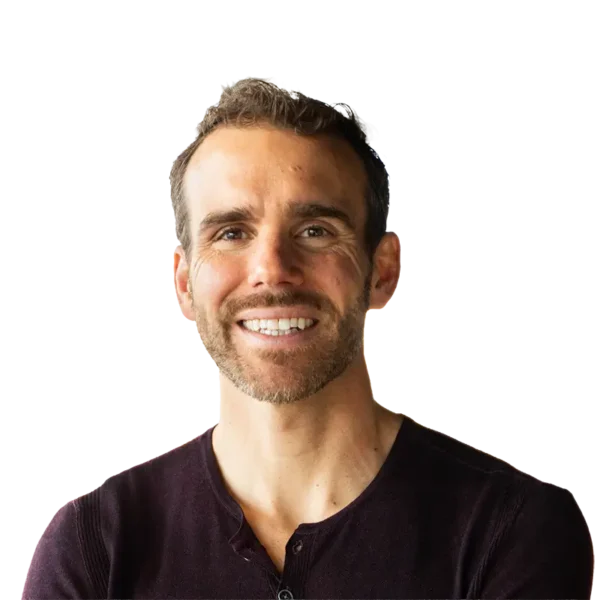
About Ed
- Chief Product Officer at WHOOP; leads company-wide product strategy
- Led growth at Facebook during its first 1B users milestone
- VP of Product & Growth at Uber during its early hypergrowth years
- Founded AnyQuestion; joined WHOOP after its 2023 acquisition
- Qualified for 2008 U.S. Olympic Marathon Trials; won 2018 Ironman Lake Placid
Table of Contents:
- Why recovery data changes daily choices
- From growth startups to a health mission
- How Whoop measures health span and age
- The habits that move your health score
- How AI turns wearables into health coaches
- When health tracking clashes with real life
- The path to a doctor on your wrist
- What wearables and AI still miss
- Episode Takeaways
Transcript:
How WHOOP wants to boost health by a billion years
Note: Transcripts are automatically generated from episode audio, and are not fully corrected for spelling, grammar, and formatting.
ED BAKER: When WHOOP started out over 14 years ago, two of our first 100 members were Michael Phelps and LeBron James. So the product has been used by these elite athletes, but over the last few years, we’ve really become more of a health company than a fitness company.
RANA EL KALIOUBY: I want to look at my recovery score from the summer.
BAKER: Okay.
EL KALIOUBY: And then from this month.
BAKER: Yeah.
EL KALIOUBY: Okay, so this is July. I took a lot of time off with family. It was a great time.
BAKER: A lot of greens in there.
EL KALIOUBY: A lot of greens, and not just one red, which was a very early flight, right?
BAKER: Just one red.
EL KALIOUBY: Look at my September. It’s a shit show. Lots of work, lots of travel, weird schedules with flights.
BAKER: Yeah. Sometimes reality does kick in, and you look at this, become aware of it, and ask yourself, “Why was my September so different from my July?” And, “Is it worth it?”
EL KALIOUBY: That’s Ed Baker, the chief product officer at WHOOP. If you know me, you know that I’m a fanatic about my WHOOP. I track my data religiously, and I am obsessed with my WHOOP metrics, especially my WHOOP Age. I had so much fun talking with Ed in front of a live audience at the Boston Museum of Science, where I’m a proud trustee and vice chair of the board. We talked health maxing versus emotion maxing, wearables as a doctor in your pocket, and we heard Ed’s incredible story of how his WHOOP saved his life. We also dissected my health data, and honestly, it was quite daunting to put it all up there in front of hundreds of people to see. I’m Rana el Kaliouby, and this is Pioneers of AI, a podcast taking you behind the scenes of the AI revolution.
[THEME MUSIC]
I would love to bring onstage my guest, Ed Baker, chief product officer of WHOOP. Welcome on.
BAKER: Thank you.
EL KALIOUBY: All right. So I have to ask you, very first question: What was your recovery score? We talked about this before —
BAKER: I’m a little embarrassed.
EL KALIOUBY: It’s an unfair question, I know.
BAKER: We were talking about this before the show. First of all, thank you for having me here today. As you were talking about memories of being here at the Museum of Science, I was thinking about a sleepover I did here with my kids many years ago. I think it was on this floor. It was in one of the little areas where you could find your spot to sleep, and there were a bunch of people sleeping over here. So that was one memory that popped into my head.
EL KALIOUBY: That’s awesome. I love that.
BAKER: Yeah.
EL KALIOUBY: Yeah.
BAKER: But back to recovery score: I think that night I also had a low recovery score.
EL KALIOUBY: I bet, yeah.
BAKER: Sleeping over at the museum, but the kids loved it. I had a red recovery score this morning, unfortunately. Like you, I was in DC yesterday and got back pretty late, around midnight, so I did not get to bed at my normal bedtime and suffered a bit as a result.
EL KALIOUBY: I have a confession there too. I was in DC yesterday.
EL KALIOUBY: When I got in, my sleep was messed up, so my recovery score yesterday was red. And I was like, “There is no way I’m showing up to this conversation with a red recovery score.” So I made sure to get home in time, slept well, and did not wake up in the middle of the night to check my phone.
BAKER: Amazing.
EL KALIOUBY: And I have a green recovery score.
BAKER: Great. All right.
EL KALIOUBY: It works, right?
BAKER: Well, I’m glad to hear at least one of us had a green this morning.
Copy LinkWhy recovery data changes daily choices
EL KALIOUBY: Quick show of hands if you wear a WHOOP device or any other fitness tracker. Okay, yeah.
BAKER: Okay.
EL KALIOUBY: Quite a good number of people. All right. I am a fanatic WHOOP user, and I actually started wearing WHOOP about five and a half years ago when my son Adam, who’s an avid squash player, got us into it. We actually often start the day by comparing our recovery scores, and it’s nice to have a common vocabulary.
You are next level. You’re an endurance athlete, and let me just read some of the amazing —
BAKER: I used to be. I don’t know if I can still claim to be.
EL KALIOUBY: You’re a former Olympic marathon trials qualifier, an Ironman winner. What drew you to wearing a WHOOP?
BAKER: Oh, gosh. It was actually about eight years ago that I had just moved to Boston from Silicon Valley and had gotten into racing triathlons and Ironmans.
EL KALIOUBY: Cool.
BAKER: I was meeting up with a friend who was an early investor in WHOOP, and he had also been an early investor in Uber, which is the company I was at prior to WHOOP. And he said, “Oh, you’re doing Ironmans. Have you heard of WHOOP? Have you ever tried WHOOP?” This is Eric Paley.
EL KALIOUBY: Oh, yeah.
BAKER: He’s the one who first told me about WHOOP. I got a WHOOP, and then he said, “You’ve got to meet Will Ahmed,” the founder and CEO. He’s like, “I think you guys will really hit it off.” So I got the WHOOP and found that to be really helpful in my training. Then I met Will and was really impressed with him, and I ended up both investing in the company and joining the board about eight years ago.
Copy LinkFrom growth startups to a health mission
EL KALIOUBY: I do actually want to rewind a little bit to before you joined WHOOP.
BAKER: Okay.
EL KALIOUBY: So you were at Facebook and led the growth team there, and actually the team that is credited with taking the company to its first billion users globally. Then you left Facebook to join Uber. So tell us a little bit about that journey.
BAKER: Sure. I joined Facebook back when it was still called Facebook, not Meta, back in 2011, and I led the international growth team there for a couple of years. We were focused on growing Facebook in our most competitive markets, which back then were Japan, Korea, and Russia—
As well as a bunch of the emerging markets, like Latin America, Southeast Asia and Africa. So those were the two areas we were most focused on, and that was part of what allowed us to cross a billion monthly active users back then, which Mark Zuckerberg said that day was the proudest day of his life. He had us over to celebrate and grilled steak for us. It was a pretty exciting moment. Then I was only at Facebook for a couple of years and went to Uber back in 2013, when Uber was a small, mostly black-car business.
I remember my parents at the time saying, “Why are you leaving Facebook to go work for a limo company?” They said, “That would never work here in Florida,” though they use it all the time now. So I started the growth team there and was there for the next four years, running growth and product.
EL KALIOUBY: So you didn’t actually need to work after Uber at all. So why Whoop?
BAKER: Yeah, well, I was fortunate to be at the right place at the right time a couple of times with Facebook and Uber. So when I left Uber, my wife and I moved to the East Coast with our kids. We had three at the time; now we have four. We decided to move to Cambridge. And I actually took a few years off. It was kind of like a semiretirement. That’s when I got into the Ironman races. And I thought, “Maybe I won’t work again.” But I started to get restless, so I started a company called Any Question, which was a knowledge-sharing platform where experts like Olympic athletes could answer any questions anyone had about any topic with short-form video.
EL KALIOUBY: That’s like TikTok meets MasterClass, kind of.
BAKER: Yeah, exactly.
EL KALIOUBY: Yeah.
BAKER: TikTok meets MasterClass is a good way to explain it. We weren’t able to really get to that product-market fit. So after working on it for a couple of years, we were looking for a soft landing for the team and for the company, and Whoop decided to acquire us. So that was how my team and I ended up at Whoop. That was about three years ago. I had been on the board of Whoop for about five years, and I thought to myself, “This is a special company.” I was also so impressed with Will as the founder and CEO. I thought, “This is someone I could really see myself enjoying working for and working with.” And it’s a mission that I believe in.
Copy LinkHow Whoop measures health span and age
EL KALIOUBY: So earlier this summer, you hosted us at your house in Cambridge. Many of us here were at your house in Cambridge. And you mentioned onstage that Whoop’s goal is to increase human health span by a billion years. Can you define what you mean by health span, and how did you get to that number? What would it take to get there?
BAKER: Sure. Well, thank you for the question. I know one billion sounds like a really cool number, and it kind of is. It’s an arbitrary number, but I actually think it’s a realistic number in terms of where we can get over the next decade. But before I get into that in too much detail, I’ll explain what health span is. Health span is how we basically measure your biological age as opposed to your chronological age. So if you wear Whoop, we will give you a Whoop age.
EL KALIOUBY: Which I’m obsessed with, by the way.
BAKER: Amazing.
EL KALIOUBY: I was.
BAKER: I hope we can see some of your data later.
EL KALIOUBY: We will, yeah.
BAKER: Your Whoop age is either more or less than your chronological age. At the end of the day, it’s all based on your daily behaviors. We have nine health span contributors that determine your Whoop age, and this is based on research we did with the Buck Institute on all-cause mortality. It’s a really powerful algorithm that basically tells you, “Hey, you’re living your life in a way where you could potentially live a lot longer,” or, “Hey, you’re living your life in a way where you might not have as much health span.” The contributors fall into three main categories: sleep, cardio activity and strength training.
EL KALIOUBY: Yeah, and I’m going to show my data for that in a second.
BAKER: Okay.
EL KALIOUBY: Maybe we can pull up my Whoop age, actually. Okay.
BAKER: All right.
EL KALIOUBY: So, as I said, I’m obsessed. So this comes out every Sunday, right? You update it. When I first started-
BAKER: Wow.
EL KALIOUBY: I guess when —
BAKER: That’s over 10 years younger. Is that what that says?
EL KALIOUBY: Yes.
BAKER: All right.
EL KALIOUBY: But when the feature first came out in March of 2025—
BAKER: Yeah.
EL KALIOUBY: I was, let’s see, 4.6 years younger.
BAKER: Okay.
EL KALIOUBY: And I was like, “I’m going to set a goal for myself to get to 10 years younger.”
BAKER: Yeah.
EL KALIOUBY: So I’m contributing 10 years out of your billion-year goal.
BAKER: Amazing.
BAKER: Well, actually, you’re only contributing five years.
EL KALIOUBY: Five years?
BAKER: Because you said you started off around five years younger, right?
EL KALIOUBY: Right.
BAKER: So we only get credit for the change.
EL KALIOUBY: Okay.
BAKER: Right?
EL KALIOUBY: All right.
BAKER: And that’s an important point: We look at the delta from when we first calibrate your Whoop Age to today.
EL KALIOUBY: Yep. Okay. That’s good.
BAKER: But that’s still good. That’s still five incremental years.
EL KALIOUBY: Five. Yep.
BAKER: Five or six years. No, that’s—
EL KALIOUBY: It is hard. It’s hard.
BAKER: Yeah. A round of applause for that.
EL KALIOUBY: You guys, let’s get to it. What’s your Whoop Age?
BAKER: I’ll have to pull up the latest. Unfortunately, it’s been creeping up recently.
EL KALIOUBY: Exactly. I know.
BAKER: It’s really hard. But I do benefit from a pretty high VO2 max, which is one of the contributors, so I’m currently 13.1 years younger.
EL KALIOUBY: Okay. Oh.
BAKER: Yeah.
EL KALIOUBY: Wow. Impressive.
BAKER: Which puts me at 34.3, versus my chronological age of 47.
EL KALIOUBY: All right. New goal, new goal.
EL KALIOUBY: Okay.
BAKER: Versus my chronological age of 47.
EL KALIOUBY: Wow. Okay.
EL KALIOUBY: I’m 48, so I have a new goal right here.
BAKER: Well, all right.
EL KALIOUBY: We’re setting a new goal, everybody, okay?
BAKER: Bring it on.
EL KALIOUBY: Okay, so let’s go to —
BAKER: And I promise I didn’t tweak the algorithm just to give me a better age. But back to your question of the billion healthy years: If we can, on average, help each member get five years younger, then with 200 million members, that’s one way to get to a billion. And I actually think both of those numbers are possible. Over the next decade, I think we can grow from where we are today, in the single-digit millions of members, to 200 million, and I think we can help people change their behavior in the same way you did to add five years of life.
Copy LinkThe habits that move your health score
EL KALIOUBY: Very cool. All right, so let’s talk about the algorithm, because I—
BAKER: Okay.
EL KALIOUBY: Kind of tried to reverse-engineer the algorithm.
BAKER: All right.
EL KALIOUBY: Talk us through the different buckets.
BAKER: Okay, great. I love how you laid it out here. We’ve got sleep on the far left, strain in the middle, and fitness.
EL KALIOUBY: By the way, what happened is this screen, I think, died minutes before we started this conversation, so that’s why we’ve got the side screens everywhere.
BAKER: Okay. Perfect.
EL KALIOUBY: Yeah.
BAKER: So under sleep, we have two main things: sleep consistency and hours of sleep. One thing I didn’t realize until I worked at Whoop is how important sleep consistency is. Sleep consistency basically means, are you going to bed and waking up around the same time every day? That is so important. In fact, it’s more important to have sleep consistency and get a little bit less sleep than to have your sleep consistency all over the place and get more sleep duration.
EL KALIOUBY: Huh.
BAKER: Anyway, I know it’s impossible to always be consistent, and there are definitely times you want to make exceptions and stay up till 4 a.m. on special occasions, and that’s fine. But in general, the more you can get into that habit, the better for your body. It looks like you’re doing well in both of those areas because your sleep consistency is subtracting 1.4 years from your Whoop age, and your duration is subtracting 0.2 years.
EL KALIOUBY: Okay.
BAKER: So, okay.
EL KALIOUBY: But it sounds like I need to invest more in my sleep if I want to hack this algorithm, which is basically what I’m trying to do.
BAKER: Yeah, I think you have room to improve with sleep consistency because when you look at the dial, if you can get further into the green, you’re going to add more years of healthy life.
EL KALIOUBY: Okay, so sleep is one bucket.
BAKER: Sleep is one. Then we have strain. Within strain, we look at your heart rate zone time. We look at time in heart rate zones one through three and time in heart rate zones four and five. One through three is kind of like when you go out on a jog, nothing too strenuous, but you’re out there and your heart’s pumping. It looks like you’re doing really well there. Does that say minus 2.7 years? You’re pretty far into the green, so I’d say you’re doing a great job when it comes to zone one through three time. One area where you could probably reduce your age a bit is in heart rate zones four and five. Those are the really strenuous heart rate zones, right? The way I try to get there is if I’m doing a VO2 max workout where I’ll do one minute on, one minute off, times 10, right?
EL KALIOUBY: Oh, okay.
BAKER: You’re going really hard for a minute, and then you take a minute where you go easy, and then you go really hard for a minute.
EL KALIOUBY: Do you run or bike?
BAKER: You can do it with any form of exercise. I’ll often do it running. Sometimes I’ll hop on the bike. Sometimes I’ll hop on the erg rowing. Whatever helps you get that heart rate up into that really high zone. It differs depending on what your max heart rate is, but I’d say up into the 170 beats-per-minute range.
EL KALIOUBY: Okay.
BAKER: So that’s zones four and five time. Then strength training time. It’s great to see you’re doing strength training. I think you look like you’re in a really good spot there. You can always add a little bit more, but that is something I think a lot of people don’t realize: how important strength training is for your health span and longevity. Especially as we age, it becomes more and more important.
EL KALIOUBY: So that’s basically weights, right?
BAKER: It’s basically weights.
EL KALIOUBY: Weights.
BAKER: But there are different ways to do strength training. It can be weights. It can be Pilates. It can be anything where you are using muscular strength more than just simple cardio. We throw steps in here because it’s good to get out there and get your steps in. Though I have to say, as a runner, I benefit from the fact that steps are one of our health span contributors because I’m running, which gives me the heart rate zone time, but it also gives me the step count.
EL KALIOUBY: Oh, you’re double counting. Ah.
BAKER: So I am double dipping a little bit.
EL KALIOUBY: Double dipping, yeah.
BAKER: We have had some swimmers and cyclists say, “Hey, come on, why do runners get more benefit than we do?” So that may be something TBD if we tweak in the future in terms of how the algorithm works there. Finally, on the far right is fitness. These are metrics that you can’t impact quite as directly as the other ones, because with the others it’s, “Oh, you want more steps? Just go out and take steps.” Under fitness, we have VO2 max, resting heart rate, and lean body mass. These are more things that improve over time as you do all the other stuff. So your VO2 max goes up, and actually, what we were talking about before, I mentioned the VO2 max workout of one minute on, one minute off, 10 times, or whatever it is. That will help increase your VO2 max.
EL KALIOUBY: Okay, interesting.
BAKER: So not only will you get more benefit from your time in those heart rate zones, but if you do that enough every week, once or twice a week, you will gradually see your VO2 max come up. It just might take a little bit longer to see that improve, and you’ll see your resting heart rate come down, and both of those things will help.
EL KALIOUBY: This is so helpful to have, because it’s very actionable.
BAKER: Yeah.
EL KALIOUBY: However, I do want to say, I want to look at my recovery score from the summer and then from this month.
BAKER: Okay.
EL KALIOUBY: Okay, so from the summer, this is July. I took a lot of time off with family. It was a great time.
BAKER: A lot of greens in there.
EL KALIOUBY: A lot of greens, and not just one red.
BAKER: Just one red, yeah.
EL KALIOUBY: Which was a very early flight, right?
BAKER: Okay.
EL KALIOUBY: Look at my September. It’s a shit show.
BAKER: Yeah, so what was —
EL KALIOUBY: I don’t know if I’m allowed to say that, but —
BAKER: What was going on in September?
EL KALIOUBY: Yeah, lots of work, lots of travel, weird schedules with flights, back-to-back Zoom calls, so maybe not getting out as much.
BAKER: Yeah.
EL KALIOUBY: So it is hard. I don’t know if you have any advice for everybody here on how, when reality kicks in, to stay healthy.
BAKER: Sometimes reality does kick in, and I think this happens to all of us. I’d say my last month or two has probably looked similar to your September as well. Things have just gotten really busy. I think it’s really helpful to look at this, be aware of it, and ask yourself, “Why was my September so different from my July, and are there any things I can change about how I’m living and working that can allow me to live more like it was in July?” I don’t know. I think it’s a very personal thing, and you just have to ask yourself, “Okay, I am working a lot more and traveling a lot more. Is it worth it?” Right?
EL KALIOUBY: I’ve had conversations with Gabby, my co-founder at BlueChilli Adventures, and I usually have meetings all day long, then have dinner, and then at 8 p.m. I’ll start actually catching up on work, and then I sign off at 10:30.
BAKER: Right.
EL KALIOUBY: So I’m in bed by 11, but not actually asleep until maybe midnight. I know that’s one thing I can fix that I think will help.
BAKER: In terms of recovery score, I found the things that are most helpful are, number one, try to eat dinner several hours before you go to bed. A late meal is always problematic, especially if you have dessert or sugar. For me at least, having sugar at night before I go to sleep always messes up my recovery score. The only thing that messes it up more than sugar is alcohol. I think all of us who have WHOOP have seen what alcohol can do to the recovery score, and a lot of times that has sugar, too, so you get that double whammy. So if you want that green recovery score, I’d recommend eating your dinner early, trying not to have sweets and alcohol at night, and, to the extent you have caffeine, trying to have that in the morning. I try not to drink caffeine in the afternoon because that’s another thing that will interrupt my sleep. One thing our members and I find valuable in WHOOP is that you can track all of this stuff in your journal, and you can find out what works or doesn’t work for you. For some people, maybe they can have caffeine in the afternoon or have dessert after dinner and still get that green recovery score. But if you track it in your journal on WHOOP, WHOOP will tell you which behaviors help or hurt your recovery score.
Copy LinkHow AI turns wearables into health coaches
EL KALIOUBY: Amazing. OK, so it is Boston AI Week, and WHOOP is the founding chair of the Massachusetts AI Coalition. So you’re basically staking your claim as an AI company. Would you have called WHOOP an AI company, say, three years ago when you first joined?
BAKER: Oh, that’s an interesting question. I don’t know if I would have called it an AI company, but actually WHOOP has been using AI for a very long time in the actual algorithms. We have this research algorithms and data team led by Emily Capodilupo, who I believe you know, and that team has been building with machine learning and AI for, I think, ever since that team started over a decade ago. That said, AI, as I think all of us now talk about AI, has really been something that happened in the last three years. I’d say there are two main ways we now use AI in that form. The first one is in our WHOOP Health Coach. So when you go into WHOOP and talk to the health coach, it will talk to you just like you can have a conversation with ChatGPT or Claude or whatever LLM, but it will be able to talk to you about all of your WHOOP data. And you can ask it some of the questions you’re asking me about, like, “What are some things I can do to improve my recovery score? Why did I have so many red recoveries in September?” And it will probably be able to tell you why better than I can, so I’d try that out, actually. That’s the first way we use AI, in the WHOOP Health Coach, and it’s really this daily AI coach or companion that can help you change your behavior in ways that improve your WHOOP age and help you live longer and healthier. The second way we use AI in the product is in the algorithms themselves, and I think the thing I get most excited about there is that the team is currently working on building a foundational AI.
EL KALIOUBY: Oh, how cool.
BAKER: Which is basically going to be like, in the same way an LLM like ChatGPT will predict the next word, and there are a lot of amazing things it turns out you can do when you can predict that next word, our foundational AI will be able to predict the next heartbeat.
EL KALIOUBY: That’s a lot of data, right?
BAKER: We have trillions of heartbeats every week that we’re measuring and collecting across our member base, and we have a lot of other data that we’re aggregating around advanced labs, where people are getting blood tests. We have people integrating their electronic health records and labeling things in the journal. What we try to do is look at all that data in an aggregated, anonymous way because, at the end of the day, the members own their data. We never sell data or do anything with your data. Your data is your data. But what we can do when we take all of that in aggregate is build these models that can actually predict that next heartbeat. And when you can predict the next heartbeat, we should be able to help predict a lot of things before they happen, a lot of health events before they happen, whether it’s a heart attack or a stroke or cancer or a number of other things. So I believe that’s the future of WHOOP, and to me, that’s the more exciting use case of AI in the WHOOP product than the chatbot. Even though the chatbot’s very powerful as well, I get really excited about this foundational AI that’s based on all of your biometric data.
EL KALIOUBY: It’s quite interesting how WHOOP is quickly expanding into really becoming a healthcare company as opposed to a fitness and performance company. What are your thoughts on that? And I know there was some tension with the FDA around one of the metrics you were…
BAKER: Around our blood pressure insights.
EL KALIOUBY: Yeah.
BAKER: Yeah. When WHOOP started out over 14 years ago now, two of our first 100 members were Michael Phelps and LeBron James. It’s rare that you have, like, this was back when Will was in college and had just started this company, and somehow two of the first 100 members were these famous athletes. So we have been a fitness company from the early days that’s built a product used by these elite athletes. In many ways, that is in our DNA. That is how we started. But over the last few years, we’ve really become more of a health company than a fitness company, especially over the last, I’d say, year and a half when we launched the WHOOP 5.0 and MG. And with WHOOP MG, we have these medical features now, including FDA-approved features like taking an ECG from your WHOOP strap. That’s something that was regulated by the FDA and is approved. We also have wellness features, and one example there is the blood pressure insights. That is a feature where we help people see, after they do a cuff calibration, trends in their blood pressure over time. A lot of the other things in our app from the beginning have been wellness, whether that’s things related to your heart rate, heart rate variability, your recovery scores, or your sleep scores. So there’s so much you can do in the wellness space without having to be diagnostic.
EL KALIOUBY: Diagnostic.
BAKER: Yeah, exactly. If you’re going to diagnose or you’re going to prescribe care, those things, of course, need to be regulated. But if you’re going to be sharing data that helps members make decisions about their lives, we believe the data is owned by the members, and they should be able to see their data and be empowered to make decisions with their data. In fact, I’ll share one quick anecdote. I personally have had atrial fibrillation twice now in my life, and both times I discovered it because of WHOOP. And it wasn’t because WHOOP told me I had AFib. The first time was before we even had the ECG functionality, and I just saw my HRV, my heart rate variability, had skyrocketed one night. I woke up one morning, and usually it’s a good thing when your HRV goes up.
EL KALIOUBY: Yeah.
BAKER: That’s how you get that green recovery score. But in this case, my HRV shot up 10 times what it normally was. So I then went to a doctor, went to a cardiologist, took an ECG, and they said, “Oh, you have AFib.”
EL KALIOUBY: Wow.
BAKER: So that was the first time it happened. That was, I think, about six years ago. Then it happened another time a couple of years ago, and I actually was able to take my ECG from the WHOOP, and the WHOOP told me, “You have AFib.”
EL KALIOUBY: Wow. That is so powerful.
BAKER: So anyway, that’s just an example of how, just by having that data, I was able to go to a doctor and get care.
EL KALIOUBY: Yeah. Amazing. So powerful. All right, so I would be remiss not to mention all of the stories about AI going rogue in the headlines and basically breaking out of their containers and colluding, getting together and keeping all of that away from the humans. How are you thinking about AI safety at WHOOP?
BAKER: Well, I’ll start by saying safety, security, privacy, all of those things are super important when we’re dealing with the data that we’re dealing with, with people wearing WHOOP on their body 24/7 and collecting all this biometric data. We invest a lot in security and privacy. HIPAA is another thing that we’ve been investing a lot in over the past year as we are doing more stuff in the medical space and healthcare space. We also just have to be very careful about the AI tools that we use because they’re very powerful, but we have a whole process we go through any time we use a new AI tool. We have to make sure that gets approved because of all of these risks. So we take that risk very seriously, and probably more than a lot of companies do because of just how important this data is. So that is a big focus of the team.
EL KALIOUBY: Yeah. That’s great to hear. OK, so every year you do your WHOOP Year in Review, which is really fun, and you basically share these great tidbits on health trends across the world. So, for example, does anyone want to guess the top country for sleep and the top country for recovery score? Spain? OK, let’s reveal the answer. It is Finland.
BAKER: Finland.
EL KALIOUBY: We should all move there.
BAKER: It must be the sauna usage or something.
EL KALIOUBY: Yeah. This is great marketing to have all this data, but it also points to the treasure trove of data that you guys have, because you have longitudinal studies that are global. What is one thing that surprised you?
BAKER: One thing that surprised me — well, I’m trying to think. I mentioned one of them already, which is just the importance of sleep consistency. That one was surprising to me. In terms of other data that we’ve seen, I may get this wrong, but it’s interesting to look at data in a city when they have a professional sports team that either wins or loses.
EL KALIOUBY: Oh, how interesting. OK.
BAKER: I’ll just leave it there.
EL KALIOUBY: Boston would be a great —
BAKER: I remember back in the day, someone joking, “Well, maybe our business model should get into sports betting,” just because of all the data. Not that we would do that, but I think there’s interesting data you can see. Here’s another one. This is probably a better example: with WHOOP Age, when we look at healthy years added, we add a lot more healthy years in the summer than we do in the winter.
EL KALIOUBY: Yep. You’re just more active.
BAKER: It kind of makes sense.
EL KALIOUBY: Yep.
BAKER: But when we saw the data, at first, when we first started measuring that over the summer months, we were like, “Wow, we’re doing so amazingly.”
EL KALIOUBY: Right.
BAKER: And then in the winter, it started to go in the other direction.
EL KALIOUBY: Yeah.
BAKER: We kind of realized we have to get at least a year of data just to see the seasonality, and now that we have over a year, we know there’ll be a dip in the winter, but then it’ll come back up in the summer. We need to make sure that keeps going up and to the right.
EL KALIOUBY: So fascinating.
BAKER: On our path to a billion healthy years.
Copy LinkWhen health tracking clashes with real life
EL KALIOUBY: I’ll be right back after a short break.
[AD BREAK]
I want to talk about this whole trend of health maxing, and this is drawing from my personal experience. I wrote about it, and it sparked a lot of debate on LinkedIn and Instagram. Over the summer, my daughter and I were debating whether we should go to this Moroccan concert in Boston. It starts at midnight, and I actually had to think about my recovery score. We ended up not going to the concert for other reasons, but the fact that I even thought about it, I was like, wow, I’m comparing a fun night out with my daughter and weighing it against kind of messing up my data. So it got me thinking. I actually have an example to share as well. My niece, who is 19 years old, was watching Egypt versus New Zealand’s World Cup match in Cairo, which happened to be at 4 a.m.
BAKER: Wow.
EL KALIOUBY: She went out with a lot of Egyptians, and they watched the match. We won, which was the first World Cup win in 92 years.
BAKER: Wow.
EL KALIOUBY: So it was a big deal. And you can see her recovery score. It’s, what, like 12%?
BAKER: Still double digits, at least.
BAKER: It wasn’t in the 1% club.
EL KALIOUBY: Yeah, she’s not in the 1% club.
BAKER: And I see she got a nap, so that’s good.
EL KALIOUBY: She did nap after that.
BAKER: An hour and 48-minute nap.
EL KALIOUBY: Yep.
BAKER: After an hour and 28 minutes of sleep. OK.
EL KALIOUBY: Yeah, so I had a conversation with her, and I was like, “Yeah, you messed up your WHOOP score.” But she was like, “It was absolutely worth it.”
BAKER: It was worth it, for sure.
EL KALIOUBY: So how should one think about that? WHOOP doesn’t measure the quality of the experience. Actually, I have one more slide to share. I am an avid Zumba dancer. A lot of people who know me know that to be true. And actually, Zumba class is happening right now, everybody, and I’m here, so that’s how much I love you all. I usually try not to miss Zumba, and it gets logged as a dance.
BAKER: Yeah.
EL KALIOUBY: Great. But in April, I was in Cairo for my cousin’s wedding.
BAKER: Yeah.
EL KALIOUBY: She’s my baby cousin, and there’s a lot of dancing. It’s an Egyptian wedding, and it also got logged as a dance.
EL KALIOUBY: But they’re qualitatively so different.
BAKER: Yeah.
EL KALIOUBY: It just made me think we’re not capturing everything with this data.
BAKER: Right.
EL KALIOUBY: So how do you think about weighing what WHOOP measures and maximizing those metrics versus the emotional part of the experience?
BAKER: I love that question, and that emotional piece is obviously very important. Today, you’re right, most of the time WHOOP probably doesn’t know that, although I think that will change over time as people start to talk more with the WHOOP Health Coach and provide more context.
EL KALIOUBY: Provide more context.
BAKER: Yeah, provide more context. Some people are already using it that way and sharing a lot more with the WHOOP AI, and it’s remembering those things. It might say, “Oh, I just noticed you were dancing,” and you might say, “I was dancing at this…” and it’ll know that. So I think in the future, WHOOP likely will do more in mental health and will want to understand a lot of these things and ask questions related to what you were doing.
But you’re right, we don’t do that today. So when it comes to, OK, was it worth it? I mean, it sounds like in this case it definitely was. Of course, sometimes it’s worth it to go out and party and have a red recovery score the next day, and I think that’s totally fine. There are different ways to deal with that. What I do is actually kind of hard, but I just won’t look at my WHOOP score until the next night.
EL KALIOUBY: Oh, OK.
BAKER: If I wake up one morning and I know it’s going to be red, I just don’t open the app.
EL KALIOUBY: Because you know it’ll mess —
BAKER: I know it will.
EL KALIOUBY: With your, yeah.
BAKER: Yeah, I do. But then I’ll look at it when I get back home and I’m getting ready for bed. Then I’ll be like, “Yep, I was red. OK, I’m going to go to bed early tonight,” and, like you did last night, get that green recovery score. We also actually have a feature in the app that allows you to hide these metrics.
EL KALIOUBY: Oh.
BAKER: Conceal mode.
EL KALIOUBY: Oh, I didn’t know that.
BAKER: It’s used by some of our athletes who don’t want to see their data, maybe the morning of—
EL KALIOUBY: A big match.
BAKER: A big match, and don’t want that to mentally impact them. So there is a way to turn that off if you don’t want to see it.
Copy LinkThe path to a doctor on your wrist
EL KALIOUBY: If you think about the vectors of longevity, sleep and movement are super important ones, but they’re not the only ones, right? There’s metabolic health and nutrition.
BAKER: Yeah.
EL KALIOUBY: I did wear a continuous glucose monitor for a while, which was very insightful.
There’s also hormone tracking.
BAKER: Yep.
EL KALIOUBY: I don’t know if WHOOP’s working on it — you’ll have to tell us — but if anybody in the audience knows of anyone who’s building an interstitial hormone tracker, please let us know. I’d love to invest. There’s also relationships, right?
BAKER: Yeah.
EL KALIOUBY: So how does WHOOP think about the other vectors of longevity and health span?
BAKER: Yeah. One way we think about what we’re building at WHOOP is that WHOOP will either help you live a longer, healthier life, which is what we just talked about with health span and the nine health span contributors, or it will save your life.
When we talk about saving your life, what does that mean? We’re basically going down the list of all the health conditions impacting people around the world, and we’re trying to figure out how we can monitor for those conditions, alert people when they might have them, and then help escalate that and potentially provide care through a licensed physician or in some other way. When you look at the list of the biggest health conditions impacting the most people, number one on that list is hypertension.
Forty-five percent of adult Americans are hypertensive.
EL KALIOUBY: Oh, wow.
BAKER: It’s almost one out of two.
EL KALIOUBY: Yeah. Wow.
BAKER: Half of the people who are don’t know that they are, and there are no symptoms. It can be the silent killer. It’s a really big problem. We talked a little bit about the blood pressure insights feature we have in the app. There’s more we want to do there to help raise awareness and help people who discover that they’re hypertensive address that. In the same way that when I found out I had AFib, I went to see a doctor and addressed it.
Hypertension is one area. Metabolic health and weight management is another big area we’re focused on and where we want to do more. Women’s health is another huge one. We recently partnered with Natural Cycles. By integrating with them, we can provide help with both conception and contraception. Within women’s health, there’s also perimenopause and menopause, and there’s a lot of stuff the team is working on there. We have a menstrual cycle insights feature in the app that a lot of our female members use. Those are just a few, but we want to go down the list of all these different health conditions, and we want to help people.
EL KALIOUBY: Almost discover them.
BAKER: Discover these things.
EL KALIOUBY: Discover them.
BAKER: Yeah, before it’s too late. So much of it is about being proactive rather than reactive. Most people go see a doctor, like a primary care physician, maybe once a year for 20 minutes. Actually, about 30% of our members under the age of 30 don’t have a PCP at all.
EL KALIOUBY: Wow.
BAKER: I think in the future, people are going to start to talk about Whoop not just as something that is helping you improve your health span and lower your Whoop age, but as a PCP or a doctor on your wrist that’s there 24/7, always monitoring you. It’s not just looking at a snapshot of you for 20 minutes once a year, but seeing that longitudinal view too, and seeing when changes happen that, for you, are out of the ordinary.
Just to share one example, one of our members, who’s a golfer, noticed his HRV, his heart rate variability, had been at a certain level for a really long time. Then suddenly it dropped in half, and it kind of stayed at this new baseline that was half of what it used to be. So he went to see a doctor to try to figure out what was going on and, after getting some tests, discovered he had cancer.
EL KALIOUBY: Oh, wow.
BAKER: Again, we didn’t tell him, “You have cancer,” but he saw that his HRV numbers had dropped, and then he went and figured out what was going on. Hopefully, in the future, we will be able to say even more than we can say today.
EL KALIOUBY: You know, I love this vision of a doctor on your wrist. One of our investment theses at Blue Shield Ventures, my fund, is this trifecta of sensors and smart sensors, multimodal data, and both predictive and generative AI.
BAKER: Yeah.
EL KALIOUBY: If you bring all of that together, you unlock new insights around health and wellness. Is there any one thing you wish you were able to sense that is perhaps on the product roadmap or not?
BAKER: We’re always working on the next-generation device, so there’s a lot of stuff I’m excited about that I probably can’t share here today. But maybe I’ll answer your question a little more generically. I believe that in this world of AI, every additional sensor we can add that can measure something slightly differently will start to enable things we can’t even predict, just if we throw enough data at it.
What I mean by that is, we have people now with Whoop Advanced Labs going and getting blood tests and seeing their biomarkers. Which biomarkers are off? Is your cortisol high, or vitamin D, or cholesterol, or HbA1c? You can kind of see which biomarkers are off.
EL KALIOUBY: You also tie it to sleep, right?
BAKER: That’s right. We do connect it. When you look at your health span and your sleep, why is your sleep off? It might be related to this biomarker that was low or something. But I think what we’re going to be able to do in the future, and this comes back to the foundational AI we’re building of predicting that next heartbeat, is start to infer your blood biomarkers without doing an invasive blood draw.
EL KALIOUBY: Oh, wow.
BAKER: But the only way we’ll be able to do that is if we have enough sensors that allow us to map the data being collected from all the sensors on your wrist to the data of your blood biomarkers. Could we, in the future, tell you that you have high cholesterol without you having to get a blood test?
EL KALIOUBY: Super cool. Very exciting. OK, I have one more bit of data that I want to share, but please submit your questions. I’m going to go to that next. All right, so a lot of this is about the science of behavior change.
BAKER: Yeah.
EL KALIOUBY: How do you get people to change aspects of their everyday life to improve their health span? You’ve got all these different things, like the little badges, which I actually track, and they’re motivational.
BAKER: Yeah, the achievements.
EL KALIOUBY: Yeah, they’re motivational. But I want to move on to the next slide here. OK, so you introduced this feature where WHOOP slides into your texts.
BAKER: Right.
EL KALIOUBY: It talks to you, and I just have a screenshot of this, and I’ll read it out. It said, “That second lift was your hardest weight session this week, and it pushed daily strain to 18.2 on a 46% recovery. No more training today. Just food, fluids, and an early night.” I’m adding emotion here.
BAKER: Yeah.
EL KALIOUBY: Right? I’m projecting. “No more training today. Just food, fluids, and an early night.” I got so mad, and I just wrote back, “Don’t talk to me like that. I am going to Zumba.” I was like, “I’m going to Zumba.” And it said, “Fair call. I came in too bossy there. If you want to do Zumba, do Zumba.” I’m like, “Yes, I’ve got to do Zumba.” I actually ghosted it after that. I was really —
BAKER: Oh, OK.
EL KALIOUBY: I was like, “I’m done.” No more mansplaining or, like, AI-splaining, whatever. So how do you find the right balance between nudging and suggesting versus being too forceful?
BAKER: Yeah, so this SMS feature is still a work in progress. We have a Slack channel called SMS Feedback where I think I posted today with a screenshot of my SMS conversation.
EL KALIOUBY: OK.
BAKER: I’m like, “Let’s tweak this.” Will’s in there posting things, too. So it’s something we’re iterating on, and it isn’t yet being used by all of our members, so you’re an early adopter, which I appreciate. I’m glad you told it, “I’m doing this anyway. Shut up.” Give it that feedback. It’s a bit of an art to try to find that right balance, and I think we’re not there quite yet. But I’d much rather push things out there and get feedback from our members and from ourselves as employees, and continue to iterate on it to make it better, rather than not launching it at all.
Copy LinkWhat wearables and AI still miss
EL KALIOUBY: OK, so we have a lot of questions here.
BAKER: OK, great.
EL KALIOUBY: Maybe we can do this rapid-fire. “I talked to a sleep doctor who told me that, ironically, sleep trackers can lead to worse sleep because people are too fixated on their data instead of listening to their body and how they feel. Too much data can disconnect us from tuning into how we feel. How do we prevent that from happening?”
BAKER: Yeah, that’s a good question. We were talking about something similar when we said sometimes you just shouldn’t even look at your score in the morning. I think I talked about that conceal mode, which you can turn on. So one thing is, if you do feel like WHOOP or any other sleep tracker is causing you to sleep worse, maybe turn it off and don’t look at it for a while. And see if that can make things better. But I actually think there are other things that are more important than not looking at your data to help you sleep better, like the things I was talking about before: eating early and not drinking alcohol. Another big one that so many of us, myself included, find hard to do is not looking at your phone right before you go to bed.
EL KALIOUBY: That’s the last thing I look at before I sleep.
BAKER: Me too. I get into bed and look at my phone before I go to sleep. But even if you can spend the last 30 minutes before bed not looking at your phone, I think that will help your sleep better than not wearing a sleep tracker.
EL KALIOUBY: Yeah.
BAKER: Does that make sense?
EL KALIOUBY: Yep. All right, another good one: How do you think about incorporating more factors like socializing and cognitive functioning in the WHOOP Health Score? Socializing is a key metric for a happy, healthy, long life, but it seems like influencers like Bryan Johnson sacrifice that. Bryan Johnson is such an interesting example. I read an article recently that was by his girlfriend.
BAKER: Okay.
EL KALIOUBY: Their whole schedule is kind of pre-scheduled, and they don’t sleep in the same room because they don’t want to mess up their sleep scores. I know sleep divorce is a thing, but I was also thinking about oxytocin. It’s the cuddle hormone.
But again, we’re not tracking the effect of oxytocin as part of your health span. So what do you think about all of that?
BAKER: Yeah, it makes me think about how they say tennis is one of the best sports for longevity, and part of that is because of the social nature of it versus solo sports like running or something else like that. So I do think that stuff is obviously really important. And as I mentioned before, I do hope that we can do more in the mental health space in the future, and I think part of that will be starting to actually measure those things.
EL KALIOUBY: Yeah, track those things. Track when people are in community.
BAKER: Yeah.
EL KALIOUBY: By the way, there are three different versions of the same community and social support question-
BAKER: Really?
EL KALIOUBY: So that’s data for your product team, right?
BAKER: All right. That is something we need to prioritize on the roadmap.
EL KALIOUBY: Yeah. Wow, there are actually a lot of questions coming up on the same thing. What’s one popular assumption about AI and personal health data that you think people are getting wrong?
BAKER: What is a popular assumption people are getting wrong? I’m trying to think. Can you help me? Can you think of any popular assumptions?
EL KALIOUBY: For example, I’ve been trying to spend a lot more time connecting with how my body feels.
BAKER: Yeah.
EL KALIOUBY: I think in this world, where we’re surrounded by more and more AI, the embodied intelligence… I also actually have a theory that we don’t even have the right vocabulary to tap into how we really feel.
BAKER: Yeah.
EL KALIOUBY: I spent my career kind of pioneering emotion AI. Anyway, that’s kind of where my mind went.
BAKER: Yeah, I like that. It’s kind of related to what we were talking about before. Your recovery score, whether it’s green, yellow, or red, is a data point, but it’s not the only data point that matters. A green recovery score doesn’t mean by definition you’re going to have an amazing day.
EL KALIOUBY: Right.
BAKER: And a red recovery score doesn’t mean you’re going to have an awful day. So don’t let that become a self-fulfilling prophecy, right?
EL KALIOUBY: Yeah.
BAKER: Yeah.
EL KALIOUBY: It also made me think: We just invested in a company called Devon.
BAKER: Uh-huh.
EL KALIOUBY: The founder was at Harvard Business School, and it is actually a smart vibrator for women. It measures sexual and pelvic health, which, again, is an area that is very understudied.
BAKER: Yeah.
EL KALIOUBY: And there’s not much data about that. So to me, that’s another great example of where AI can expand the universe of what it can measure and use that to provide more insight. That’s another example.
BAKER: Interesting.
EL KALIOUBY: All right, another question. Are we moving toward a world where wearables know more about you and your health than we consciously know about ourselves?
BAKER: I think we’re already in that world, where our bodies are constantly speaking this language that we don’t understand. But when you put something on your wrist that can listen to that language — your heart beating, your heart rate variability, your skin temperature, your SpO2, and all the other sensors — it’s a language your body’s speaking that you can’t understand without a wearable that knows how to interpret it and translate it into English. So you could almost think of this device as a little translator. It’s translating your body language into a human language that you can understand.
EL KALIOUBY: Ooh, this is a fun question.
BAKER: Yeah.
EL KALIOUBY: How did you come up with the name Whoop, and do you ever make corny jokes about it, like saying “big Whoop” when someone says something like that?
BAKER: Oh, yeah. Will has shared this story, but I think back when he was in college, he was captain of the squash team at Harvard, and he said “Whoop” was just something they would say when they were happy and wanted to celebrate something good. So they liked that word, and that’s what they named the company.
EL KALIOUBY: All right. This is a good one. I’m sure you’ve seen this: Oura Ring decided to postpone their IPO. The question is, what does Oura’s decision to postpone their IPO mean for Whoop?
BAKER: And does Whoop have any plans to go public?
BAKER: Great. OK. All I know about the Oura IPO is what I read in the news, so I don’t have any information that you don’t have.
EL KALIOUBY: Are you surprised?
BAKER: I guess I was surprised because I don’t think it’s that often that IPOs planned for a certain day end up not happening that same day.
EL KALIOUBY: Yeah, because I think it was supposed to happen this week.
BAKER: I think so.
EL KALIOUBY: Yeah.
BAKER: Yeah.
EL KALIOUBY: Yep.
BAKER: Anyway, I don’t have any information as to why that decision was made. In terms of how that impacts Whoop, if at all, we’re still just heads down, focused on execution. At some point in the future, we’ll IPO. It’s probably going to be in the next couple of years, I think, is the plan at this time. But having been at a couple of other companies that have IPO’d, I think the most important thing is to stay heads down, focused on execution. Don’t let the IPO change anything, because at the end of the day, whether you’re private or public, you’re still working on the same mission. You still have to do the same work, and you shouldn’t let an IPO be a distraction.
EL KALIOUBY: That’s a great perspective. All right, another question. You’ve mentioned that you have four kids. Curious what their relationship to AI is, and how do you think about raising them in the AI age?
BAKER: Oh, gosh.
EL KALIOUBY: This is a great question.
BAKER: I should ask you and others for advice here, because I haven’t figured it out yet. But yeah, I have two teenage girls, and my boys are 11, and one’s turning 8 this weekend. They’re growing up with AI, so I feel like it’s the same way when we were kids just starting to experience the internet. For them, it feels like it’s always been that way.
EL KALIOUBY: Are they big AI users?
BAKER: Not directly. I think they’re discouraged at school from using ChatGPT and stuff. In fact, they can get in trouble if they use that for assignments and that kind of thing. I was at a parents’ night at the school last week, and they were talking about their no-AI policy for doing schoolwork unless it’s explicitly allowed. I think it’s important for them to learn how to use it in the right ways, but what you don’t want is for them to use it as a crutch and not learn some of the fundamentals. But I think they probably also use AI in a bunch of their iPad apps where they’re playing games or doing other things. There’s just more AI everywhere, right?
EL KALIOUBY: Yeah.
BAKER: So I think for them it just feels very normal and natural.
EL KALIOUBY: My two kids are here.
BAKER: Yeah.
EL KALIOUBY: Adam and Jana.
BAKER: Yeah.
EL KALIOUBY: I’ve talked about this a few times on the podcast. They sit on opposite ends of the AI spectrum.
BAKER: Oh, really? OK.
EL KALIOUBY: Jana refuses to use AI for anything. She has an AI policy similar to the school.
BAKER: Similar to the school, yeah.
EL KALIOUBY: Yeah. Adam uses AI for a lot of things.
BAKER: Yeah.
EL KALIOUBY: It’s an ongoing conversation in our family about the right use cases and the right balance.
BAKER: Yeah.
EL KALIOUBY: I think it’s not easy.
BAKER: Right.
EL KALIOUBY: Because I do believe it’s important for kids to be AI-native and aware, but you don’t want the cognitive crutches and offloading happening.
BAKER: Exactly.
BAKER: I remember one example I thought was useful. My daughter was preparing for this AP exam, and she asked it to give her some sample questions. It was actually quite good at doing that and then giving her feedback on how she answered them.
EL KALIOUBY: Yeah, that’s a great use case.
BAKER: Yeah.
EL KALIOUBY: Right? Because she’s not delegating the thinking and the work.
BAKER: Right.
EL KALIOUBY: To AI, but it’s helping her.
BAKER: Exactly.
EL KALIOUBY: Kind of, yeah.
BAKER: Exactly.
EL KALIOUBY: Yeah, I love that. Well, we have a lot more questions, but I am going to be cognizant of time. So my last question for you is: What are you most excited about?
BAKER: With WHOOP, or just in life?
EL KALIOUBY: All of the above.
BAKER: Well, I’m very excited about our mission of a billion healthy years. I mentioned when I was at Facebook, when we crossed a billion monthly active users, that was an exciting moment in time. But I look back on that milestone, and I have somewhat mixed feelings about feeling good about hitting that milestone. Whereas when we cross a billion healthy years added to the planet, I feel like that will unequivocally be an amazing accomplishment and a good thing for the world. And I believe we’re going to get there.
EL KALIOUBY: I love that.
BAKER: I’d say that’s what I’m most excited about.
EL KALIOUBY: That’s an amazing way to end our conversation. Thank you, Ed.
BAKER: Thank you.
Episode Takeaways
- Rana el Kaliouby opens with a very personal hook, comparing her pristine summer recovery data with a brutal September to show how WHOOP can make our habits impossible to ignore.
- WHOOP chief product officer Ed Baker traces his path from Facebook and Uber to WHOOP, arguing the company has evolved from an elite sports tracker into a much broader health mission.
- Baker explains WHOOP Age as a behavior-driven measure of health span, shaped by sleep, cardio, strength, and fitness metrics that can turn longevity into something surprisingly actionable.
- The conversation then shifts to AI, with Baker describing WHOOP’s health coach and a future foundational model that could predict the next heartbeat and flag risks before symptoms appear.
- They close on the tension between health-maxing and actually living, landing on a more human takeaway: the data matters, but joy, family, community, and context matter too.