For everyone from Superbowl-winning coaches to CEOs, Ryan Holiday’s writing has made the timeless wisdom of ancient Stoic philosophers accessible and relevant in a modern age. He joins host Jeff Berman to reveal how he scaled his audience at The Daily Stoic and why the four Stoic virtues (courage, discipline, justice and wisdom) feel more important than ever.
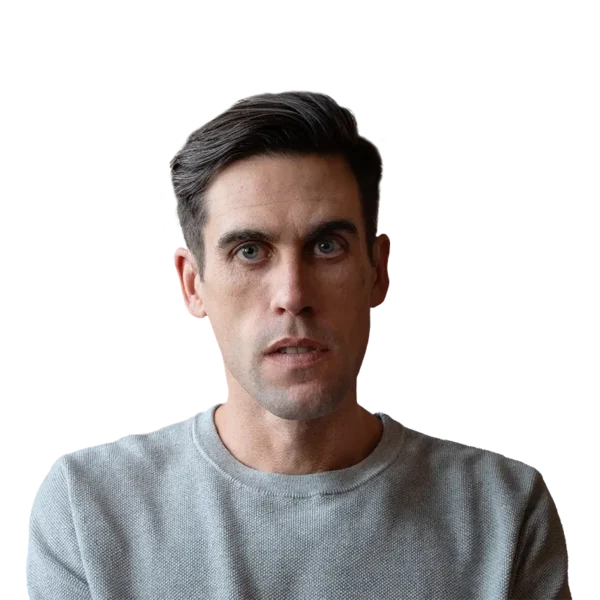
About Ryan
- Authored 10+ books selling over 10 million copies worldwide (as of 2025).
- #1 New York Times bestselling author; works translated into 40+ languages.
- Creator of The Daily Stoic, with 1M+ daily newsletter subscribers (2026).
- Pioneered modern Stoicism movement; credits for popularizing ancient philosophy.
- Former Director of Marketing at American Apparel; author of 'Trust Me, I’m Lying'.
Table of Contents:
- Introducing Ryan Holiday and the virtues of Stoicism
- Ryan Holiday's evolving relationship with Stoic philosophy
- How "The Obstacle is the Way" gained influence through unlikely channels
- Inside Ryan Holiday's book series on Stoic virtues
- Elon Musk and the dangers of yes men
- What Ryan Holiday worries about in regards to podcasting
- The book that Ryan Holiday recommends the most
Transcript:
When ‘genius’ becomes a trap
Note: Transcripts are automatically generated from episode audio, and are not fully corrected for spelling, grammar, and formatting.
RYAN HOLIDAY: Great leaders, a Lincoln or something, assembles a team of rivals versus a team of yes men. And these are things that we have a lot of precedent over historically. You think you want freedom of movement and supporters and advocates but, actually, what you need is to be challenged, and you need boundaries, and you need limitations.
JEFF BERMAN: Ryan Holiday has made it his mission to bring the wisdom of ancient Stoic philosophers such as Roman Emperor Marcus Aurelius into modern life. Ryan believed the Stoics unlocked the source code for leading a meaningful life, the four virtues.
HOLIDAY: We know what courage is, right? Courage is when you brave danger but then what danger? Why? To whose benefit? Well, now you’re dealing with justice. And then where’s the line between courage and recklessness? Well, now you’re talking about discipline and temperance. And then how do you know what the right amount is? Well, now we’re talking about wisdom.
[THEME MUSIC]
Copy LinkIntroducing Ryan Holiday and the virtues of Stoicism
BERMAN: This is Masters of Scale. I am Jeff Berman, your host. And this week on the show, author Ryan Holiday. He has introduced millions to Stoic philosophy with his Daily Stoic newsletter, podcast, and bestselling books. Ryan quite brilliantly makes the ancient Stoic ideas feel accessible and essential to our 21st century lives. Here’s how he explains Stoicism in his own videos.
HOLIDAY: Stoicism, if I had to summarize it in one sentence, I would say it’s this idea that we don’t control what happens to us in life but we control how we respond to what happens in life. And the Stoics say that, basically, every situation, big ones, small ones, ones you wanted, ones you didn’t want, it’s all an opportunity to respond with these four virtues. Courage, discipline, justice and wisdom.
BERMAN: The four virtues are the focus of Ryan’s latest book series. The final installment is out now, it’s called Wisdom Takes Work.
Ryan, welcome to Masters of Scale.
HOLIDAY: Yeah, thanks for having me.
BERMAN: Great to have you. I first encountered your work through my friend Michael Bostick who turned me on to The Obstacle is the Way, and, I have to confess, I finished the book, I annotated the living daylights out of it.
HOLIDAY: Oh, thank you.
BERMAN: I went to our local bookstore and I went to Marcus Aurelius because I was like, “Well, this is a distillation with these modern examples, and it’s super accessible. What’s missing in the translation?” I read a lot and, I have to say, I couldn’t get through it.
HOLIDAY: Really?
BERMAN: Yeah, I really struggled with it. And so, I’m just curious, how did you first encounter Stoicism and how did you make sense of it?
HOLIDAY: Well, it’s funny, I had the exact opposite experience. So, someone recommended Meditations, and I read it and I picked it up and I was like, “This is the greatest thing I’ve ever read,” I just didn’t know that that’s what philosophy could be. These practical ideas and observations about – there’s this passage in Meditations where Marcus Aurelius talks about fighting to be the person that philosophy tried to make him. And I don’t know if I ever thought philosophy is trying to make you anything except confused and that’s what it is for most people. It’s just these esoteric questions or riddles or probing so deep that you end up going nowhere. You’re like, “Wait, so everything’s meaningless and nothing matters?” I just didn’t know that philosophy could be practical and accessible and help you live a good life and what I’ve tried to do is make that a little bit more of a bigger target for people.
BERMAN: Ryan discovered the book Meditations by Marcus Aurelius when he was an undergraduate and became obsessed with living by Stoic principles. Soon, another writer also had a profound influence on him. Ryan honed his writing and research skills by working for Robert Greene, the bestselling author of books such as The 48 Laws of Power. It distills thousands of years of power dynamics into basic tenets.
HOLIDAY: I met him when I was also in college, and I started working for him doing online stuff, and he basically showed me how to do the job. I didn’t necessarily know that it was a job that I could do – the idea that writers were people. There’s something about, when you meet someone who’s actually done a thing that you’ve consumed, that is very humanizing, I think, and very powerful. This doesn’t just come fully formed out of someone’s brain, there’s a framework or a system or a process and I spent almost seven years working for him. Actually, well into writing maybe my first two books but he was just a huge mentor to me.
BERMAN: So, that wasn’t full time? It was a part-time role?
HOLIDAY: No, no. And then I worked in Beverly Hills at a talent agency which was another unique, weird experience. I was like, “I’ll just work for anyone doing anything cool and I want to figure out how stuff works.”
BERMAN: What did you learn about how stuff works from working with Robert Greene?
HOLIDAY: Well, Robert is like a scholar monk. Basically, all he does is wake up every day and work on these books and he works on them for incredible amounts of time. I think he’s six or seven years into the book that he’s working on now which is not my process. But there was something just amazing about watching someone work on a thing where progress is going to be measured in months or years and the discipline that it takes. And then I think, if anyone’s read any of his and my work, the Influence is very clear. What he mostly showed me is that people learn through stories and that the job of the writer is, not just to have the insight or the thing that you want to teach, but to find the best way to illustrate that in a way that’s memorable and explanatory to people.
So, what I ended up doing in my books is I would take these Stoic teachings which I think are pretty straightforward, pretty well said but, instead of going, “The Stoic said this or the Stoic said that,” I would go, “Okay, well, what does that look like? What does it look like when someone takes this idea and tries it in the world? What does it look like as a leadership principle or a productivity principle or as a principle in principle? How does that actually work?” And so, I learned how to do that with Robert, how to track those things down, how to find all the interesting parts of it and then how to write it.
BERMAN: But before Ryan could make the leap to writing about Stoic philosophy and, let’s be honest, that’s a bit of a tough sell to most publishers especially from a college dropout, he decided to follow the old adage, write what you know. In his first book, Ryan revealed the secrets of marketing he’d learned in his career, it’s called Trust Me, I’m Lying: Confessions of a Media Manipulator.
HOLIDAY: I was the director of marketing in American Apparel for a number of years and—
BERMAN: In an era where American Apparel was quite a marketing machine.
HOLIDAY: I know. It’s sad these days. I guess there’s a documentary about it, but it’s sad these days because it used to matter. You do these things and it’s on your resume and you’re like, “This’ll matter forever.”
BERMAN: Ryan, I worked at Myspace.
HOLIDAY: Yeah, people don’t even know that it exists.
BERMAN: That’s right.
HOLIDAY: And maybe you come out the other side and, eventually, it comes back again but, yeah. So, I had this marketing career, and my first book was an exposè of marketing and public relations which was a fun, interesting, “dark matter of the soul” book that I knew was always going to be a transitional project. I wanted to do that book, and then I wanted to write about this.
BERMAN: Why did you want to do that book?
HOLIDAY: It’s not that I wanted to do this book, I felt like that was a book that only I could do. Usually, you want to write about what you can’t not write about and there was definitely that. I felt like I had seen and experienced and understood how the sausage was getting made in a way that was not good. And so, that’s what the intention of that book was. And I was writing about fake news and misinformation and all the things that have come to define public discourse now probably a tad early.
BERMAN: Right. Before it was cool.
HOLIDAY: And before there was necessarily the zeitgeist around it. But I didn’t want to write marketing books, I just had a book that I wanted to do and then this is what I wanted to write about.
BERMAN: So, you could have gone on to write 10 more books about marketing and communications, you could have gone and written for Vanity Fair writing features and essays and analysis of what’s happening in the world of media and marketing. You said to your publisher I want to write a philosophy book and so, well, that’s going to sell like gangbusters. How did you get them there?
HOLIDAY: Your publisher always has an option for your second book, you have to at least run it by them so they have the right of first refusal. So, I knew I wanted to write about stoicism and they told me later that they were just hoping, they said, “We were hoping that you would just get this thing out of your system and then go back to doing marketing books.” I took a huge pickup, 50-plus percent between Trust Me, I’m Lying and what became The Obstacle is the Way because, it wasn’t so much they were like, “It’s going to fail,” it just seemed like there was a pretty low ceiling on it. And, obviously, I thought there was a pretty low ceiling or I wouldn’t have accepted the offer.
It’s always important that you’re clear about the story you’re telling yourself because you can end up telling yourself a story that endows your past self with a prescience that you didn’t have. I just wanted to write this book and the advance they offered was more than $1. I was like, “Are you kidding? This is amazing. This is what I want to do.” And I didn’t have all these other books in mind, this was just what I was interested in and what I thought would work. And I was directionally right but pretty open-ended with my expectations for how it would do.
Copy LinkRyan Holiday’s evolving relationship with Stoic philosophy
BERMAN: At this point in your journey, how had you personally implemented Stoic philosophy into your day, into your process in the lead up to The Obstacle is the Way?
HOLIDAY: Well, I certainly thought I was applying it, my wife would probably have disagreed. You look back on your younger self and you’re like, “What was I thinking?” I was an ambitious, driven, intense person in my mid-20s so my understanding of the stoicism that I was applying was barely in the ballpark. But I think most people, when they come to Stoic philosophy, especially if they’re in a position remotely similar to mine which is a young guy trying to make their way in the world, you’re probably going to be interested in the emotional regulation and the productivity, the toughness, the resilience, that kind of thing. And that was what I was mostly taking out of stoicism as an ethical-based philosophy designed around virtue and public service was, obviously, not the most salient parts of the package but that’s something I think that developed over time, not just in the philosophy itself, but I think it slowly, steadily dawns on you.
BERMAN: Do you think that that is age, maturation, experience? Do you think that is going through the process of studying and collecting these stories and writing it?
HOLIDAY: I think it’s all of that, and I also think there’s a hierarchy of needs. It’s, hey, when you get some of the basic stuff and then you’re even in a position where your decisions matter or have impact, then you’re like, “Oh, wait, let me think about these other components too.” But I think, at 19, I’m reading Marcus Aurelius in my college apartment, I’m not lit up by the passages about the common good. I’m like, “Oh, yeah, you’ve got to wake up early, you got to shrug this criticism off.”
And I don’t look back on that with embarrassment or cringe, I just think that’s probably the most accessible entry point and that’s the most straightforward of it. And so, I understand this even now, it’s, look, am I going to make a YouTube video about stoicism and its strong social justice components? I am because that’s interesting to me but I understand that, when I make one that’s “10 Stoic strategies for owning the day,” that’s going to reach more people and that you can’t talk to them about the social justice side of things until they’ve heard of it first.
BERMAN: Yeah.
HOLIDAY: And so, in my works, I’ve always understood, and this is I think coming from the marketing background, it’s what is the most compelling, understandable, articulatable part of it, let’s start there. And then, once you’re in that funnel, we can talk about the more complicated ideas.
Copy LinkHow “The Obstacle is the Way” gained influence through unlikely channels
BERMAN: Yeah. So, what happens when The Obstacle is the Way it comes out?
HOLIDAY: Now, it’s sold millions of copies and is in all these different languages and has made its way through professional sports and special forces and tech and politics. But the first week it came out, it sold, I don’t know, 3,000 copies. It didn’t hit a bestseller list. It didn’t fail but it was definitely a slow build. I remember, about a year in, it was some of the first serious media coverage. Maybe a year and a half in, the New England Patriots had won the Super Bowl and some members of the team had read it so there was some media coverage and it sold out. And it sold out not so much because there was media coverage everywhere but because they weren’t printing that many copies because it was a year-old book that had done okay. It sold more copies every year for 10 years in a row.
BERMAN: Do you know what happened with the Patriots? Did Tom Brady or Bill Belichick read it and pass it around? Did the Krafts give copies to all the players? What happened?
HOLIDAY: I know Mike Lombardi who was in the front office there, he read it and then he sent me an email and I sent him a bunch more copies and then he passed it around. And then their season turned around and they won the Super Bowl, I think those are unrelated variables but they —
BERMAN: Causation, correlation, who’s to say?
HOLIDAY: It definitely was when Sports Illustrated wrote about it, I’m not going to disagree. But he was one of the first people in professional sports. There’s a guy named Andy McKay who’s a performance coach, I think he was then with the Mariners, that was one. There was just a smattering of different people in different fields that picked it up and then each one caused a little contagion in their own space. The funny thing about Mike Lombardi, so Mike Lombardi passed it around the Patriots and then I found out about this from a Google alert, he’s the one that gave it to the Seahawks after they beat them in the Super Bowl.
And now it’s a West Coast book and it’s just going around. That just happened, and that happened for slowly and steadily over many years. And it would be like, ESPN would be profiling someone and be like, “On the shelf in their office is this,” and it was this little secret weapon kind of a thing. And then I started giving talks and there was never any moment where it was – it didn’t hit a bestseller list until 2019.
BERMAN: So, we just talked about scaling the impact of your work because, again, there are a lot of, to use the word broadly, “creators,” who could keep putting out a book every couple of years and build and build and build and that’s efficient, get paid very well to go do talks. You’ve scaled across platforms here. So, at what point did you see that there was an opportunity to scale the reach and impact of your work beyond the books?
HOLIDAY: So, this is right around the time that I wrote Daily Stoic. So, I’d always written online and always had an online audience but I found it to be very hard to build an audience around just me as a person. And so, it was actually my agent who had the idea for the Daily Stoic, the idea of being a page a day entry point into Stoicism. I was familiar with the page a day books, and I had known a couple of them had done well — he had published The Daily Drucker when he was an editor at HarperCollins. But what I immediately recognized about the idea of a page a day book was, what happens when you get to the end of the book? And could you just keep that going as an email every day. That’s been the solution to my problem of, how do you keep this conversation going? And so, the Daily Stoic, which we launched in 2016, was the idea that Stoicism is this thing that you should be reading and engaging with.
So, it started as an email list and I’d already had an email list so we were able to drive some people. But I think it started with maybe 10,000 people in 2016 and now we’ll go into 2026 with easily a million people getting it every day. And from the email it was, okay, we started hearing from people and they were like, “Well, I just don’t like reading this every day. Can I listen to it?” So, then I started doing the audio and that became the podcast and then social media. The idea of being that … My preferred medium to learn about things is books, that’s what I like to do but that I’m probably in the minority.
BERMAN: Just ahead, more with Ryan Holiday on why being smart doesn’t always mean being wise. Welcome back to Masters of Scale. You can find this conversation and more on our YouTube channel.
[AD BREAK]
Copy LinkInside Ryan Holiday’s book series on Stoic virtues
Tell us about the new book.
HOLIDAY: So, 2019, I had this idea for the series on the Stoic virtues, courage and discipline and justice and then the fourth and final one is wisdom. I had never done any books that were related to the other books and it’s been interesting because Zeno, who’s the founder of Stoicism, would talk about how the virtues are distinct yet inseparable from each other and nothing quite illustrates that to you like having to write four distinct books that are hopelessly and exasperatingly interrelated with each other. So, it’s been this interesting challenge, you’re writing courage and all you’re thinking about is this first book and then you realize, shit, I locked in a story that I would like to be in the third book in this series which I hadn’t even conceptualized yet.
BERMAN: Interesting. So, you hadn’t mapped out, here are the four books, here’s how I’m going to structure this here where I’m going to pull apart in time together.
HOLIDAY: I did as much as I was able to. Obviously, I knew what the four books would be and I knew what order they would go in and I knew vaguely what each of them was. But it’s not until you’re writing, at some point, you’re on the third one and you go, “You know what would go perfectly right here? That thing on page 26 of the first book which is now permanently stuck there.” But that’s the point is that we know what courage is, courage is when you brave danger. But then what danger? Why? To whose benefit? Well, now you’re dealing with justice. And then how much courage? Where’s the line between courage and recklessness? Well, now you’re talking about discipline and temperance. Well, how do you know what the right amount is? Well, now we’re talking about wisdom. Or how do you know what is good and bad, right and wrong? Now we’re talking about wisdom. So, all the virtues are fascinatingly interwoven with each other.
So, the wisdom book is the final one and what I’ve been saying is no one’s born with wisdom but all the virtues are born from it. It’s the one that defines the other virtues.
BERMAN: When you launch a book like this into the world, what is success for you?
HOLIDAY: I remember, on my first book, it’s funny how quickly … It goes from a dream, I want to work for myself or I want to write a book and then you’re like, “I want it to sell for $1 billion.” All you wanted was to not have a job and now you’re comparing yourself to the most successful people of all time. All I wanted to do was write a book and then it immediately became, but if it doesn’t hit a bestseller list, what was the point? So I was mostly concerned, on my first book, with how does it sell, does it hit the list, what are people saying about it? And with the irony being that those three things are the opposite of Stoic philosophy because not a single one of them is in your control.
Copy LinkElon Musk and the dangers of yes men
BERMAN: Yeah. You talk about Elon here.
HOLIDAY: A little bit.
BERMAN: Why Elon in a book about wisdom?
HOLIDAY: Well, Elon is one of the smartest people on the planet. To say that Elon Musk is not smart, which some people have started to say, it’s like saying he’s not rich. It’s a fact, he is a genius in many, many ways. He is also, I think, a great example of how a very smart person can break their brain and I think he’s a cautionary tale. Look, I tend to try to write about people who are dead for a reason which is that, one, they can’t sue you and, two, we’re less partisan about it.
I think, for someone like Elon who is so brilliant, what he presents to us is a warning about what happens. I’m fascinated by the journey from the guy reading Soviet rocket manuals to figure out the SpaceX business to the guy who spends all of his time tweeting, and what happens to a person when your inputs degrade, and also what happens to a person when they start to believe that they are a genius. It’s not good, it’s not good for you or other people.
And so, he’s a man who has stood over the world like a colossus, and I think it behooves us to look at both the laudatory things that you can take from it but then not to shy away from what are the obvious flaws. And I saw this at American Apparel too, Dov being a controversial genius. But what happens when you don’t take care of yourself, you don’t sleep, when you surround yourself with people who tell you what you want to hear. And, also, I think this is a timeless thing for entrepreneurs and leaders. You can imagine Napoleon as he is considering the invasion of Russia. When you have done impossible things over and over and over again and people have told you it’s not going to work, what lesson do you take from that? That is, I think, a timeless thing.
Apparently, some of Elon Musk’s friends staged an Alcoholics Anonymous-style intervention when he was considering dumping all of his money into SpaceX. So, when that happens to you and then you’re thinking about buying Twitter or whatever, how can you listen? The point is not to judge or to dunk on anyone, it’s to go, “Okay, well, in your own life, in my own life, when you have beaten the odds or done the impossible or just gotten to a place where you’re the decider, how do you not blow it all up?”
BERMAN: Yeah, it’s also – one of the benefits of experience and wisdom is pattern recognition. But the problem is, if you’re relying on patterns that were established in different contexts, in a different time, a different era, that pattern recognition may be, actually, a negative. Set aside the hubris and the surrounding yourself with sycophants, there’s even just the most basic, oh, I’m in my 50s, I’m a CEO, oh, I’ve seen this movie before, I know how this ends, we got to do this, not that. And you got 20-somethings who are like, “Hey, old man, you’re wrong,” and they’re really tuned in to what’s happening. And so, I guess the question is balancing that pattern recognition experience with the curiosity and the open-mindedness to listen to those 20-somethings and say, “Well, actually, maybe you’re right, say more.”
HOLIDAY: Well, it’s also the job of the writer and social commentators to recognize patterns. And it’s, guy gets very rich and then becomes more and more reactionary and conservative as he gets older, that’s about the oldest pattern that’s ever existed too.
BERMAN: Right, yeah.
HOLIDAY: But yeah, you have to be able to have new inputs coming in and then also understand what you’re good at. And yeah, the domain expertise, sometimes it’s transferable and sometimes it’s not and knowing the limitations of those. I think he’s a great example of why companies have boards of directors and why great leaders, a Lincoln or something, assembles a team of rivals versus a team of yes men. And, again, these are things that we have a lot of precedent over historically. You think you want freedom of movement and supporters and advocates but, actually, what you need is to be challenged and you need boundaries and you need limitations.
Oh, you want to raid the finances of this company to dump it into this company, to dump it into this? Some of the things we’ve developed in this country and in the global financial system about conflicts of interests, about disclosures, about just even the rule of law like, “Hey, you started to acquire a company and you needed to disclose,” that’s technology too. Technology is not just computer chips, it’s also, hey, when we allow people to do X, Y or Z, it’s not good for them even if they want it.
And what we’re also just looking at from, I think, in the whole tech space is what happens when people are more or less unfettered. They control their information environment, they’re essentially beyond legal or financial repercussions and I think even – I wrote a book about Peter Thiel who I really admire, I think one of the things that is a force that’s acting on some of these guys, and you’re probably in some of these chats or have been at some of these dinners, they become these gurus. And so, you go to these dinners or you’re in these groups, they say some dumb shit and everyone is just like, “Oh, yeah, that’s so…” – it’s this pontification and this performance and they just don’t hear anyone push back and then they write it in a Wall Street Journal op-ed and everyone laughs because those people aren’t on the payroll and don’t want anything from them and they’re surprised.
And so, what’s happening, honestly, is I think some of the faculties are degrading. When you’re an outsider and you’re really having to get all your arguments right and you’re constantly being challenged and just everything’s tight and good, that’s different than the, I’m on this podcast where they’re just grateful to have me and then I’m talking to these kids who want a job or these founders who want my money or this board of directors who I appointed. I don’t think they’re being challenged in a way that – One of my favorite stories in the book, there’s this famous meeting that Martin Luther King is having. At the end of it, he pulls Andrew Young aside who is one of his most trusted advisors and he goes, “Dude, what? You didn’t do your job in the meeting.” And he goes, “What are you talking about?” He’s like, “You know we’re maniacs. All of us are true believers.” He’s like, “We need you to point out when what we’re talking about is crazy,” basically calling out one of his subordinates for not disagreeing and being the devil’s advocate enough in these meetings.
And you go, “Ooh, yeah, that’s how you don’t plunge off of a cliff. You don’t pick the wrong confrontation or give the wrong speech.” And if you’re not cultivating that in your life, I think you get sloppy and entitled.
BERMAN: How do you cultivate that in your life?
HOLIDAY: Well, I try not to spend a lot of time around people who do what I do. I try to spend a lot of time around regular people living a regular life where your advantages aren’t baked in. I think my wife holds me pretty accountable, so do my kids. But I think, I don’t know if you notice this too, podcasting as a medium is very enticing for sloppy thinking also because it’s not like being grilled by a journalist, it’s mostly non-adversarial. And same with most public speaking, you were invited, they want you there and so how do you make sure that you’re not hearing what you want to hear. What you have to be careful of is that you don’t just fall in love with the sound of your own voice.
Copy LinkWhat Ryan Holiday worries about in regards to podcasting
BERMAN: Yeah. It’s interesting, the note about podcasting and I can certainly see that. One of the privileges of getting to do this show is I get to sit with smart people who’ve done incredible things but it’s not hagiography, it’s not –
HOLIDAY: Yeah, sure.
BERMAN: People who have really done the work, they can really explain how they did it. And the ones who haven’t, can’t and you know pretty quickly what you’re sitting with. And, disproportionately, we get to sit with those who have and are but I take the point, I can see how it becomes self-reinforcing.
HOLIDAY: Well, it’s not good to sit and just talk into a microphone three hours a day every day of the week, I think it can melt your brain. Just like it’s not good to tweet all day and it’s not good to – how is it staying difficult? One of the things I like about writing is that it is really hard. And it doesn’t matter how long you’ve done it or how well you have done it, you’re starting fresh each time. And so, that’s one of the ways that I do it. It would be easier for me to just do this stuff and to not do the main thing which is hard and I’ve found a lot of my peers, they’re just like, “I don’t think I’m ever going to do another book,” because it’s like, “Why? Why would you do it? You made life-changing money.” Athletes love playing and then they also look forward to the day of not having to play. I do try to stay in the craft of the thing because I think it’s good that it’s kicking your ass constantly.
Copy LinkThe book that Ryan Holiday recommends the most
BERMAN: If it’s not a book of yours and it’s not a book by one of the Stoics, what’s the book that we should all go read?
HOLIDAY: The book I’ve been recommending to people the most is this biography of Montaigne who’s a character in the wisdom book by Stefan Zweig. Stefan Zweig was a great novelist in the early 1900s, he’s fleeing from the Nazis and he ends up in Brazil and he discovers the works of Montaigne and he writes this, it’s the last thing that he did.
It’s this book about a man turning away from the chaos and violence and dysfunction of the world. Writing about a guy, Montaigne, being the French philosopher who is doing the same thing in the middle of the Reformation and the Counter-Reformation. And so, it’s one guy trying to stay true and good as the world is imploding being written about by a guy doing the same thing. I found it to be immensely beautiful and moving in this moment. And there’s a line in the book, he says the job is to remain human in a time of inhumanity. How do you not become hard, how do you not become closed off, how do you not become entitled, how do you push away ego, that’s the job.
And what’s amazing about Montaigne as a thinker is that he wasn’t one of those philosophers that told us a bunch of things that he knew for certain, what he mostly did was ask a lot of questions. His famous one is, he’s playing with his cat and then he goes, “Wait, am I playing with the cat or is the cat playing with me?” Most of his things are these open-ended observations and he was also very influenced by the Stoics. But this is this little book that I’ve loved and I’ve read probably three times in the last five years or so, it’s one of my all-time favorites.
BERMAN: We’ll link to it in the show notes.
HOLIDAY: Please.
BERMAN: Ryan, thanks for being with us.
HOLIDAY: Thanks for having me.
BERMAN: It’s striking to think about how we have more information at our fingertips than ever before in human history yet wisdom is still so scarce. Ryan Holiday’s books will certainly help you get many steps closer. His latest is Wisdom Takes Work, we’ll put a link in the show notes. I’m Jeff Berman, thank you for listening.