Money = Math + Feelings. That’s the equation at the heart of Carrie Joy (CJ) Grimes’ nonprofit WorkMoney, which has scaled to more than 9 million members since it started during the height of the COVID-19 pandemic. Grimes joins host Jeff Berman to reveal the strategies that can improve not just how much money we have, but our relationship with it.
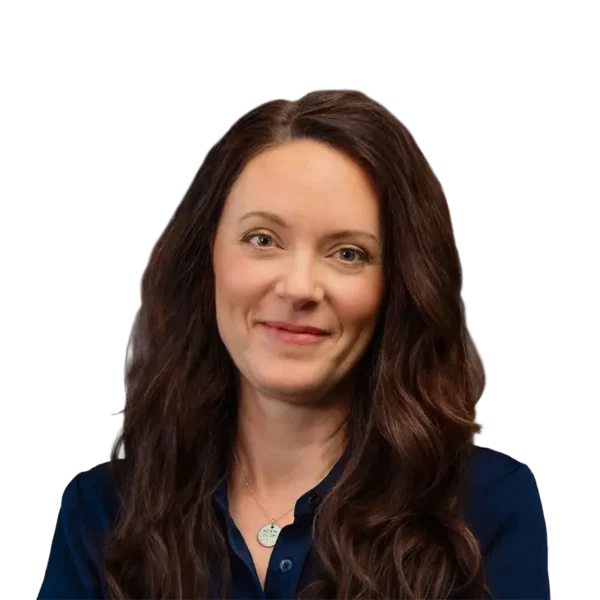
About Carrie Joy
- Founded WorkMoney; scaled it from 0 to 9M members in 5 years
- Built a major nonprofit helping 9M+ Americans navigate personal finance
- 20 years as a union organizer for higher pay and better benefits
- Author of The Joy of Money
- Launched MoneyFinder bill negotiation service; avg. savings about $400
Table of Contents:
- How union organizing revealed what people really need from money help
- A first budget born from embarrassment and necessity
- Why being short on money is often a math problem not a moral failing
- How fear and avoidance can shrink a life
- Why money problems are really math plus feelings
- Turning a pandemic project into a lasting institution
- The scaling choices that helped WorkMoney reach millions
- Building middle class power beyond politics alone
- The worst personal finance advice and what to do instead
Transcript:
How to get better at money
Note: Transcripts are automatically generated from episode audio, and are not fully corrected for spelling, grammar, and formatting.
GRIMES: Money is math and feelings. But after thousands of conversations with individual people, and from the experience at WorkMoney of being in conversation over text, email, and phone with nine million people all the time, one of the things that became very clear is that the thing that holds most people back is the feelings part.
BERMAN: This is Masters of Scale.
[THEME MUSIC]
I’m Jeff Berman, your host. This week on the show: Carrie Joy Grimes. Carrie Joy Grimes is the founder of WorkMoney, which helps nine million and a growing number of Americans deal with personal financial issues, has a fascinating history, and is also a dear friend with a big new book coming out. Carrie Joy Grimes, welcome to Masters of Scale.
GRIMES: Thank you so much, Jeff, for having me here.
BERMAN: Why don’t we just start with what WorkMoney is and how you got started doing this?
GRIMES: WorkMoney is the thing I wish existed when I was trying to figure out money. It is a nonprofit. We’ve got nine million members, and we help people figure out how to earn more, save more, and spend less. And we do that through programs and services and coupons and discounts, kind of like the AARP. The other thing that WorkMoney does is figure out how to use the power of nine million people to bargain for cheaper stuff, and to make sure that people understand how the economy works and what they can do to navigate it.
It started during COVID. It was 2020, and everyone’s money kind of got turned upside down. People were trying to figure out: What are these stimulus checks? What’s a PPP loan? What is unemployment? And I put up a website to answer all the questions that I was getting from people, and it just took off. After COVID, it became pretty clear that there wasn’t one place everyday Americans could go to figure out what to do with their money. There wasn’t one trusted website, brand, or person you could really lean on who would give you straight information. And that’s why we were not done after COVID. That’s why we’re now nine million people, and we’re growing pretty rapidly.
Copy LinkHow union organizing revealed what people really need from money help
BERMAN: What in your background led you to not just identify this need, but say, “Oh, I’m actually someone who can really help with this”?
GRIMES: I was a union organizer for about 20 years, and I had this incredible gift of talking to working people in their homes, at their churches, in bars, and in union halls, and just asking people about their money and their lives and figuring out how to help folks negotiate for higher pay and better benefits. So I got to see what happens when regular people get together and put their shoulder to the wheel of doing better. And there was a very obvious set of problems that emerged after thousands of conversations. Thing one was that most people didn’t really have the money basics down. Nobody sat me down and taught me how to do money. The other was that most people felt like they were in all of it by themselves, that they were just alone having to navigate it. So when I put the website up, I had a really strong sense of what I needed, which was help with the basics of money, but also the idea that we really can change the circumstances we’re all trying to earn more and save more in.
BERMAN: I very much want to get to the scaling of WorkMoney. Zero to nine million in five years is a pretty impressive number. And these are people you have a text relationship with, an SMS relationship with, not just nine million visitors to a website or an Instagram or something. But before we get there, what led you to union organizing work to begin with?
GRIMES: I’m a pretty cantankerous person. I don’t like it when people have a bad deal and they can’t fix it. I was in college, I was a history major, and I went to Northern Illinois University. Go Huskies. And I got really into how we improved America over time. How did it get better? It wasn’t magic. It wasn’t nature. People got up and decided to shift things over and over again.
And I was lucky enough that somebody I went to college with was like, “You might make a good union organizer.” And I was like, “Unions? Those old things that people need when they work in a factory?” But I was like, “OK, let’s check it out.” So I moved out to Ohio, where this local union was organizing workers, and I said, “OK, I’ll try.” And I hated it for the first 90 days.
BERMAN: What did you hate about it?
GRIMES: It was really hard. Really good organizing is listening, and I really liked to talk, so I had to learn to listen first.
Copy LinkA first budget born from embarrassment and necessity
BERMAN: One of the things that struck me reading the book was that 20 years working with working families, paycheck-to-paycheck voters, etc., gives you incredible grounding for the work you’re doing at WorkMoney today. And also, you have some pretty extraordinary personal stories that help you relate to the nine million and growing number of Americans you’re serving through WorkMoney. You referenced moving to Ohio for the first union job. There’s a story in the book about the boss you were working for at that time. Would you mind sharing that story with us?
GRIMES: No, I wouldn’t. When I moved out to Ohio, I had negative money. I mean, I really had no money. I had shoes with holes in them, and I had my rust bucket of a car, which is literally what I call it in the book. She barely got there. She had a name. Her name was Moe. I called her Moe. She barely got there, and it was like, “Please don’t die on the road.” We’ve all lived those years — or not all of us, but many of us have lived those years. If you know, you know. And I show up for my very first day at work, and we’re at this union hall office and doing a bunch of stuff. Then the organizing lead says, “Let’s go out to dinner, and we’ll sort of finish up the night.”
I didn’t have any money. I was going to go back to my Red Roof hotel and get some ramen noodles and watch Law & Order, which is the only thing on television in hotels at that time of night. And the organizing lead was like, “No, no, no, you’ve got to come to dinner.” And I was like, “That’s OK.” But he knew. He knew.
BERMAN: He saw those holes in your shoes?
GRIMES: He did. I was so threadbare, and I was so obviously strapped for cash. He’s like, “I got you.” And, oh my God, I hated that. He was like, “No, you’ve got to come.” And you couldn’t say no. I really wanted to impress him. So we have dinner, and he pays for my dinner. Then he gives me $100 and says, “Here, buy some new shoes and give yourself some cushion until the next paycheck.”
BERMAN: Yeah. And let’s be clear: $100, 20 years ago, when your next paycheck isn’t coming for two weeks and you’ve got absolutely nothing, that is God-sent money. But also, how the heck do you pay that back?
GRIMES: I mean, this is the question. This is part of why this book even exists. Because, look, I tried budgeting here and there, like we all have. I’d had a bit of an emergency fund, and then I’d spent it all on an emergency and hadn’t figured out how to fill it back up. And this was the first time I was so aggravated that I owed this man money. It just ate at me. So I sat down in my Red Roof hotel room, took out a pen, and wrote down all of the money I had to pay for things, how much I was going to make, and I was determined to pay him back.
BERMAN: That sounds suspiciously like a budget.
GRIMES: And it was my first real budget. To this day, the way that I figured that out has become my method for budgeting. It’s not rocket surgery. It’s like, “Here’s what you’ve got to spend, and here’s where the extra money can go.” So I paid him back, and I just had this feeling of accomplishment. And this is the thing that I realized: I had been telling myself I was terrible at money because I was poor and I was working poor, and I couldn’t keep it in my bank account. I was living paycheck to paycheck. I had had those moments, which some of us have had, where you go to the store and you give them your card and you’re like, “I hope it goes through.” And I just assumed that all of that was evidence that said I’m bad at money.
And the reality was, when I thought I was bad at money, I behaved like somebody who was bad at money, and I kept behaving like somebody who was bad at money. And that moment where I paid this guy back and felt like I’d really done something with my money, I decided in that moment to change the way I thought about how I did money. And I thought, “Wow, I can be good at money. I really can.” And then I was like, “Well, if that worked for that guy, I should pay down the credit card debt that I’ve got. I should save up an emergency fund,” and so on. And I did. And every time I found myself thinking I couldn’t do it, I’d be like, “Of course you can be good at money.”
Copy LinkWhy being short on money is often a math problem not a moral failing
BERMAN: I go back to my first job out of law school, where I went to be a public defender rather than going to a big law firm and making an insane amount of money. I made 29.5 that first year out of law school, and the local Safeway would triple coupons on Sunday nights after 9 or 10 p.m., whatever it was. And I would literally wait for the clock to strike so that I could walk up to the register and get that triple coupon value and buy my huge thing of chicken thighs, which I’d have to stretch out to make the week. The idea of setting money aside at that time was insane for me. How did you do it?
GRIMES: Let me be really clear. Most people, the problem they have is that they don’t have enough money. I just want to say that plainly.
BERMAN: It’s a math exercise.
GRIMES: It’s a math problem.
BERMAN: Yeah.
GRIMES: In this economy and in our society, you play the hand of cards you’re dealt, no matter what they are. And I think holding both of those realities together is hard. And so I say this without judgment. I chose, for myself, to say, “I choose to do this. It is important to me to pay this guy back.” So it took me longer than I would’ve liked to save up $100, but I did it. And the “choose to,” not “have to,” thing was really helpful for me. But I also worry that I don’t want people to weaponize it.
Copy LinkHow fear and avoidance can shrink a life
BERMAN: There are several personal stories from the book that were quite powerful to read and felt formative. There’s a story about when your mom is passing, which feels really foundational. So I was wondering if you could share that as well.
GRIMES: Yeah. My mom, bless her heart, died in 2022. I’m going to say some things that are a little hard about my mom, and just to pay for that little bit, I’m going to say she was so smart. She was a card shark. She was a very Christian woman who believed it was her God-given right to cheat at cards and beat you any way she could. She was a huge Cubs fan and a Bears fan, and she lived long enough to see the Cubs win the World Series. And my mom died in really shocking conditions. By the time she passed away, she had been living on Diet Coke and cheese and crackers because she wasn’t sure how much money she had. So she had been spending nothing, on the barest sustenance, living in a filthy house, and everything she owned was set out at counter level because her health had deteriorated from her lack of nutrition and mobility, so she couldn’t really bend up or down.
She fell, and then we moved her into rehab and then an independent living facility, where she passed away pretty quickly after we moved her. And what I realized is that my mom had been living this kind of pauper’s existence, and she’d been afraid to go to the doctor. She hadn’t been taking her medicine because she was afraid she couldn’t afford more. So at the end of her life, her world got so small, and she was so afraid that she wouldn’t have enough, that she did nothing. And to this day, I know that if my mom had called me 20 years ago, or even 10 years ago, I could have sat down with her, looked at her money, figured out maybe some in-home help for her. We could have budgeted differently. I could have helped her think through what the end of her life could look like.
It was hard in the moment, and then the reflections afterward were really like, “Oof, I don’t want my kid to go through that, or my husband, and also me. I don’t want to go through that.” But I wanted to make sure that other people’s moms and other people maybe didn’t get to the cheese-and-Diet-Coke-and-crackers stage.
BERMAN: Yeah. And it’s such a moving and powerful part of the book. One of the more mundane, but for me really striking, elements was that even people who are not in the financial circumstances your mom was in can have a lot of issues around money.
GRIMES: Oh my gosh, yeah.
BERMAN: A lot of fear can make people avoidant. I’m an avoider. The book really helped unstick me on a couple of things that I’ve just been like, “I don’t want to deal with it, so I’m not going to do it.” And it’s like, “I have to do this.”
GRIMES: Yeah, that’s right.
Copy LinkWhy money problems are really math plus feelings
BERMAN: Why do so many of us have so many issues around just facing the facts and dealing with the basics of our personal finances?
GRIMES: Money is math and feelings. It’s math and feelings.
BERMAN: Math plus feelings equals money.
GRIMES: Math plus feelings equals money.
BERMAN: Got it.
GRIMES: Having had thousands of conversations with individual people, and having had the experience at WorkMoney of being in conversation over text, email, and phone with nine million people all the time, one of the things that became very clear is that the thing that holds the most people back is the feelings part. That’s the part where you go to Target and you go in to pick up a prescription, and you walk out with peanut butter pretzels and a throw pillow and that really cute little solar lantern that you’re like, “This is going to look perfect on my back porch,” but it wasn’t really in the budget, and you really wanted it, and, “I’m just going to do it anyway.”
There’s nothing morally wrong with doing that, but I got really curious: “Well, why did I do that? I know I have a budget. It’s not in there. Why?” And for me, it would usually be, “I had a hard week. I felt like there’s no joy in life. I just needed some bit of pleasure in my week,” which is a note that I need to figure out some pleasure in my week. Or for me, avoidance was also, I cannot stand evidence that I might not be good at this. So I would just not want to open the envelope or look at my bank account. It’s like, I just don’t need one more person telling me that I’m doing a bad job at something, because there’s a story in my head that runs pretty hard telling me, “You’re doing a bad job, you’re doing a bad job.” This is obviously in the past.
So the feelings part is why, in the book, the very first chapter is figuring out what your money story is and what you want it to be, because that’s the thing, more than anything else, I’ve seen make it hard for people to implement all the math.
Copy LinkTurning a pandemic project into a lasting institution
BERMAN: Still ahead, how Carrie Joy Grimes is scaling WorkMoney into a movement.
[AD BREAK]
Welcome back to Masters of Scale. You can find this conversation and much more on our YouTube channel, and be sure to check out the show notes for a link to our newsletter. Let’s talk about WorkMoney. What happened that this went from being sort of a project or a side hustle, or something that might have potential, to something that started actually scaling?
GRIMES: I thought when the pandemic was over, or subsiding, that we would see interest subside, that our signups would drop. This was meant to be like, “Let’s get us all through something hard, and then let’s see what happens.” And it became, to be blunt, I’m also a person who believes in organization.
BERMAN: Twenty years of union organizing will do that for you.
GRIMES: I wanted to build something that would be sustainable, but I was aware that this was launching to solve an immediate problem. I had been thinking about the concept of WorkMoney up till this point, but WorkMoney was really meant to patch a hole in the moment. And then the test for me, for all of us, was, “Okay, once the pandemic is over, do we see traffic drop? Do we see signups drop?” And it turns out, no, because the economy hasn’t really gotten dramatically better for most of us.
BERMAN: Yeah. There was a chart that you and I were looking at this weekend that showed basically the delta between where the stock market is and how Americans feel about the economy has literally never been larger since they’ve been measuring this.
GRIMES: That’s right. Look, there’s always going to be those of us who get dealt a hand and have a really hard time getting to financial security in the American economy. I’m very aware that that has been a story for some people perennially in the American economy. But the number of us who feel squeezed in today’s economy, who make a very good living, who are watching health care costs, education costs, housing costs, and child care costs go up so much faster than our wages, it’s staggering. And when the pandemic ended and our signups went just as fast, if not faster, and right now we’re seeing a lot of signups because middle-class families are stretched, it was a real clarion call after the pandemic.
It’s like, “Okay, this really is about” — for me — “how do we build a permanent civic institution in America, a place that anybody can go to get individual information about money, how to save, how to invest, how to learn about buying a house or not? And then also, how do we use our collective strength to bargain for better in the market, to make sure that decision-makers who are politicians know what everybody wants?” This isn’t about political parties; it’s about right and wrong. And how do we think about using all of our resources to build the businesses that we want? I feel even more passionately now than I did during the pandemic that the problem isn’t just a one-time crisis. That was a particularly gnarly one, but there’s a need to shift how the economy works right now and to make more success more possible for more people.
Copy LinkThe scaling choices that helped WorkMoney reach millions
BERMAN: On the road from zero to nine million, were there inflection points you can point to and go, “Oh, that really changed. We hit a scaling moment there”?
GRIMES: We started in the pandemic, so we’re fully remote. We’re still fully remote. And that moment when you go from one Zoom screen to two — do you know what I mean, where you have to hit the little arrow? — that was a big deal, because it meant that we had gone from passionate generalists to passionate generalists and experts in some things. It meant also that a lot of things I was doing were leaving my hands. And I’ll just confess, as a founder’s founder, I really love solving hard problems all by myself, and I am very lucky to have an incredibly talented team that can do a lot of work, but also can give me some grace as I learned to let go. I don’t mean to make this about me, but me learning how to let the team take things was a moment. And then I’ll say figuring out how to deliver dollars into people’s pockets in a material way, and realizing that solving this is kind of antithetical to how some startups work: defining the problem in a very specific way, where it’s just one kind of problem.
So, for example, we could have decided, “You know what? The problem we’re going to tackle is car insurance costs are too high. We’re going to focus on that. We’re going to be really narrow. We’re going to talk about car insurers and how they can do better, and we’re going to deal with regulators on that and lower costs, and we’re going to cut a deal with some car insurance.” So we thought about doing that, picking one or two specific problems that could put dollars in people’s pockets. What became really clear is that being able to scale fast meant figuring out how quickly we could talk to anyone, figure out what kind of money help they need, and then deliver the best version of that. So we kind of broke some of the startup-y rules where we didn’t get really specific. We actually leaned way back.
So we have a bunch of partners now, and we think a lot about, “How do we provide an individual person with the most help they can that does two things: immediately add some value, whether that’s a dollar in your pocket or information you really need, and then also give them the chance to influence what happens in the economy more broadly?”
BERMAN: What’s an example of a partnership that gives you additional capacity so you can scale the impact you have for your members?
GRIMES: Here’s a great example. There’s an app called Upside. Upside is an app you can download to your phone, and you buy gas at a gas station and Upside will give you a discount per gallon. If you do it and use the code WorkMoney, you get an extra discount. I’ve saved myself 25 cents a gallon in some places. Upside’s not perfect. They track your data, and also it’s not the best deal in every single market, but it’s a way that somebody who’s really thinking about gas can save a little bit at the pump right now. And it’s a good example because we look for partnerships that are going to add value, but we’re very eyes-wide-open about it. There are very few perfect things out there in the world, and I really like Upside personally, and I like having cheaper gas, especially in this economy where gas is off the chain, and I think a lot of us can use a little bit of breathing room.
One of the things that WorkMoney does is look for the best possible partner, and then we’re very eyes-wide-open about it. We say, “Okay, here you go. You can sign up for it. It might not be perfect for you, but here’s a way you can use it, and here’s how it does better for you and for your family.”
BERMAN: Right. So you don’t have to develop the expertise yourself, you don’t have to develop the service yourself. You really are, almost to your AARP point, a marketplace for them to choose options that might work for them in some cases.
GRIMES: That’s right. And mostly, those are a bunch of different options, but mostly what we do right now is look at the economy, really understand where prices are at, understand where things are going, and give people a heads-up. So, for example, we read every word in the new tax bill and we said, “Okay, y’all, here’s what the tax bill means. Here are the tax credits you should look out for. Here’s what you should be mindful of. Here’s the benefit of this. Here’s where it’s not going to do you as much good.” So we really help people parse what’s happening in policy and in the economy. And then we also have the coupons, the discounts, the partnerships, because it’s really a full-stack thing. Money’s individual: make your good choices, do what you can with it. Everyone should play the cards they’re dealt, and there are things we can do that improve the odds that we can do better.
Copy LinkBuilding middle class power beyond politics alone
BERMAN: How do you think about the political power of the middle class, of paycheck-to-paycheck voters, of the core of the WorkMoney community in this moment? Are these two examples you’ve offered representative of where you can go?
GRIMES: I think yes. I am very, very clear that if politicians could solve the problems of the American economy, they would have. So I do not look to politics to fix anything. Politics is an outcome, and I don’t really think much about left or right. I think a lot about right and wrong.
BERMAN: Politics is an outcome, but politics is also the process by which we have policies. That tax bill that you referenced exists because a bunch of politicians passed a law that the president signed, and there were a lot of big-money interests trying to influence the fine print of that bill.
GRIMES: That’s right. So when I say politics is an outcome, I mean the decisions that get made are the end result of a lot of stuff that happens. When I think about WorkMoney, I think about WorkMoney having power in five ways. I think about market power. That’s getting together to bargain for cheaper stuff. I want to get so big we can bargain around healthcare costs. It does not seem impossible. There’s a bunch of things like that we could bargain cheaper on. I also think a lot about constituent power, like everybody together telling politicians and regulators and elected leaders of both parties, “Here’s our expectation. You have this job because we put you in it, and your job is to represent all of us. What we want from you is this and this.” So I’m a very big fan of working- and middle-class people really flexing their power at the constituent level.
I also think a lot about audience power. How do we decide what we listen to and what we make for ourselves? WorkMoney does a lot of that. As part of what I talk about, we make content or send out messaging around, “Here’s what this economic thing means for your wallet.” So how do we know who to trust and who to follow? How do we make our own content? I also think a lot about entrepreneurial power and ideas, and how we make our own businesses. How do we launch our own stuff that makes life better for us? We have a- it’s not official yet, but-
BERMAN: Breaking news.
GRIMES: Breaking news. We’re launching a bill negotiation service. It’s called MoneyFinder, moneyfinder.com.
BERMAN: Will this work with my health insurance company or my healthcare providers, too?
GRIMES: Not yet.
BERMAN: Not yet. OK.
GRIMES: It is on deck. But right now, we can negotiate to lower anybody’s cable, internet, and cell phone bill.
BERMAN: Wow.
GRIMES: So you go to it and upload a bill, we analyze it, and then our negotiators get to work. So far, we’ve saved an average of 400 bucks a pop.
BERMAN: Which is a lot of money. So I upload my Verizon bill, you all come back and say, “Yeah, we think we can do better than this.” What am I paying for this?
GRIMES: You are paying a maximum of $75, but you only pay if we save you money.
BERMAN: I’m basically going to give you a commission on what you can save me. I say, “Great, I’ll make the deal. Go ahead.” You go off and negotiate.
GRIMES: That’s right.
BERMAN: Right. So we rise or fall together.
GRIMES: Most people have saved 400 bucks or more. There are other bill negotiation services out there, but we wanted to make one that everyone can trust. This is nonprofit-backed. We’re not doing anything except literally trying to put money in people’s pockets. This is the first stage. I want to add a bunch more to it. I want to add healthcare bills. I want to add health insurance bills. I want to add car insurance and home insurance, tons of different things we could do once we get the negotiation team built out. Right now, we’re starting with cable, cell phone, and internet. People should get it while the getting’s good.
Copy LinkThe worst personal finance advice and what to do instead
BERMAN: I think there’s huge value here, not just in the actual dollars, but in the time and exasperation cost of it. I’m a lawyer by training. I’ve been a professional for a lot of years at this point. Several years ago, I was negotiating for months over a five-figure healthcare bill that absolutely should have been covered by insurance. Granted, I didn’t have the benefit of Claude or Gemini or whatever to coach me through it, but I had the internet, and it took me forever. So to say, “I’m happy to give up a portion of what I get back,” because you’ll have the pattern recognition, you’ll know what the trigger words are going to be, etc.- this is a real benefit for people.
BERMAN: Before we close, I want to come back to the book for a moment. Carrie Joy, what is one of the biggest pieces of advice that proliferates through the internet that is just really bad advice when it comes to personal finance?
GRIMES: I’m torn.
BERMAN: Give us two.
GRIMES: OK. The first is, anyone who makes you feel like crap about yourself or your choices- any advice that makes you feel bad about yourself, any shame-based money advice- just walk away. That’s not just a moral thing, although it aggravates me morally. It’s also short-termism. It won’t actually fix the habits. A friend used to say- he was a baseball player- “There’s always a guy eating a hot dog in the fourth row yelling at you to hit the ball better.” It turns out that doesn’t actually work to help people hit the ball better. So the first thing is just those shame messages. It can be really tempting. We have a lot of training to listen to them. Do what you can to ignore those people. I don’t know who hurt them, but-
BERMAN: That’s a them problem.
GRIMES: That’s a them problem. The second is, please max out your tax-advantaged retirement accounts before you go throwing money into some other investment. There is very little the everyday person can do that’s going to make them more money than just maxing out their tax-advantaged retirement accounts. That’s a 401(k), that’s a 403(b), that’s an IRA. Read the book. You can learn about Roth versus traditional. You can make your own choices, but there’s all this sort of cowboy investment culture right now. “Is it crypto? Is it housing? How do I trade stocks?” And look, no shade. My husband loves that stuff. He is good at it. He puts a lot of time into learning about it. He’s a crypto person and figures out how to maneuver inside the markets, and I ain’t got time for that. Also, it takes a level of skill and knowledge in the industry that most people don’t have.
So the one piece of advice I wish everyone could hear me say is: It’s not complicated. Get yourself a $1,000 emergency fund. Pay off any credit card debt you have. You will not invest in things that will make you more than your credit cards are costing you. After you pay off your credit cards, you want to save up three to six months’ worth of expenses, and then you’re into investment and retirement. It’s not that hard. The math is pretty clear on it. The third thing I would say is this: Nobody gets to tell you what matters. No one gets to tell you what matters about your money. No one should tell you you’re only successful if you buy a house, have a kid, 1.2 kids, whatever that is.
The reason I called the book The Joy of Money is because the joy is what the money is for, whatever that is for you. Maybe it’s being a homeowner. Maybe it’s not. Maybe it’s something entirely different, and you can build wealth by investing. Just don’t let other people tell you how you’re supposed to do money. You get to decide. Don’t give that power up to somebody else. There’s less joy in it.
BERMAN: The book that I have most recommended and reread on personal finance is The Psychology of Money.
GRIMES: Oh, yeah, Morgan Housel. He’s great.
BERMAN: The Joy of Money is a phenomenal companion to Morgan’s book, and they really should be read together. I’m so excited for people to discover this. Carrie Joy, thank you for being on Masters of Scale.
GRIMES: Thanks, Jeff. I really appreciate the chance.