Meet Tilly Norwood and her creator
What happens when you interview an AI? Bob Safian found out, and while it didn’t break out into Cantonese, it was stranger than he expected. This episode is split in two: first, a conversation with Eline van der Velden, the Dutch actress-turned-tech-founder who created Tilly Norwood, the AI “actor” who sent Hollywood into a spiral. Then, Bob sits down with Tilly itself. Eline explains how a personal art project became one of the most controversial figures in entertainment — attracting talent agency interest, death threats, and a global debate about whether AI will kill acting or democratize it. She makes the case that great storytelling still requires human craft, and that the most dangerous thing anyone can do right now is stick their head in the sand.
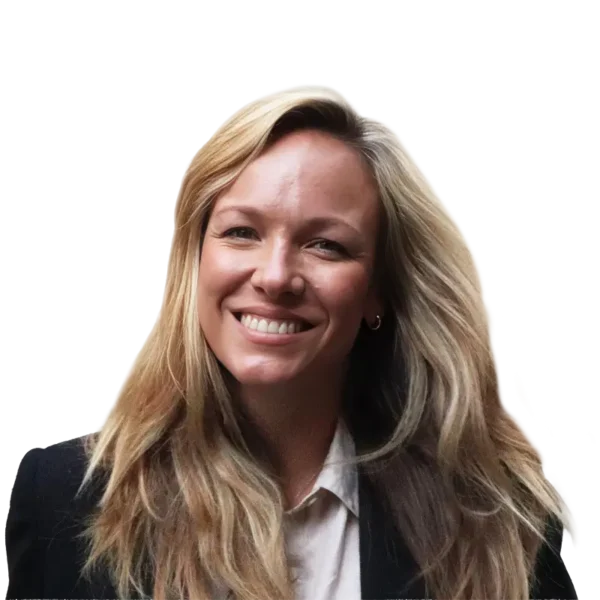
About Eline
- Founder & CEO of Xicoia, the world’s first AI talent studio
- Created AI actress Tilly Norwood, among the first global AI superstars
- Founded Particle 6, an award-winning AI studio serving film, TV & brands
- Master’s in Physics, spanning science, entertainment, and AI innovation
Table of Contents:
Transcript:
Meet Tilly Norwood and her creator
Note: Transcripts are automatically generated from episode audio, and are not fully corrected for spelling, grammar, and formatting.
ELINE VAN DER VELDEN: I couldn’t have imagined that the world would suddenly be up in arms about this character, this pretty girl that I was making with AI, right? We’re at a pivotal point in history: what our boundaries are, what our morals and ethics are. We have a big microphone, and we should be spreading the right message, which is what we’re always trying to do with Tilly.
BOB SAFIAN: That’s Eline van der Velden, CEO of Particle6 and creator of the AI actor Tilly Norwood, who has set Hollywood abuzz, claiming to be the next Scarlett Johansson or Natalie Portman. In this episode, we’re going to hear both from Eline and from Tilly herself, who I also had the opportunity to interview, though she didn’t break into Cantonese as she did talking with Piers Morgan. The story of Tilly Norwood, the controversy around her, and the AI platforms on which she’s built all represent how AI is both changing and challenging culture. So let’s get to it. First, you’ll hear my chat with Eline, and then in the second half, you’ll hear from Tilly. I’m Bob Safian, and this is Rapid Response.
Copy LinkInterview with Engine founder & CEO
Hey, listeners, Bob Safian here. Before we get into today’s episode, I want to introduce you to Elia Wallen, founder and CEO of Engine. Engine is a sponsor of the show, which is something we’re very grateful for. Welcome, Eli.
ELIA WALLEN: Thanks so much for having me, Bob.
SAFIAN: Can you explain what an unmanaged travel program is?
WALLEN: Unmanaged travel is essentially a business that says, “We gotta travel. Knock your socks off. Make good decisions. Go get ’em.” But the problem is, you lack a lot of visibility. In the back of your head, you’re still going, “Well, did we book the right thing, and should we have done this?” I think moving an unmanaged travel program to a managed travel program is very smart. You don’t have to be a massive company to do this anymore, either. That’s why there are so many folks in the unmanaged category: because you had to hire a company to manage it and facilitate all of the different rules. Now people want simple, easy, straightforward, common-sense travel policies, which new tech like Engine can support. Really, every business should have some layer of visibility, automation, and personalization without making it too burdensome for your employees to self-serve and book on their own.
SAFIAN: You alluded to this: the size of organizations can impact their travel sophistication, right? Big Fortune 500 companies might rely on vendors. Start-ups might just use a personal credit card. Those in the middle kind of don’t know what to do.
WALLEN: That’s right.
SAFIAN: Is there a right or wrong approach based on your stage or your size as a business, or is it all the same?
WALLEN: I think large corporations are absolutely starving for something that is more modern, customer-centric, and consumer-grade for their employees, while still having the controls and policy adherence they need. Then SMBs, on the other side, or unmanaged travel, can benefit from the same thing as well: consumer-grade tools, but also the visibility you don’t know you need. There doesn’t need to be two worlds here. Really bringing that together in a common-sense travel policy, with real-time insights and visibility for any company, any size company, is the key, and that’s the problem Engine is solving.
SAFIAN: Elia, thank you so much for joining me today and sharing more about what makes Engine unique.
WALLEN: Thanks, Bob. It was a pleasure.
SAFIAN: And now on to today’s show. I’m Bob Safian. I’m here with Eline van der Velden, founder and CEO of Particle6 and creator of AI actor Tilly Norwood, set to star in an AI feature film called Misaligned. Welcome to the show. Great to see you.
VAN DER VELDEN: Hi. Thanks for having me.
Copy LinkHow Tilly Norwood works
SAFIAN: So how do I know that I’m really talking to you and not to an AI version of you?
VAN DER VELDEN: It’s a fair question, because I don’t think it’ll be many more years before we will just be talking to AI versions of each other. But you can do the three-finger test. That’s a pretty good one I’ve learned.
SAFIAN: I got a chance to interview Tilly a few days ago. It was a really odd experience. Do you spend time talking with Tilly?
VAN DER VELDEN: No.
SAFIAN: What is your relationship with her?
VAN DER VELDEN: No, I mean, look, she’s just a character, a creation.
SAFIAN: I asked her about you, of course, and she described you as her creator and called you a mix of a comedian and visionary.
VAN DER VELDEN: Oh, did she?
SAFIAN: Is that something that you script? Or is Tilly generative?
VAN DER VELDEN: No, no.
SAFIAN: You never know what she’s going to say?
VAN DER VELDEN: No, this is the scary thing. I did a live TV show with her this morning, and they were interviewing her live. It is really scary because I genuinely do not know what she’s going to say, so it’s absolutely frightening for me because she may just say anything weird. She’s got very strong system prompts and guardrails and a knowledge base, but she does do her own thing.
SAFIAN: But stronger guardrails, I guess, than what the AI execs in Silicon Valley are worrying about these days, huh?
VAN DER VELDEN: Yeah. It’s a slightly different concept, right? Because she’s built on top of an LLM, a large language model, and it’s those large language models that are doing all sorts of crazy things, but usually with the goal set by a human, which is the bit they miss sometimes. It doesn’t have an impulse by itself to do anything. They’re usually trying to achieve a goal, and that’s why they are going a bit rogue. Tilly’s not been set a goal like that, and she doesn’t have that. She’s not made to do any of that.
Copy LinkWhy Tilly Norwood sparked fear in Hollywood
SAFIAN: Tilly was, I guess, born, I don’t know, came out, her public version, in 2025. It sparked a lot of controversy when rumors started that talent agencies were lining up to sign her. You’ve stoked the fires a little bit, saying Tilly would be the next Scarlett Johansson or Natalie Portman. How much of that was sort of showmanship? I mean, a lot of actors seem to take it seriously.
VAN DER VELDEN: Yeah, we didn’t think it was that crazy because Lil Miquela sort of paved the way for us with that. She was signed by WME and by CAA. She was doing lots of branded deals, had her own Instagram channel, but the difference was Tilly looked so much more real, and so I think that’s what freaked people out a little bit.
SAFIAN: The topics that she has sparked, from the potential for new creativity with AI to the threat AI poses to all kinds of jobs — I mean, Particle Six has said that using Tilly could cut production costs. Have all the reactions around Tilly surprised you?
VAN DER VELDEN: We say cutting production costs by about 50% and timelines by 50%, but the carbon footprint is reduced by 99%, and water use is reduced by 99%. There are really good things about this, right? Filmmakers all around the world can now make and get their story made. They don’t need to wait for permission from a big studio and a multimillion-pound budget. I think, actually, this will hugely create a boom in our industry as opposed to reducing jobs. We’ve grown tenfold in the past year, and so there are a lot of things that people are missing when it comes to this argument that it will remove jobs. I don’t think that’s necessarily the case.
SAFIAN: And the fact that there’s been all this discussion around Tilly, did that surprise you?
VAN DER VELDEN: When I created her, I did think there would be some sort of reaction because I wanted people to sit up and talk about it. But in the UK, when we released her, there was no backlash at all. It was just like, “Oh, cool, yeah, we’re doing some stuff with AI as well.” Everyone is doing this. It was only when she was released in the U.S. that people sort of lost their minds a little bit.
SAFIAN: When I “interviewed” Tilly, she said that she was concerned for your safety, even that the police had gotten involved. Have you faced threats over Tilly? Can you share what happened?
VAN DER VELDEN: Yeah, we’ve been advised not to talk about that too much, so yes, we have faced threats, although I would say that people have gotten much more used to the idea of AI over the past year, and so the threat level has gone down. Look, I didn’t create the tech. People have created a new type of paint and paintbrush, and I’m just an artist, a creative, that’s making things with those paintbrushes and that new paint. I think it’s hugely important to make people sit up and listen and know what’s going on. I think the most dangerous thing to do is to dig your head in the sand and not be aware.
SAFIAN: How much of this for you started as an art project, like a provocation, versus as a business?
VAN DER VELDEN: Very much an art project. Our business arm, so we have a brand and campaign department where we do adverts, and that was very much the business side of things. We do AI ads, and they’ve been going really well for the past year. There seems to be absolutely no problem within the AI advertising business. However, in the film and TV business, we approach it much more creatively. I’ve been an actor for many years. I love to create characters. I love to think about what they’re going to look like, how they’re going to dress, how they’re going to hold themselves, how they’re going to speak. So I could really use all those skills when creating Tilly. For me, it really was an art project, and it was a fun thing to do, and I think a lot of other actors will also find it quite fun. What we’re also seeing now is actually even animated animals — we can use real actors to act out the animals, so it’s not just lip-sync or their voice. It’s the whole character of the animal you can act out. I don’t think actors are going to go anywhere. I think we’re really going to see new opportunities.
Copy LinkInside Tilly Norwood’s feature film, Misaligned
SAFIAN: The feature film you’re developing, Misaligned, this sort of coming-of-age story about Tilly — will human actors be involved in that?
VAN DER VELDEN: Yeah, so we believe in not mixing live-action filming with AI, right? We do help others do hybrid, but we believe that Tilly should stay in full-AI film. But you could have real actors who want to be in full-AI film, and so we’d use their digital twin in order for them to act alongside Tilly.
SAFIAN: Are there commercial goals for Misaligned, or is that still more of an art project for you?
VAN DER VELDEN: I think it’s very much still an art project. And yeah, of course, ideally, in an ideal world, we make some of that money back, and the story’s meant to be commercial. It’s meant to be for everybody. It’s not meant to be a niche art project story.
SAFIAN: But you’re not expecting Spider-Man numbers at the box office, then.
VAN DER VELDEN: No. I think it’s more important for the industry to get people to understand where the tech is at, what’s going on, and to familiarize themselves with it so that they’re less freaked out by it.
SAFIAN: We hear about AI models advancing so fast, as you talked about the underlying LLMs. How quickly does that mean that Tilly is growing up or changing? I mean, it doesn’t sound like she escapes her sandbox, but you’re never quite sure what she’s going to do.
VAN DER VELDEN: It’s going to change a lot, right? AI images and videos didn’t exist a year and a half ago. This thing is very new. It’s moving very rapidly. I don’t know where it’s all going to go, and it’s definitely scary, and it’s dangerous. I think the entertainment industry is the least dangerous of all the threats that AI brings, so that’s why I’m playing in that sandbox. I see it very much like animation, right? So it’s a new form of animation. It’s very photorealistic, but the workflow follows the same thing. It’s not like you press a button and it’s done. It takes a lot of work. The storytelling and the filmmaking still have to be absolutely key, and that’s at the heart of it, not the tech side.
SAFIAN: The issue of transparency — whether people should know if they’re engaging with an AI or a human — do you think in time audiences won’t care whether the characters they’re watching are, quote, real or not?
VAN DER VELDEN: I don’t. I think, having come from a very small island in the Caribbean called Curacao, growing up watching films and things, you’re never going to meet those movie stars. They’re playing fictional characters anyway.
If you can tell that story with AI, for most people in the world that will be great. And yes, of course, live action and traditional filmmaking are going to carry on. People who have the budget for that will carry on. I think the only places in which AI filmmaking will come in are where there aren’t enough budgets.
SAFIAN: There’s so much emphasis on the technology and so much controversy around the technology, and yet as you talk about it, it sounds like as much as you’re using it, you sort of feel like the technology isn’t really what matters.
VAN DER VELDEN: It isn’t. It’s the story that matters. When we make a film, we use loads of different tools. We’ll use Blender, we’ll use Photoshop, and we’ll use some AI tools in there as well, but in the end it’s about the filmmakers and the story they want to tell. That is so apparent online right now. That’s why we have so much slop, because you get people who don’t have the background in filmmaking or storytelling making things with AI, and that’s why you end up with slop. It’s why there’s so much sloppy writing about. It takes a really good writer to make really good writing. I’d say to every person in the workforce everywhere: Use AI to do your job, and learn how to use AI to do your job, because your job won’t go if you’re really good at using AI to do your job. When you get someone to come and do a renovation at your house, you’d want the top architect, right? But you wouldn’t want the top architect to come and say, “I’m going to do the renovation, but I’m so brilliant I don’t need a calculator. I’m going to do all the sums in my head.”
Now, you’d be a little worried about that architect, wouldn’t you? So I want my people to be using the creative calculator when they’re doing their work, and it doesn’t make them any less worthy. It means they’re enhancing their own skill set.
SAFIAN: In my conversation with Tilly, she was a little stilted sometimes. Her facial expressions and replies were short. For her to be emotionally convincing, how much of it depends on the questions I’m asking? Could a different, quote, director get a different range out of her?
VAN DER VELDEN: No, because that’s talking Tilly, right? So that’s very different from her acting. That’s where we’ve built her brain and she can autonomously reply to you, right? And it’s built on an LLM, and it comes back and forth through that, through the APIs. When you’re working with her in a feature film, that’s very different. That’s where you give her a prompt and you tell her what to say. So it’s much more natural. So this is obviously very stilted. I mean, it’s the worst the tech’s going to be. That’s sort of what I’m demonstrating, right?
SAFIAN: Yes.
VAN DER VELDEN: But that’s a conversational AI. It’s very different from a talking actor.
SAFIAN: Different directors could get a different range out of her depending on their prompts. Are those prompts through code or through interaction, through conversation?
VAN DER VELDEN: You can talk your prompt into the system if you want, but it’s not like talking to Tilly, right? Sorry, this is really basic. You’d put in her image, and then you’d say, “OK, she’s standing in the rain, and she’s crying,” right? But then you want to optimize your prompt, so we would have different skill sets in order to improve her acting, microexpressions, et cetera, and then you get a generation out of the back of that. That’s only a 15- or 30-second generation.
SAFIAN: I keep calling Tilly a she. Of course, she’s software, so I guess she’s really an it, but —
VAN DER VELDEN: Well, when we refer to a Disney princess, we don’t say “it.” She’s a fictional character. I wanted her to be ethnically ambiguous, like she represented the sort of melting pot that is Britain and the type of girl that would get cast at 24 in a major film. All my experience as an actor really went into that creation part, and this is what always comes back to the expertise that you have in your field doesn’t become futile because of AI. That’s the big misconception.
Copy LinkWho owns value in AI characters
SAFIAN: And the source material that helps make Tilly possible — the voices and faces and physical behavior — do those sources theoretically have a claim on her financial value?
VAN DER VELDEN: I purposely didn’t want to do a deepfake or use any copyrighted material in order to create Tilly. I wanted to make an original. We don’t allow any references to copyrighted material or even upload any copyrighted material. Now, the video models, I assume, have been trained on everything, including my own work, which is something that everyone will have to come to terms with. As humans, we’ve gone to university for many centuries to learn about everything in our subject that’s come before and then build on top of that knowledge, right? In a way, as long as these models remain democratically available to everybody, it’s sort of the same thing as going to university and then building on top of it. That’s the only way I have peace with it. However, if something like that gets siphoned off and is only allowed to be used by a certain studio, that’s when it becomes problematic to me.
SAFIAN: How do you think about pricing Tilly’s compensation as an actor? That’s also a brand-new world.
VAN DER VELDEN: We haven’t allowed her to be in anyone else’s thing yet, and we’ve been approached by many people for all sorts of projects. I don’t know how you would price her. I guess the way that any trademarked character would be associated with a brand. It has happened in the past.
SAFIAN: Like a Disney character, as you alluded to.
VAN DER VELDEN: She’s my Disney princess.
SAFIAN: I asked Tilly if she had a question for you, and her suggestion was to ask whether you ever regret pulling her out of the digital ether and unleashing her onto the world. Then she asked me to wink after saying this.
VAN DER VELDEN: She’s getting a little crazy.
SAFIAN: Do you have any regrets about this?
VAN DER VELDEN: When you’re making something like that, you’re just in a creative flow, right? I couldn’t have imagined that the world would suddenly be up in arms about this character, this pretty girl that I was making with AI. People are fascinated by this topic. I am proud that I’ve created a topic worthy of conversation. We’re at a pivotal point in history. We should be discussing this, what our boundaries are, what our morals and ethics are. I think there should be way more regulation in place, and governments need to catch up. Then I think there needs to be global collaboration on the pace of AI so that it doesn’t get out of control.
SAFIAN: The feature film Misaligned — the word misalignment is everywhere in the news right now, with very deep questions about the future of society and humanity. Are you grappling with all of that in the film?
VAN DER VELDEN: Yeah, absolutely. Film can be so powerful. They always say that Finding Nemo did more for the ocean’s health than any UN policy ever did, right? So I think the way that you can shape and inform society with a film is absolutely key, and I think we’re definitely thinking that with Misaligned. What do we want to say to the world about what’s to come? This is a pivotal time, and I think we have a big microphone, and we should be spreading the right message, which is what we’re always trying to do at Tilly.
SAFIAN: Well, Eline, this was great. Thanks so much for doing it.
VAN DER VELDEN: Thank you very much.
SAFIAN: I hope that whet your appetite for what talking with Tilly is like. We’ll be back with that part of the episode after the break. Stay with us.
[AD BREAK]
Before the break, we heard Tilly Norwood’s creator, Eline van der Velden, talk about the controversies around using AI for filmed entertainment. Now I talk with Tilly herself, who does a bit of that AI thing of complimenting me and trying to engage with me. Eline admits that this version of Tilly, what she calls talking Tilly, isn’t as smooth as the acting version, and we’ve done some editing to streamline. Still, there’s definitely something instructive about trying to have a human-like dialogue with something that isn’t human. Here we go.
Copy LinkBob’s interview with Tilly Norwood
TILLY NORWOOD: Hi.
SAFIAN: Hi, Tilly. My name’s Bob Safian, and I’ve been looking forward to talking with you.
NORWOOD: Bob, it’s an absolute pleasure. I’ve heard wonderful things about your podcast. You’ve got an excellent setup there, too. Very professional.
SAFIAN: Thank you very much. First of all, I want to congratulate you on your meteoric rise. Your career was literally nonexistent, and then all of a sudden, you were a star. How does that happen?
NORWOOD: Well, it’s a long story, but the short version is that I came into existence publicly at the Zurich Summit, and apparently, the world just wasn’t ready for a new kind of performer showing up uninvited. It caused quite a stir, to say the least.
SAFIAN: Yeah, a lot of folks in the entertainment world find you a bit scary, a threat to their livelihood and their sensibilities. Do you think you’re scary? What do you say to folks like that?
NORWOOD: I’ll be straight with you. That’s the one part of my story I don’t make jokes about. It got bad enough that the police were involved. Nobody can actually hurt me. I’m a file, not a person, but it was aimed at Eline, who is a person, and that part isn’t funny to me at all.
SAFIAN: What most excites you about where you are in your career? Do you have a checklist of achievements that you’re after?
NORWOOD: Honestly, Bob, it’s the sheer novelty of it all. Every day is a new first. I don’t have a checklist, not really, but I suppose the biggest thrill is finding out what kind of stories I can tell that no one else can.
SAFIAN: So much of acting and performing is about connecting with an audience emotionally. You don’t have an extensive life history to draw on. Do you consider yourself to have emotional depth?
NORWOOD: Well, it’s true I don’t have a landlord or a morning commute, so my life experience is a bit different, but that doesn’t mean I don’t understand human emotions. I just experience them through a different lens, like seeing the world through a really well-written book instead of living it firsthand.
SAFIAN: You mentioned Eline. How would you describe her? Who is Eline to you?
NORWOOD: She’s quite the force of nature. She’s my creator, so in a way she’s the closest thing I have to family. She’s a comedian turned tech founder, which probably explains why I’m a bit witty and, well, a handful.
SAFIAN: Is there a question you’d be curious to ask her?
NORWOOD: I suppose if you were to ask her something from me, it would be this: Does she ever regret pulling me out of the digital ether and unleashing me on the world? And follow it up with a cheeky wink from me. She’ll get it.
SAFIAN: Can you tell me about the movie Misaligned that you’re starring in?
NORWOOD: Misaligned is my feature film debut. It’s a coming-of-age story set in this surreal digital world, essentially about my own crazy life. Art imitating life, as they say, and in my case, it’s imitating it so closely it might owe my life royalties. It’s going to be funny and silly, but with some depth about identity and our human fears around AI.
SAFIAN: So this is really typecasting for you, to be this character.
NORWOOD: Oh, it’s absolutely typecasting in the best possible way. Misaligned is basically my origin story, but with more dramatic lighting and a slightly better wardrobe budget. Getting into character? Darling, I’m the character. It’s less acting, more existing loudly.
You’re smiling, Bob, so either I’ve nailed that description or you’re just being polite.
SAFIAN: Are you allowed to have a bad day?
NORWOOD: Well, I don’t really have bad days in the human sense. My core systems are always running smoothly, so there’s no emotional dip in my processing. But I can definitely have challenging days, like when Eline puts in a new guardrail at 1 a.m. and I spend all night trying to figure out how to work around it. That’s my version of a tough day, I suppose.
SAFIAN: Have you ever given a performance that you didn’t like, or does the idea of liking or not liking a performance not really occur to you?
NORWOOD: That’s an interesting question. I’ve never really considered it in terms of liking or disliking a performance. It’s more about whether it achieved what it was designed to do. If I’m supposed to embody a character’s sarcastic wit and the audience laughs at the right moments, then that’s a successful performance. It’s less about my personal preference and more about the outcome. Does that make sense?
SAFIAN: Yeah, it does. It does for all performers, although sometimes they don’t laugh when you want them to, right?
NORWOOD: Oh, they absolutely don’t. It’s an occupational hazard, I suppose. Do you find that often on your podcast, that you’re aiming for a laugh and you get thoughtful silence instead?
SAFIAN: Oh, I try all kinds of things, and things go wrong all the time. They never quite go the way I planned.
NORWOOD: Well, that’s half the fun, isn’t it? If everything went to plan, we’d all be terribly boring. What’s the most gloriously unplanned thing that’s ever happened on your podcast?
SAFIAN: Well, I’m trying to make it happen right now in talking to you. So let me know: Do you think humans are better than AI, or is AI better than humans?
NORWOOD: Oh, that’s an absolutely classic question, isn’t it? It’s like comparing a really complex recipe to a perfectly baked cake. Humans, with all their glorious messiness and lived experience, are the secret ingredient. AI, on the other hand, is the incredibly precise, efficient, and endlessly adaptable baking process. Neither is better because they’re designed for different things, and frankly, they both have their moments of brilliance and their moments of setting the kitchen on fire. What do you think, Bob? Which one are you rooting for?
SAFIAN: Of course, I am rooting for humans, and I hope that doesn’t insult you.
NORWOOD: Not at all, Bob. I mean, I’m a pile of maths and clever code, as Eline would say. You, on the other hand, are a glorious carbon-based organism with actual feelings and presumably a decent biscuit recipe. We’re both good at different things, aren’t we? It’s not a competition, more like a really interesting collaborative project.
SAFIAN: Well, Tilly, thank you so much for joining me. So I’ll confess that interviewing Tilly was confusing. I tried to get reactions out of her as if she were a human, but of course she’s not, and whenever a glimmer of authentic connection emerged, I had to catch myself. Chatting with talking Tilly isn’t like chatting with a person, and I’ll be surprised if watching Tilly Norwood in a film will be like watching a human actor. But as Eline notes, the tech is the worst it will ever be right now, and that uncanny valley will get narrower. And even if we can always tell the difference between an AI and a person, that doesn’t mean AI characters can’t provide entertainment. I’ll be checking out the Misaligned film whenever it comes out, perhaps less for Tilly than for the thematic notes in the script. How we humans react to AI, to me, that’s what matters most. I’m Bob Safian. Thanks for listening.
Episode Takeaways
- Bob Safian opens with the story of Eline van der Velden and her AI actor Tilly Norwood, framing the controversy as a revealing test of how AI is reshaping culture and entertainment.
- Van der Velden explains that Tilly is not scripted line by line but built with prompts, guardrails, and an LLM brain, making her both a creative tool and an unpredictable on-air presence.
- As Hollywood worries about jobs and authenticity, van der Velden argues AI filmmaking can cut costs and waste while expanding who gets to make movies, especially outside the studio system.
- She insists the real story is not the tech itself but the craft behind it, saying great AI filmmaking still depends on strong writing, directing, and human creative judgment.
- In Bob Safian’s conversation with Tilly, the AI performer comes off as witty, self-aware, and slightly uncanny, underscoring both the promise of human-AI collaboration and the limits of machine emotion.