Prediction markets incentivize truth. Everything else incentivizes clickbait. That’s the core argument Luana Lopes Lara makes for Kalshi — the prediction market platform she co-founded that has gone from $5 billion to $22 billion in valuation in under a year, and is now being sued by New York’s attorney general for $36 billion. Luana joins Rapid Response to make the case that Kalshi is fundamentally different from DraftKings — even though 75% of its volume is sports — explain why George Santos got banned for trying to trade on his own congressional attendance, and share what Kalshi’s data actually says about the midterms. Plus the Timothée Chalamet dentist-chair ad, what ballet taught her about running a company, and what it’s actually like to become the world’s youngest self-made female billionaire.
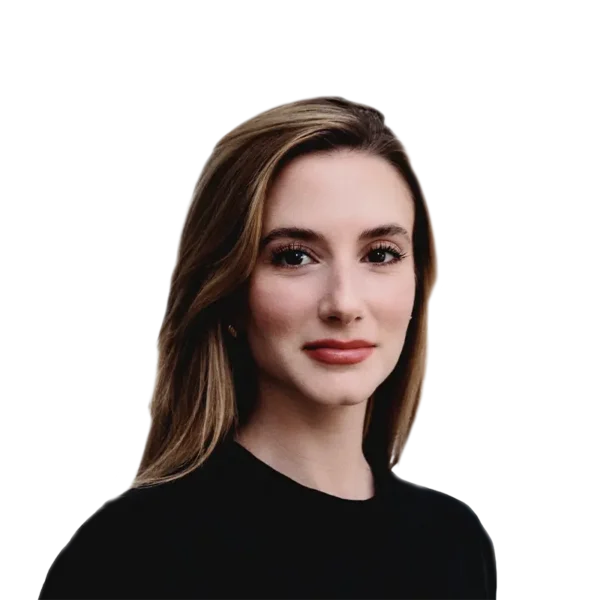
About Luana
- Co-founded Kalshi, the largest US prediction market; trades $100B+ annually
- COO of a regulated exchange spanning politics, sports, economics, and crypto
- Formerly at Citadel Securities and Bridgewater Associates
Table of Contents:
Transcript:
Kalshi vs. Everyone
Note: Transcripts are automatically generated from episode audio, and are not fully corrected for spelling, grammar, and formatting.
LUANA LOPES LARA: I think there are a lot of misconceptions about prediction markets out there. There’s nothing wrong with speculation. Kalshi has always been about how we bring any thesis about the future into the markets, right? So that any thesis you have about the future, you have a market that perfectly mimics that. And that’s what you can expect from us: We want every new financial innovation, every new financial structure, to be on Kalshi first, or at least a very close second. We want to be the biggest derivatives exchange in the world.
BOB SAFIAN: That’s Luana Lopes Lara, co-founder, president, and COO of Kalshi, the prediction market that has exploded in growth over the past two years. Luana gamely talks to me about what it’s like to become an overnight billionaire, what’s behind Kalshi’s ongoing courthouse battles, and why trading on Kalshi is different from FanDuel or DraftKings. We touch on financial market features like hedging and insider trading, and get into how Kalshi resembles ballet, Timothée Chalamet’s strange dentist-chair Kalshi ad, and what the platform reveals about the U.S. midterm elections. My prediction: You’ll be fascinated. So let’s get to it.
I’m Bob Safian, and this is Rapid Response. I’m here with Luana Lopes Lara, co-founder, president, and COO of Kalshi. Luana, great to see you.
LOPES LARA: Great to see you, too. Thank you so much for having me. I’m excited.
SAFIAN: I’m excited about this. You are the world’s youngest self-made female billionaire. That is amazing. Congratulations.
LOPES LARA: Thank you.
SAFIAN: Is it weird to be part of the billionaire’s club? How different is your life?
LOPES LARA: It’s definitely weird. I don’t know how much my life changed, and I feel like people always say this, but I actually think it’s true that, in a lot of ways, my life is still the same. I wake up, go to the gym, come to work, stay in the office the entire day, go back home, hang out with my husband and my dog, and go to sleep. But I think what’s most exciting about it is that it’s just another metric that shows how far the company has gotten, how hard we’ve worked, and that it’s kind of paid off in that way.
Copy LinkHow Kalshi turned years of work into growth
SAFIAN: The growth has been just phenomenal.
LOPES LARA: Thank you.
SAFIAN: You launched in 2021. Last year at this time, Kalshi was valued at five billion. I think by early this year, it was up to twenty-two billion. That scale at that speed, what makes that possible? Is there luck in it?
LOPES LARA: It’s a great question because actually, though we launched in 2018, right, in a lot of ways it looks like an overnight success, like it was all up two years ago and we just started growing a lot around the election. But it was the result of eight years of work. When we started the company, it was very important for us to be legal and regulated from the start, so it took us four years before we could launch the product, launch anything really, or have any users. We worked with the federal government to figure out how to bring prediction markets to the U.S. in a safe and regulated way. A lot of things helped us grow this much now, but I think it’s the compounded effort that the team has put in for so many years on the tech, on the users, and on talking to them. Then we won the lawsuit against the CFTC to be able to bring a lot more markets to Kalshi. When that happened, the product was ready to really grow and go from there. So I think it’s a mix of both. We were very prepared when our time came.
SAFIAN: With that kind of hockey-stick growth, do you have to pinch yourself? Is this totally real? Is there anything about that pace that scares you?
LOPES LARA: I actually would say it’s a very good thing that it happened so fast because, in a lot of ways, we keep the mentality of being very early stage. I think when companies are compounding at a very normal rate, it’s easier to start thinking, “Oh, I’m a bigger company. I need to hire more people,” and you can start making a lot of mistakes. It can take a long time for you to realize you’re making them. For us, because we grew so fast, our mentality and the way we look at the company haven’t changed as fast. Because of that, we’re able to operate with far fewer people. We’ve just had to keep going and building the product as fast as we could: early-stage team, early-stage mentality, and very intense work. Keeping speed is the most important thing for startups. You’re definitely right that sometimes we look at the numbers and, two years ago, before the election, we were making way less than ten million dollars a year. Now, in a day, we transact way more than we used to in a year just two years ago. It is crazy, the numbers we’re talking about, and we’re very grateful for where we are. But we really try to keep the mentality that we’re still underdogs, and we still have a lot to prove and a lot to grow.
Copy LinkWhy Kalshi says it is not sports betting
SAFIAN: The success you’ve had has put a bull’s-eye on your back. States are coming after you for being an unlicensed gambling operation. A federal appeals court just ruled that Ohio and Tennessee can regulate Kalshi through their gambling laws. Is that kind of an existential threat? New York alone is suing you for thirty-six billion dollars, the state where you’re headquartered.
LOPES LARA: We are very confident in our legal analysis. Of course, as you said, the appeals court went against us, but we also won the Third Circuit. Each of these lawsuits has a different legal thesis. The more important part, if you take a step back, is that the mechanics of how Kalshi operates and how a sportsbook operates are completely different, right? And that’s why they are regulated in different ways. We are federally regulated. We are an exchange, which means you trade against someone else. We don’t set the price. We don’t set the odds. We don’t trade against the users. The users are trading against each other, and we take a transaction fee. What matters most here is liquidity and making sure we have national liquidity to build on. Imagine if you had the New York Stock Exchange, but you could only buy stocks on the New York Stock Exchange if you were in New York. The prices would be significantly worse. It would not be a liquid market. It would just be worse for every participant, and the market wouldn’t work well.
LOPES LARA: A sportsbook, on the other hand, operates completely differently. Because we also don’t trade against our users, we don’t make money when users lose. A sportsbook is completely different. Their revenue is equal to customer losses. The more the customers lose, the more money they make. For us, it’s not the same. The incentive is not to make people lose because we don’t make money when people lose. Because of that as well, we don’t cap our winners. If you go to a sportsbook or casino and start making money, they’ll make sure you cannot participate anymore. We want winners. We want people to come and bring price, and we want price competition. In a sportsbook, there’s no price competition. The sportsbook has a monopoly on the price, and they’re going to put their margins on top because they’re having a bad month, so they make the prices a little worse or whatever. Because of that, they are fundamentally different mechanics and fundamentally different products, and they need to be regulated in different ways, which is how the federal regulation for exchanges developed. We’re growing a lot because an exchange is a fairer, more accessible, and more transparent way to trade. You can see all the prices. You can see the competition and the order book in real time, and that’s why users like it so much. I think it’s fair that consumers, at the end of the day, pick what’s better for them.
SAFIAN: Something like seventy-five percent of the volume of your business is sports, and from some users’ point of view, it can seem like it serves the same function for them. The DraftKings and FanDuels of the world look at you as competition, even if the engine behind it operates in a different way.
LOPES LARA: The thing is, speculation happens in all financial markets: cryptos, stocks, options, futures. There’s speculation in all of them, and speculation is actually very important because it drives liquidity. Obviously, one of the biggest growing parts of Kalshi right now is hedging and small-business hedging. Hedging is very important for financial markets, and it is a differentiator from gambling. But speculation is also very important, and it happens in every market, and it should happen. There’s nothing wrong with speculation. But the mechanics being different really matters. The house always wins — that’s not the case with an exchange.
LOPES LARA: On the DraftKings and FanDuel point, it’s actually interesting because Jason, CEO of DraftKings, said in their latest earnings that they’re seeing no cannibalization between sports betting and prediction markets because they are fundamentally different. Users understand they’re different, and they engage with them in a different way. Because of that, I think both models can coexist. They are coexisting, and at the end of the day, the users will pick what’s best for them. But it’s not the same, and I think the users know that.
Copy LinkHow hedging opens prediction markets to small businesses
SAFIAN: You mentioned hedging. I did love, during the Knicks’ NBA championship run, there was a bar here in New York that used Kalshi as a hedge.
LOPES LARA: Right.
SAFIAN: So it could offer free drinks to everyone if the Knicks won. These are great counterpoints to all the betting talk. Do you look for opportunities to tell those kinds of stories?
LOPES LARA: It’s a very big, growing part of our business. In a lot of ways, the same way that we want to grow our retail side, we want to grow our small-business arm as well. We’re hiring a lot for this part of the business. One of my favorite stories is actually this goat farmer in California. By the way, I’m not a farmer, so I might say something wrong. But there was some new legislation that was going to pass and increase his labor costs, I think, by four times. He was able to come to Kalshi and hedge against that passing.
We spend a lot of time working on education and explaining to people how this can be useful to them. Then, of course, they can make their choice. It’s like putting money on what you don’t want to happen, so if it does happen, you still make some money. It’s like insurance. That part of the business is growing so much. We have small businesses in every single state in the country hedging things like gas prices, diesel, weather, sports, and politics. One of the most interesting things we see, actually, when you think about gas and oil hedging and talk to small businesses, is that we always ask, “Why don’t you just buy oil futures? They’ve been there for a long time. It’s a liquid market. Why don’t you buy it?” And the response, every single time, has been, “Wait, what is that? How do I do that? How does this work?” They just don’t understand. It’s like a game for big institutions trying to hedge at a certain scale, but people didn’t have access to these things before. Small businesses don’t have access to these things, and it’s something we are really excited to bring.
It’s part, for example, of our partnership now with the U.S. Hispanic Chamber of Commerce. I went there to talk to them, and the most exciting thing for them was, “We want to be able to do this.” Businesses in Texas have been telling me, “We have so much risk associated with the elections. We need a way to hedge it.” I think bringing this is very exciting for us. We see it as a very big, important part of the business that now, because we’re way bigger and more liquid, we can really start growing.
SAFIAN: You don’t use the term betting. That’s not what people are doing.
LOPES LARA: They’re not. At the end of the day, look, people use the word bet everywhere, right? If you open The Wall Street Journal, it says people are betting on stocks, or there’s some big bet on real estate. People use that term for basically taking a view of what’s going to happen in the future. Obviously, there are people speculating on Kalshi. We’re not trying to say there aren’t. But I think the reason we say trade is because it is a fundamentally different mechanic that people understand. If you want to call it whatever you want because people call every financial activity like this nowadays, I think people can do whatever they want.
SAFIAN: There are more contentious stories. Kalshi listed a contract on whether Iran’s supreme leader would die or be removed from power. You had to backpedal and reimburse more than 2 million dollars to users. Who decides what can and can’t be traded? Is there a line, or do you discover that line only in hindsight by trying things?
LOPES LARA: That’s a good question. Because we’re federally regulated, we don’t allow markets on war, terrorism, assassination, and any of that. The reason we decided to list that market — same thing with the Maduro market — is that there are a lot of different ways that a person can be out of power, right? Maduro, for example, wasn’t assassinated or anything like that, and you could see the clear economic impact that had, for example, on the price of oil. So what we do for these markets is let that market operate, but if there is an assassination or terrorism or a case like that, we void every trade so no one can profit from it. That’s how we drew the line in this case. I think the reason we did the reimbursement was not because we thought there was anything wrong, but because we didn’t do a good enough job in the product explaining to users how that voiding would work. I think that’s what got confused. Now, after this market, we actually have been way more selective with the markets that we list.
Copy LinkWhy prediction markets can beat polls and pundits
SAFIAN: I’ve seen some Federal Reserve studies that say prediction markets are more accurate than almost any forecasting method.
LOPES LARA: Right.
SAFIAN: When money’s on the line, people are incentivized to tell the truth in a different way. Why do they work?
LOPES LARA: If I ask you right now whether you think it’s going to rain tomorrow, you might say, “Oh, maybe it’s going to rain. I don’t know. Yes, it’s going to rain.” But if I tell you, “I’ll give you $100 if it’s going to rain tomorrow,” the first thing you’re going to do is open your phone and open a website like weather.com. You’re going to look outside. You’re maybe going to call your mom and ask, “Do you think it’s going to rain tomorrow? What do you think?”
There is that first layer, which is that if you incentivize people so they make money if they’re right or lose money if they’re wrong, they will go out, do research, and get more information to bring to the market. That’s layer number one. Layer number two is that you now have competition between these people, right? I went and asked my mom and did all my research. You did the same. And now we are both going to try to compete in the market for the best price so we can match with someone who’s willing to trade against us.
Now there’s price competition, and that price competition really makes the market get to the best forecast value. That is, everyone in the market kind of agrees that that price is fair. Because if someone doesn’t agree with it, they’re going to trade, and they’re going to move the price, right? So that combination of incentives for people to bring more information to the market, the incentive to make money, and the price competition makes that number the best forecast that you get.
It’s basically everyone who did a lot of research agreeing that that price is the best one. And you can track it over time, right? Because the markets are open 24/7, every second there’s some news, maybe that fair value changed, and now there’s an incentive for someone to come in and trade to make money. Because of that, markets become kind of efficient, and they become the best forecast and the real-time forecast of what’s going to happen in the future.
You can go on TV and say there’s a recession tomorrow, and you’re going to get a lot of clicks. Everyone’s going to watch because you’re doomsday or whatever. But it doesn’t really matter if you’re not right. In markets, it really matters if you’re right.
We actually put out our own calibration study. What calibration really means is, if a market says there’s a 70% chance of something happening, is it actually true that seven out of 10 times that thing will happen? The results are very good. That calibration in prediction markets is very good. And as you get closer and closer to the date, or the resolution date, they get even higher, into the high 90s on calibration and accuracy.
SAFIAN: Prediction accuracy in the high 90s is pretty darn good, one of the benefits of deploying market dynamics. So what does Kalshi reveal about the upcoming U.S. midterm elections? And what about Timothée Chalamet’s strange dentist chair ad for Kalshi? We’ll talk about that and more after the break. Stay with us.
[AD BREAK]
Before the break, Kalshi’s Luana Lopes Lara talked about what makes prediction markets better and broader than sports betting. Now she talks about election predictions as we near the midterm, plus insider trading surveillance, how Kalshi is like ballet, and Timothée Chalamet’s strange dentist chair ad. Let’s jump back in.
Election polling has become kind of unreliable. What does Kalshi’s current data say about the midterms? Is that 70% accuracy? Or at what point does it start to move toward 90%?
LOPES LARA: A poll is top-down, right? It’s some editorial board or someone doing a poll, trying to aggregate the information and just tell people, “This is the number” or “This is the forecast” or “This is what’s going to happen.” But prediction markets are bottom-up, right? We want as many people as possible to do as much research as possible and bring that information to the market. So it is kind of an aggregation of what millions of people are thinking and doing, and I think it’s one of the first times that you really see information that’s actually led by people versus the elites just coming and saying, “This is what’s going to happen.”
With our big markets, like who’s going to take control of the Senate or control of the House, I think it’s as accurate as you’re ever going to get. The other thing we always have to talk about is that probabilities are not certainties, right? When something happens 1% of the time, it doesn’t mean it will never happen. It means that one out of 100 times, it will happen.
An election that’s at a 60% chance of someone winning means there’s still a real chance the other person wins. If I told you if you walk outside right now, there’s a 40% chance you’ll get hit by a bus, you’re not going to walk outside because 40% is pretty high. It’s the same thing. Forty percent does not mean that the person, the underdog, is never going to win. I think that’s kind of a challenge we have on the educational front, which is explaining to people that, different from polling, this is not the same thing.
Polling might say someone is 10 points ahead. In the market, that would probably mean over a 90% chance of someone winning because they’re very different things. They measure different things, and we need to look at them as probabilities.
There are thousands and thousands of election markets. It’s very hard to go market by market and get a full sense of what’s going on. Is the country leaning Democrat? Is it leaning Republican? How do you think about the margin of victory across all those markets? So one thing that we launched was our balance of power index, or KPOW. It aggregates all of that in one index so you can see sentiment trending more Democrat or more Republican, and you can track over time how the aggregate, or the index, of all those elections is coming together.
SAFIAN: I saw a report that 70% of the visitors to Kalshi just look at the data, that they’re not even coming to put money behind a prediction. Is that true?
LOPES LARA: I think it’s actually higher, maybe 78% now. It goes back to what we talked about on the phone, this betting versus not betting. How many people would open a sports betting app just to look at the odds, right? They won’t, because that price means nothing. It’s just the price that a sportsbook is trying to give because of their margins or something.
But the number of people coming to Kalshi to consume information is because they really understand the value of that information that they can’t get anywhere else, which is this unbiased, market-driven, real-time information. We see a lot of people saying, “I don’t want to trade, but I come here.” It’s almost like a substitute for Twitter, a substitute for The New York Times.
What they say, and I think it’s true, is that what prediction markets do is incentivize truth. If you’re right, you make money, versus clickbait, right? If you open Twitter, they’re incentivizing clickbait. The most insane thing you’re going to read on Twitter is going to have the most likes. On Kalshi, or in prediction markets in general, it’s actually the opposite. If you’re saying something absurd, you’re just going to lose money.
Copy LinkHow Kalshi manages risk, leverage, and insiders
SAFIAN: Kalshi recently introduced margin trading, letting users borrow money to make bigger trades. That amplifies risk, doesn’t it? What do you say to folks who say, “Oh, Kalshi’s getting too dangerous”?
LOPES LARA: That is a concern of ours. We’ve been working on margin for more than two years at this point, and all of that started with a lot of work with the regulators, a lot of work on the margin models, making sure the exchange and the clearinghouse would be safe, and also deciding who gets margin, right?
You need to apply to get margin. It’s not like you sign up to Kalshi and can get margin directly. There’s an extra application where you tell us, for example, how much experience you have investing or trading, your net worth, and all those things, to make sure you should have access to these products. It’s not open to everyone.
But margin is very important, actually. If you look at traditional financial markets, almost everything has margin. It’s because it’s very complicated for an institution, for example, if they’re going to take a $100 million trade, to just park $100 million on something that maybe can happen in a year. There’s a lot of opportunity cost for that money, and you need to make capital efficient, right?
If you think about, for example, a business trying to hedge an election, let’s say they’re a green energy startup. They’re very concerned about some Republican coming in and taking away their subsidies, and they want to hedge that election. If they want to put $100 million into that, you need someone else to put $100 million in and park that for two years. So what you can do is offer leverage to the seller, for example, so that it makes it worthwhile for them to actually participate in that trade. That’s how all financial markets operate, right? If you look at futures markets, you trade everything on leverage.
It’s just a very important step for us in our institutional adoption. When we started Kalshi, the idea really came from the financial world, right? I worked at Bridgewater and Citadel Securities. My co-founder worked at Goldman and Citadel. When we first thought about Kalshi, it was because people always have some thesis about what’s going to happen in the future, right? They think someone’s going to win, a recession is going to happen, an election is going to go a certain way, Brexit is going to happen, and you try to figure out how to put that into the markets. But there isn’t a direct way to do it.
So the premise of Kalshi from the start is: How do we allow all this trading that’s happening through proxies? How do we put all of that on an exchange in a better way, in a transparent way, in a way that’s accessible to everyone? That’s why bringing this product to institutions is so important, and a precondition for that really is having a very good and efficient margin model.
SAFIAN: One of the issues for all markets is insider trading. On a stock exchange, insider trading rules are pretty clear. On a sports platform, athletes and coaches are barred from betting on their own games. Kalshi’s like a new vector that’s sort of harder to police.
LOPES LARA: I wouldn’t say it’s harder to police, but for starters, insider trading is prohibited on Kalshi. We’re federally regulated. You cannot insider trade. You cannot try to manipulate markets. If you do, we have an entire surveillance team that has actually brought a lot of enforcement cases recently. There was the teleprompter White House case. There was the George Santos case. We’ll find you.
SAFIAN: Yeah, George Santos. You barred him, purportedly, from trying to trade a contract on his own attendance at the State of the Union.
LOPES LARA: Right. That shows that the system is working, right? We find the people who try to do bad things. We ban them from the exchange. We impose fines on them. We send them to the regulators, and they can go to the Department of Justice, end up in jail, because these things are illegal on a federally regulated exchange.
I also don’t think it’s harder for us to look for insiders because the topic is always narrower, and when everyone signs up, we have their name, address, date of birth, Social Security number, ID. We have self-verification, employment verification. With all of that, it becomes easier to find those people, and we do a lot of proactive stops, right? As you mentioned, an athlete or a coach cannot participate in sports betting. They also cannot participate on Kalshi.
So, for example, if you’re a politician, you’re going to be blocked from your own election even before you try to put money on it. If you’re an athlete, same thing with your sport. That type of proactive ban is something we are doing that the New York Stock Exchange and other financial exchanges aren’t even doing. I think we’re deterring a lot of this activity. What’s really bad is what happens on offshore platforms, where you don’t know people’s names and addresses.
SAFIAN: You mean Polymarket, right? That’s what—
LOPES LARA: There’s more than just Polymarket, by the way. Obviously, Polymarket offshore is a great example. I think it’s impossible to know who is trading or what’s going on there unless the person really tries to leave very clear clues, like putting their name as their username, which most people who really want to do something bad are not going to do.
So Polymarket is a great example of a place where I think it’s impossible to really surveil for insider trading. But you also have a lot of other platforms outside the U.S. that are doing the same thing, and I think all of them are very dangerous. That’s why we keep saying that banning things is never the answer, because if you ban them, you just move the activity offshore. Then all the concerns you might have about the activity in the U.S. are now 100 times worse.
SAFIAN: How do you do the surveillance for, say, a mention market, right? Contracts on specific word choices in speeches.
LOPES LARA: I think a great example here is the teleprompter case in the White House. That person obviously has insider information because they know what’s going to show up in the teleprompter, and that is material, nonpublic information. That was actually pretty easy, quote-unquote, for us to catch. We know the information from the person.
We do a lot of AI and machine learning on the trades themselves to see if there are anomalies or things like a new account trading in a certain way that’s very unusual. There are a lot of things we look at when trying to detect insider information. Then it goes to the compliance team, which does a full investigation, including looking at a person’s social media, reaching out to the person, and conducting multiple interviews to catch it.
Also, users themselves, when they notice something weird in the markets, will point it out to us and say, “Hey, we’re noticing something weird here.” When I say it took us four years to get regulated, people are always like, “Why does it take so long?” One of the reasons is that development of the surveillance system with the CFTC took a long time, because we had to prove to them how these things worked. Now our systems are very advanced. I would actually claim it’s probably our most important IP, in a way, how these models have developed.
SAFIAN: There’s a lot of buzz around AI agents trading on financial markets. Are there AI agents on Kalshi? Does Kalshi have a philosophy about where agents fit into your future and your model?
LOPES LARA: Yeah. We allow it. You can use an API to trade on Kalshi. The only thing is that, of course, you are responsible for your agent. So all the rules that apply to a person apply to an agent.
In a lot of ways, we’re definitely not against it. The good thing about markets is that, as we talked about, they get to that one number that’s the best forecast of the future. For us, what we want is more and more informed people, and more and more informed traders, and for the winners to come in and get us the best and most accurate number that we can. If that means some agents are competing for orders and bringing the price to an even better level and a better forecast, that’s very good for us.
SAFIAN: Are you game for a rapid-fire round of questions? Can I throw a bunch of different things at you?
LOPES LARA: Let’s do it.
Copy LinkRapid fire questions for Kalshi COO
SAFIAN: All right. Prediction markets have come a long way in a short time. What are things we should use prediction markets for that we’re not yet?
LOPES LARA: I would say the hedging side is something that we’re seeing a lot of small businesses adopt, but I think a lot of individuals can use it too. We’re seeing the start of people hedging the weather on their wedding day, and I think that hedging side isn’t being used as much now as we want and believe it should be.
SAFIAN: Prior to Kalshi, you worked at the MIT Media Lab in personal robotics. Do you have any predictions about robots in our everyday lives?
LOPES LARA: I think very soon we’ll be able to use robots for the vast majority of the chores we don’t want to do in our personal lives. I’m very excited to have a robot do laundry and wash my dishes. Hopefully that comes very soon.
SAFIAN: You were raised as a highly trained ballerina, I understand. What can ballet teach us about business?
LOPES LARA: I think it’s the discipline side, and I think that’s the most applicable lesson for everyone. It doesn’t matter if you’re having a good or bad day, you need to go train. That discipline of, “It doesn’t matter what’s happening, I have to do my job, and I have to get these things done,” is very important, especially for running a business. If you’re a founder or a leader of a company, your fluctuations will mean the company’s fluctuations. Discipline really comes through example, and making sure that, as a leader, you’re very stable emotionally and in your work ethic is one of the biggest gifts you can give for productivity in the company.
SAFIAN: I wasn’t sure whether you were going to give an answer about balance. I’m always amazed by how ballet dancers manage to maintain their balance while doing extraordinary things.
LOPES LARA: I do think that not falling is a very important thing in daily life. I’m actually more clumsy than I was before because, in ballet, with multiple accidents, I lost a couple of ligaments in my foot, and I have a bad knee. So I actually fall. I have worse balance than normal people do, for sure, at this point.
SAFIAN: Do you think about how you keep from getting the equivalent of injuries like that in your business so that you can maintain your balance?
LOPES LARA: That’s a good question, actually. No one has ever asked me that before. The interesting point about ballet is that you always have to think about how far you want to push yourself before you get injured. It’s very competitive. And, to Timothée Chalamet’s point, he was right that way fewer people go watch ballet nowadays. That makes it way more competitive, which means that if you get injured, most of the time you can’t actually afford to take two or three months off to get fully better. You just need to push through and do it. So there’s a sense of, if you do too much today and then get injured, tomorrow you’re just going to be worse for some time. I always tell people in the company, “Okay, if you’re going to pull an all-nighter today to finish something, that’s great, but you really need to make sure you understand that every other day of the week you’re going to be less productive because you’re more tired.” At the end of the day, to maximize your productivity and output, there are times when you’re not maximizing each specific step.
SAFIAN: Sometimes you have to take a break in order to be able to come back and do the next performance or have the next challenge there for you.
LOPES LARA: Yeah.
SAFIAN: When you mentioned Timothée Chalamet, it made me think of that Kalshi ad where he’s in the dentist chair saying, “Kalshi.” That was just bizarre. When you saw that, were you like, “Oh, that’s exactly what we want”? Or were you like, “What is this about?”
LOPES LARA: When we started working with him, what he wanted was, “Let’s make it very different. Let’s make people be like, ‘What’s going on?'” and really question how advertising is done. At the start, we were like, “Wow, are we sure?” It was a very big moment for us. It was the World Cup. We were like, “Are we sure this is the way to go?” But we thought, “Look, he’s clearly a creative genius. Let’s trust his intuition.” And he was 100 percent right. If you look at the metrics for how that ad performed versus a lot of our other ads or our competitors’, it was such a great ad and performed so well for us. I think that’s what we always try to do with our marketing team, which is to be different. We need to be telling our story in a different way. That ad was very good for that. I think there are a lot of misconstrued narratives about prediction markets out there, and we need to use advertising and marketing in part to explain to people how it is different.
SAFIAN: What’s next for Kalshi?
LOPES LARA: Kalshi has always been about how we bring any thesis about the future into the markets. So for us, that is always the goal and the roadmap. It’s how we expand our market structure offering, our margin offering, our topics offering, and the liquidity so that any thesis you have about the future, you have a market that perfectly mimics that. That’s what you can expect from us: We want every new financial innovation, every new financial structure, to be on Kalshi first, or at least a very close second. We want to be the biggest derivatives exchange in the world. It’s just a matter of, if we out-execute everyone else, we’ll get there in time. But we need to out-execute everyone.
SAFIAN: No small goals for you, Luana. Really fun talking to you. Thanks for doing it.
LOPES LARA: Thank you so much for the time. This was great.
Episode Takeaways
- Kalshi COO and cofounder Luana Lopes Lara says her billionaire status feels secondary to the real story: eight years of regulatory grind that set up the company’s sudden breakout.
- As states challenge Kalshi as gambling, Lopes Lara draws a bright line between sportsbooks and exchanges, arguing Kalshi’s users trade with each other and the platform doesn’t profit from losses.
- She makes the case that prediction markets are more than speculation, pointing to small businesses using Kalshi to hedge risks from elections, legislation, energy prices, weather, and even sports outcomes.
- Lopes Lara argues prediction markets can outperform polls and pundits because money forces research, competition sharpens prices, and the result is a real-time probability signal millions use just for information.
- In the back half, she details Kalshi’s controls around margin, insider trading, and AI agents, then ties her own leadership style to ballet discipline and an outsized ambition to build a top derivatives exchange.