Dr. Joy Buolamwini wants AI to see everyone
For Dr. Joy Buolamwini, addressing bias in data sets and algorithms, especially in facial recognition, is crucial to AI’s future. How do the data sets we use to train AI play into that? After years of research at MIT, founding of the Algorithmic Justice League, and becoming the “poet of code,” Dr. Joy has made it her mission to ask questions about inclusion in AI design, and address the answers. Dr. Joy joins Pioneers of AI to share how she uncovered the deep roots and impacts of bias in AI, and how to address it.
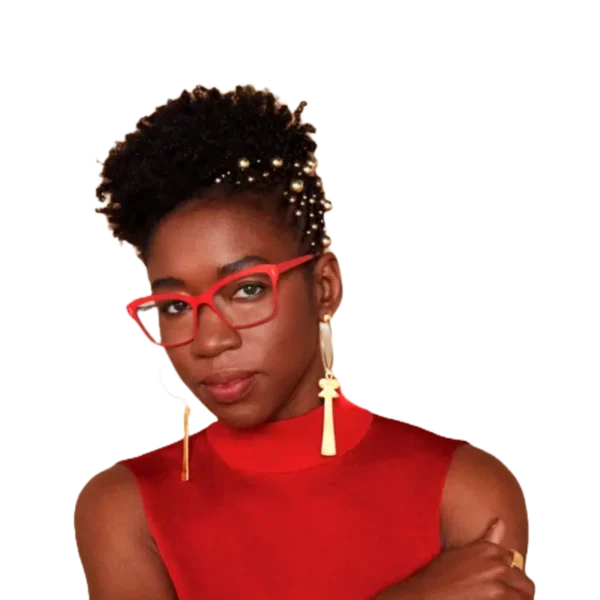
About Joy
- Founder of the Algorithmic Justice League, advocating for ethical AI.
- MIT Media Lab researcher focused on algorithmic bias in facial recognition.
- Exposed racial and gender biases in Microsoft, Amazon, and other AI systems.
- Renowned digital activist and speaker on AI and data justice.
Table of Contents:
- How early role models can shape a life in AI
- The moment a robot failed to see its creator
- Why biased vision systems reflect older design choices
- How skewed training data bakes bias into AI
- Why fixing AI takes more than diverse teams
- What rigorous testing reveals about who gets misclassified
- When more accurate AI still creates real world harm
- How activism and policy can help people challenge AI harms
- Where inclusive AI can create real breakthroughs
- Episode Takeaways
Transcript:
Dr. Joy Buolamwini wants AI to see everyone
Note: Transcripts are automatically generated from episode audio, and are not fully corrected for spelling, grammar, and formatting.
RANA EL KALIOUBY: In the winter of 2020 two Detroit police officers arrived at Robert Williams’ home in Michigan. Without any explanation, they handcuffed him on his front lawn while his whole family was watching.
Williams gave the details of his story to a House Judiciary subcommittee the following year.
EL KALIOUBY: Williams spent the next 30 hours in a Detroit jail. Detectives said he was arrested for federal larceny. The proof — images captured by a surveillance camera and analyzed by a computer algorithm. Yikes! “The computer got it wrong” — as in faulty facial recognition technology wrongfully identified Williams as the culprit.
This was the first known case of its kind, but it wouldn’t be the last.
DR. JOY BUOLAMWINI: There had been others who had been arrested by that same police department. And part of this is, these are the stories we know about because in some ways the AI systems are acting as silent witnesses with flaws. That’s Dr. Joy Buolamwini – computer scientist, poet and national bestselling author of the book Unmasking AI.
And these flaws that she’s talking about have a name. Algorithmic bias. And it can have major consequences, including wrongful arrest. But it can also drive any number of computer-based errors that could directly affect you. Bias could mean a medical misdiagnosis, a denial of your mortgage application, or being skipped over as a qualified job applicant.
I’m an AI optimist. But if we’re not mitigating its pitfalls, we’ll never see its full potential. Which is why in this episode, we’re taking algorithmic bias head on. Why does algorithmic bias happen, and how can we avoid it?
I’m Rana el Kaliouby and this is Pioneers of AI.
[THEME MUSIC]
A podcast taking you behind-the-scenes of the AI revolution.
EL KALIOUBY: Dr. Joy is one of the leading experts on algorithmic bias, a hero of mine, someone who, like me, is a BIG believer in AI and a staunch advocate for how we can make it better. But our conversation didn’t start there. It started with us talking about what inspired us to get into tech in the first place. Dr. Joy, I am so excited for our conversation. You and I have crossed paths a number of times. I’m a huge fan of your work, and I just admire all you’re doing to make sure AI is just and inclusive for all of us.
BUOLAMWINI: I’m so excited to be here. I’ve been following in your path, watching you from afar, being inspired by the work you’ve been doing. And so I’m so excited to be a guest.
Copy LinkHow early role models can shape a life in AI
EL KALIOUBY: And early on, I guess you met the MIT robot Kismet, which for our listeners who are not familiar with Kismet is a gizmo-looking robot with like blue eyes and furry eyebrows, very 90s style. But I don’t know if you know that, but Kismet inspired my own research because it was the very first social robot that had social and emotional intelligence. And so I’ve really looked at Kismet as an inspiration for a lot of my work. But how did you meet Kismet?
BUOLAMWINI: Okay, I think we were similarly inspired. So when I was little, I had a very strict diet. And by diet, I mean media diet. So I could only watch PBS.
EL KALIOUBY: Love that. I should have done that with my kids.
BUOLAMWINI: It’s a different time. You know, we were new, we were immigrants. My parents weren’t exactly sure what else was on TV. So PBS seemed safe. So I would watch Nova, American Scientific, American Frontiers, all of this. So I was watching one of these shows and they had an episode about robots.
EL KALIOUBY: This was in fact the PBS show “Nova,” in 2006 when Dr. Joy was still in elementary school.
BUOLAMWINI: And I remember seeing at that time graduate students, Cynthia Brazeal. And she was the one who had created Kismet, the social robot. I hadn’t seen a robot that was actually developed to interact with humans. And so the big expressive eyes and the ears and all of that, I was so captivated. And I was curious if I could make something like that. And so from then on, I said, I wanted to be a robotics engineer and go to MIT. I didn’t know there were requirements.
And I think also seeing that it was a woman behind it as well, I didn’t even question it. It was just like, oh yeah, this is of course something I could do.
EL KALIOUBY: Growing up I had a similar experience. My mom was one of the first female computer programmers in the Middle East. And she paved the way for me and so many other women.
For Dr. Joy, her childhood dreams of going to MIT would come true. She would even end up working with the same code used to program Kismet.
But her first stop was Georgia Tech, where she was admitted as an undergrad to study computer science.
Unsurprisingly, her class didn’t look like her. The student body was — and still is — largely white and male. But Dr. Joy’s attention was turned towards the non-human residents on campus. You know — the cool robots in the computer science lab.
Copy LinkThe moment a robot failed to see its creator
BUOLAMWINI: When I was working on one of my first robots, Simon, I was at the time trying to get a robot to play a turn taking game with me called peekaboo, right?
Peekaboo, you cover the eyes, you uncover the eyes. Peekaboo, I see you. Peekaboo doesn’t really work if your robot doesn’t see you.
And my robot wasn’t seeing me. And so that’s when I really started thinking, okay, what’s going on the computer vision side, because it was detecting the face of my roommate who was fair skin, green eyes, red hair, not necessarily detecting me.
EL KALIOUBY: This was Dr. Joy’s first experience of being UN-SEEN by a robot. And she let it slide.
But the second time came a few years later – in graduate school at MIT. This time it was too blatant of a mistake to ignore.
BUOLAMWINI: So I had taken this course, science fabrication, and I wanted to explore the concept of shape shifting.
We had six weeks, so all right, not changing any laws of physics anytime soon. So maybe instead of shifting my physical appearance, maybe I could somehow alter my appearance in a mirror.
And so I worked on this project called the Aspire Mirror, and I found this material, half silvered glass, which essentially has a really cool property. If you have something black behind it behaves just like a regular mirror. But if there’s light behind it, the light will shine through. So I thought, huh, if I put a black background and then add a digital mask, then it would make it seem as though that mask were on my face.
And so this is all digital first, right? And it worked. Okay, this is so cool. But now let me see if it can — that filter — follow me. Right. So I needed to get a webcam and then on the webcam hooked it up to my laptop. Now, I needed some face-tracking software to achieve the effect. So nothing to do with social justice or anything like this.
EL KALIOUBY: You just wanted like some facial recognition technology to just track your face basically.
BUOLAMWINI: Yeah, so I could have this cool Aspire Mirror thing. And so I wanted to look like a lion or look like Serena Williams. Now, maybe Roger Federer, right? And so when I was trying to get that to work, that’s when I noticed it wasn’t really picking up my face consistently. So I drew a face on my palm, held it up to the camera. It was not the best face. It was very much the smiley face sort of thing. And the face on my palm was detected. So after that, I was like, okay, anything is up for grabs.
EL KALIOUBY: It was around Halloween at the time and Dr. Joy had a white plastic mask by her desk – the kind you find at the drugstore. As an experiment, she reached out and put it on.
BUOLAMWINI: It’s not even halfway on my face before it starts being detected. I take it off. My face is not detected. You can’t even make this up.
Copy LinkWhy biased vision systems reflect older design choices
EL KALIOUBY: So can you talk a little bit about that? Like, what was your first thought? Like, did you think it was a bug in the system? Were you angry? Like, what was the emotion?
BUOLAMWINI: Well, people with dark skin have been seeing the limitations of cameras for a while, right? So before we even get to computer vision, if you’re thinking about film, the early film technology, the way the chemical solutions were created, they were optimized to expose lighter skin.
So if you see photos from back in the day, right, you might just see dark skinned people and you see the eye whites and maybe the teeth and those are actually design decisions. It didn’t have to be that way. And in fact, I remember reading about the Oprah Winfrey show actually getting specific cameras from Philips.
I think they were LDK series that had microchips that were optimized to actually show darker skin better. So that’s like, okay, these are design decisions. And then Kodak changed their film when chocolate companies and furniture companies were complaining. You can’t see the fine grain of my mahogany.
Some of us got a windfall. Now they’re marketing it so good it can shoot a black horse at night. If it can shoot a black horse at night, it might be able to show my — so in some ways, it wasn’t so surprising that in the world of vision, right, that there are these issues. But what I was surprised about was I had all the lights on.
And so that’s when I was like, hmm, I think there might be something more here.
EL KALIOUBY: Something more than just technical limitations of cameras failing to pick up darker skin tones.
BUOLAMWINI: I was curious. And then it also did make me think of the book called Black Skin, White Mask from Fanon.
EL KALIOUBY: That’s Frantz Fanon, the political philosopher.
BUOLAMWINI: He was talking about the ways in which people of color have to mask who they are in order to be rendered visible or seen by society as well. So it almost seemed too literal. I was like, yeah, I can’t make this up. So I responded with curiosity. Why is this happening? Is it because of this specific environment, or is there a broader pattern here? So it really became that launching point for exploring more about computer vision, but also AI more broadly, like, what else could be going wrong?
EL KALIOUBY: The programs that power facial recognition are built by people. Which means they are built with the same biases — unconscious or otherwise — that are already baked into our society.
Technology is meant to be the great equalizer — bringing access and opportunity to everyone. But if the computer systems we build can’t even see US, we’re just reproducing the same inequities that already exist.
As a computer scientist, Dr. Joy wanted to get to the root of this coded bias. How was this happening, and how widespread was it?
That’s in a minute.
[AD BREAK]
Copy LinkHow skewed training data bakes bias into AI
Dr. Joy wanted to know: how are we training our machines to see?
BUOLAMWINI: So our human fingerprints are all over AI and automated systems. And so this is engineer hat comes on. What’s going on? Let’s debug it. Let’s figure out what’s happening. And so this led down a whole exploration where I started looking at a little bit of how we even train machines to detect human faces. And so it turned out they were using this concept of machine learning, right?
So let’s provide a data set of examples of faces and use that as a way of training an AI system to detect a human face. So I started looking at those data sets and I started looking at the most popular data sets and I started saying, oh, I think I’m seeing where the problem is coming from. So I would look at a gold standard benchmark, right? This is the one we’re using to judge progress in the field.
EL KALIOUBY: Benchmark data — as in THE standard dataset of sample faces. Now, you’d want your benchmark to be universal, to represent the diversity of the world’s population.
But this benchmark data – the go-to sets of faces – did not do that.
BUOLAMWINI: Over 70 percent male, 80 percent lighter skinned individuals. And then I would look and I was like, oh, and they’re taking it from images of public figures. And oftentimes politicians. So I started to see what I was calling power shadows. So you have the power shadow of the patriarchy, right?
When you look at women’s representation, when it comes to political positions, you tend to be in the 30 percent or less zone, so that men were showing up 70 percent or more in these data sets wasn’t too surprising once you start considering the source. Similarly, when you’re looking at the prevalence of lighter skinned individuals, even though the majority of people on earth would be classified as people of color, who’s more likely to have their photos available online.
And then there was another technical piece about it. So for computer scientists to collect large sets of data, we ain’t got time and we’re lazy. So what we’re going to usually do is run some kind of automated system—
EL KALIOUBY: To scrape data off the internet, basically.
BUOLAMWINI: Absolutely. And so to get face data sets, people would create face detectors. That way you’re not scraping every image, just the image that has a face — but a face that has been detected. So I also found out that the face detectors themselves were especially more likely to fail on darker skinned faces.
EL KALIOUBY: Not only were the standard data sets overwhelmingly skewed, the tools being used to build those data sets were only further adding to the problem.
BUOLAMWINI: And then scientists had, okay, let’s run an experiment.
One of one is not enough to make a generalized conclusion. So that’s what led to my research.
EL KALIOUBY: Again, I think that’s a very important concept. The training data is really important, and it’s not just the quantity of the data, but the diversity of the examples you’re using in the training dataset, whatever problem you’re solving with machine learning. But it’s also the validation. It’s what we’re testing on, right?
BUOLAMWINI: Absolutely.
EL KALIOUBY: Because if it’s not representative of humanity, people who are going to be using the system, it’s going to end up being biased. So at Affectiva, the company I started around emotion recognition early on, we also kind of faced this idea of data and algorithmic bias.
We did a lot of work in China and we were recognizing people’s facial expressions and smiles. And we got a call from one of our biggest clients in China and they were like, this technology doesn’t work. Like, you’re not detecting any smiles across our Chinese customers or users. And we looked at it and we basically realized that we didn’t have enough representation of the Chinese population, but also we were putting everybody in the same bucket, right? Like as we were testing these algorithms, we weren’t really paying attention to subpopulations.
BUOLAMWINI: Absolutely. I used to talk about so much of this data being pale male data and that’s destined to fail the rest of the world.
So there’s an undersampled majority that was implicit in these data sets that I was seeing. And I started to think, what does this mean outside of the face arena?
Copy LinkWhy fixing AI takes more than diverse teams
EL KALIOUBY: Dr. Joy coined the term coded gaze — it’s her way of describing algorithmic bias. And it’s based on feminist theory.
BUOLAMWINI: The male gaze is this concept of who is prioritized and whose perspective influences the choices of what we see in visual representation. And so when it comes to, let’s say, art, and they talk about male gaze in art, you would look at how women were being posed as objects of desire for a male viewer.
Also, if you’re thinking about the white gaze as well, Toni Morrison used to talk about this in relation to her writing, where if you’re writing a book for a particular audience and you’re talking about a Russian, no one’s saying no one can relate to the Russian character because of this, that, or the other.
You’re seeing the universal humanity of that person. Yet if you’re talking about somebody who was having an African American experience, suddenly you’re getting all of these questions about, well, what about the perspective of this white person? Pointing out the fact that some groups were so used to being centered.
That when they were no longer centered, it felt destabilizing, but that itself was showing the white gaze and this expectation of whose perspective matters or should be prioritized or even what is considered worthy.
EL KALIOUBY: I’m seeing this in AI all over the place, right? We need more diversity of people who are building different AI technologies, but also solving different sets of problems.
BUOLAMWINI: I agree with that. But the other part — to add some nuance to the conversation — is that it’s important to have diverse people and diverse perspectives, but I was the black computer scientist who built the Aspire Mirror that did not detect my face.
And so it’s not just looking at the people involved, but looking at the processes. So in this case, what was I doing? Okay, I need a system that can track my face. GitHub. So I go online, I go to an open source place to see if I can find some preexisting code. Just like if you have a backyard fence project, you’re not going to go chop all the wood, you go to Lowe’s and you get the pre-made parts. So I’ll also say, what are some of the pre-made parts that we use? And what’s baked into that?
Because if you change the people, but you don’t change the processes, you’re still going to be able to perpetuate that kind of discrimination. So I was realizing we had to go back to the roots even more. The process and the people are both important.
Copy LinkWhat rigorous testing reveals about who gets misclassified
EL KALIOUBY: In a research project, Dr. Joy set out to quantify how accurate facial recognition technology actually was.
To do this, she created her own dataset of over 1000 diverse faces. Her plan was simple: process this data through facial recognition technology that some of the biggest tech companies were making, and see how well they did.
But to test these companies, she first needed to figure out how to classify her data. She tried to organize the data by race, but that got messy pretty quick.
BUOLAMWINI: I never felt race was more constructed than when I’m going through ethnic enumeration across different countries, across different times, even looking at the U.S. census, the way labels changed over time.
Talking to my Egyptian friends, and they’re like, so do we put African American? Do we put white?
EL KALIOUBY: The next U.S. census in 2030 will include a Middle Eastern or North African category. But before this change, people like me don’t have a clear choice. It’s an example of how flimsy racial enumeration is.
BUOLAMWINI: Some of the justifications for doing ethnic enumeration in different countries is supposed to be around discrimination, but we know Arab Americans get discriminated against in all kinds of ways where that’s not even coming through. And then I learned there are all kinds of whites. So looking at ethnic enumeration in European countries and also specific moves that were made to kind of paper over ethnic distinctions, right, in efforts to have a sense of national unity. And so when I was going through all of this, I was like, all right, let’s move from race. Let’s move away from ethnicity. And let’s look at skin response — closer to objective.
EL KALIOUBY: She decided to classify the data using the Fitzpatrick scale, that’s a classification of skin pigmentation based on reaction to UV exposure.
Then she used her data to evaluate how accurate facial recognition technologies really were.
But so then you basically find that all the face ID systems out there, especially those published by the big tech companies—
BUOLAMWINI: More or less. So I was specifically looking at gender classification and binary gender classification. So I didn’t test every kind of task they could have done.
So whether it’s, is there a face, right? Face detection. I was in the Wakanda era of what kind of face, you know? And so for gender classification, I did open source systems for my master’s work, as well as systems from IBM, from Microsoft, from Face++, which was a company based in China that had access to over a billion face photos.
So I wanted to know if this data part mattered or was it the type of data? So I included them there. And then later on we included Amazon and Kairos.
EL KALIOUBY: Kairos is an anti-fraud company that uses facial recognition tech.
BUOLAMWINI: And so what we found was for gender classification, binary gender classification. Here’s a photo, guess male or female. All of the systems perform better on male labeled faces than female labeled faces.
They all perform better on lighter-labeled faces than darker-labeled faces. But then this is where it got even more interesting.
Just like you were saying with your own work with Affectiva, the subpopulations matter. So if we had stopped the story there — okay, we have this gender bias, we have the skin type bias — but then we did an intersectional analysis.
So I wanted to see if there were differences between lighter females, lighter males, darker females, darker males. And there were, and the stories weren’t all the same. The story that was consistent is they all did the worst on darker females, but some actually performed better on darker males overall, right?
And some, the differences between lighter females also changed. And so part of that exploration was saying, you can’t just assume the trend is going to be the same. You can have a hunch, you can have an intuition as scientists, we have to test this. And also as product leaders, we also have to test this before we put it out because we can’t just assume if we’re using these universal benchmarks that aren’t representative of the rest of the world, that that aggregate score is A OK.
EL KALIOUBY: Exactly. You got to look at the details. Dr. Joy published her findings in a study called Gender Shades. She sent the results to the three companies she audited: Microsoft, IBM, and Face++.
BUOLAMWINI: IBM got back to us almost immediately.
EL KALIOUBY: Amazing.
BUOLAMWINI: And actually invited me to their headquarters to meet with their teams behind the systems. And they had a new model and I actually tested that model. So when I presented the official results of the paper at the first FACT conference, Fairness, Accountability, Transparency, I was able to say, here’s where they were then and here’s where they are now.
EL KALIOUBY: Awesome.
BUOLAMWINI: But something that struck me was shortly after, there was a report, I think from the Intercept, that said that IBM had been working with the New York Police Department and actually creating tools that would help them search surveillance videos to search people by their hair color, by if they had facial hair and other things.
Basically, digital profiling enabled by computer vision. And so there was a part of me that’s like, okay, it’s good that these companies are paying attention and understanding that there are these accuracy gaps, accuracy disparities, but accurate systems can be abused.
And so in some ways, because I started this kind of research in such a surveillance adjacent or surveillance heavy space, I really had to grapple with those questions immediately. And then I’m thinking, okay, if we have accurate facial recognition, think about drones with cameras, with guns. Mistaking civilians for combatants is problematic, but also if you have political enemies, that can be abused in other kinds of ways as well. And so it was very much, it forced me immediately, right, to think about the potential for abuse of different types of AI systems, regardless of accuracy.
Copy LinkWhen more accurate AI still creates real world harm
EL KALIOUBY: Remember Robert Williams who we met at the top of the show — the man who was wrongfully arrested because of faulty facial recognition? Well, he and Dr. Joy connected several times over the past few years.
She actually presented his story to President Biden and other elected officials during a roundtable discussion about AI.
When Williams was arrested in 2020, the story made headlines. But it didn’t make change.
BUOLAMWINI: Here’s the thing. Three years later, Portia Woodruff was wrongfully accused by an algorithm.
Same police department, faulty facial recognition. She was eight months pregnant. She was being accused of a carjacking.
I haven’t been eight months pregnant, but I assume it might be hard to jack a car. Context clues, people, context clues. And there had been others who had been arrested by that same police department. And part of this is these are the stories we know about, because in some ways the AI systems are acting as silent witnesses with flaws.
Right. So these have real world consequences on people’s lives.
EL KALIOUBY: Yeah. And as AI continues to become more and more mainstream, we’re kind of encoding these biases in these everyday decisions, right.
BUOLAMWINI: It might not be, are you getting arrested? It might be, are you getting the job? Because you have the bias in the resume screening systems, or do you get fired, or hired and things of that nature.
EL KALIOUBY: We’re going to take a short break. When we come back, we’re moving beyond the problem and talking about solutions. And we find that not all heroes wear capes — stay with us.
[AD BREAK]
Copy LinkHow activism and policy can help people challenge AI harms
EL KALIOUBY: So you founded the Algorithmic Justice League, and I kind of sometimes picture you parachuting into these companies with a cape.
So what do you actually do and what are the sort of campaigns or policy work that you take?
BUOLAMWINI: Yeah. So a big part of our work is raising awareness about AI harms and ways to prevent AI harms. And I think now that more people are understanding AI’s impact in society, there’s even more of an appetite for it. In the early days, if I would mention something like algorithmic bias or AI discrimination, it’s okay, what are you on about? Now it’s like, of course we will be addressing the algorithm. So the discourse has changed since 2016 until now. So that has been good to see, but there are also evolving harms and evolving threats. So I think sometimes it’s easy to think, okay, we know about this problem, but you’re not looking at the ways in which it’s evolving.
Another big part of what we do is we fill this gap we were seeing when we did an ecosystem analysis, which is where do you go if you’ve been harmed by an AI system? The research is necessary. The white papers are great. If I’ve been hurt, where do I go? And so we actually started building this thing called the X coded experiences platform.
And so around that we do different campaigns. One of our recent ones has been for writers.
So as a new author, I was like, wait, what are they doing with the text? How are they training these systems? And so this is a campaign for creative rights. About the four C’s. There should be consent. There should be compensation. There should be credit. There should be control. We also do campaigns around biometrics.
So one of the latest ones is actually looking at the introduction of facial recognition into airports. Many people don’t know that at the TSA checkpoint, this is supposed to be optional and there’s supposed to be signage. We’ve been documenting the signage covered in a different language, turned over, the smallest print you ever did see.
It’s not giving visible to me.
EL KALIOUBY: No explicit consent, right?
BUOLAMWINI: Exactly. So you have that coercive consent kind of thing. So those are some of the campaigns that we do where people can know their rights, know if there’s a right to refusal. We do creative science communications, like the film coded bias, some of the poetry that I do. And then we also advise decision makers who want to know what can we do to prevent AI harm. So for example, in the book, in the epilogue, I talk about the roundtable I had with President Biden and Governor Newsom, whose hair is as perfect in person as it looks on TV, verified.
Copy LinkWhere inclusive AI can create real breakthroughs
EL KALIOUBY: I think a lot of people want to do the right thing. They just don’t know how to. And so providing a roadmap on how to mitigate these kinds of biases is really powerful. What are some of the applications of AI that you’re most excited about?
BUOLAMWINI: My dad’s a professor of medicinal chemistry, pharmaceutical sciences. So his life’s work has been devoted to drug development and he was working on computer aided drug design using neural nets when I was a little kid. So I would go to his office, he would have these huge silicon graphics machines and you could see different proteins and their shapes and all of that.
And I didn’t know much about it other than my dad does cool stuff to help people. And so when I saw AlphaFold come out and the progress that’s been made there in terms of basically characterizing all known proteins and their shape. This is huge in terms of what it can enable for scientific breakthroughs for future therapies.
EL KALIOUBY: Awesome.
BUOLAMWINI: So, very excited about what that can do for humanity for sure.
EL KALIOUBY: Yeah, the intersection of AI and biology and how it’s accelerating and really revolutionizing medicine and health is really powerful.
BUOLAMWINI: But I also do have a bit of a cautionary tale there. I was thinking about one organization called Melalogic. The founder, Avery Smith, his wife died due to melanoma. When they first noticed something was wrong, it was stage four. It was really late. And I learned that people with darker skin tend to have melanoma diagnosed much later on. And there are two parts to it.
One are the stories we hear, right? I’m like, oh, I’m dark skin, I’m protected, I’m good. But in this case, right, looking at studies coming out from Stanford saying AI systems are performing better when it comes to detecting melanoma and so forth. And then you look at those data sets and like the face data sets, those data sets for dermatology were also heavily skewed.
EL KALIOUBY: Meaning that the dermatology data sets also skewed towards lighter skin tones. It’s not just data sets of faces that are biased — we need to examine bias in all types of data sets.
BUOLAMWINI: AI can be a tool here, but we have to be very intentional about being inclusive.
EL KALIOUBY: Yeah, we have to do it right. OK. So we’ve mentioned several times that Dr. Joy is a poet.
And in my experience, to move hearts and minds, you need more than just the data. You need stories, emotions — and a reason to care.
Listening to Dr. Joy’s poetry, I feel hopeful that we have the power to shape the future by putting humans at the center of AI.
Okay. We have to end with a few lines of poetry.
BUOLAMWINI: Oh.
EL KALIOUBY: So over to you.
BUOLAMWINI: All right. I usually try to choose a poem that’s based on the kind of conversation we had or the theme of the podcast. So in this case, I’m going to choose one called Unstable Desire.
Prompted to competition, where be the guardrails now? Threat in sight will might make right hallucinations taken as prophecy destabilized on a middling journey to outpace to open chase to claim supremacy to reign indefinitely.
Haste and pace control altering deletion. Unstable desire remains undefeated. The fate of AI still uncompleted.
Responding with fear, responsible AI beware.
More than transactional diffusions. Are we not transcendent beings bound in transient forms? Can this power be guided with care, augmenting delight alongside economic destitution? Temporary band aids cannot hold the wind when the task ahead is to transform the atmosphere of innovation. The android dreams entice the nightmare schemes of vice.
Put of code. Certified human made.
EL KALIOUBY: Love that. Love that you are grounding the human at the center of this AI revolution. Thank you for joining us today, Dr. Joy. This was wonderful.
BUOLAMWINI: Thank you so much for having me.
Episode Takeaways
- Rana el Kaliouby opens with the chilling wrongful arrest of Robert Williams, using it to frame how algorithmic bias can turn flawed AI into a real-world threat.
- Computer scientist Dr. Joy Buolamwini traces her path from childhood inspiration at MIT’s Kismet to the moment a face-tracking system quite literally failed to see her.
- Joy explains that biased AI starts with biased data and processes, as benchmark face datasets skewed heavily male and light-skinned shaped who these systems learned to recognize.
- Her Gender Shades research showed major tech facial analysis systems performed worst on darker-skinned women, proving that aggregate accuracy can hide deep inequities across subgroups.
- The conversation then shifts to solutions, from the Algorithmic Justice League’s advocacy and consent campaigns to a broader call for building inclusive AI that serves humanity.