A first look at Samsung’s blueprint to win the AI era
As AI redefines how products are both built and experienced, Samsung is reimagining its place in the tech ecosystem. As Milan Design Week gets underway, Samsung’s president and chief design officer Mauro Porcini pulls back the curtain on the company’s new design manifesto, and gets candid about their rivalry with Apple, the shift from hardware to human experience, and why a brand known for engineering dominance is now betting its future on something far harder to measure: how a product makes you feel.
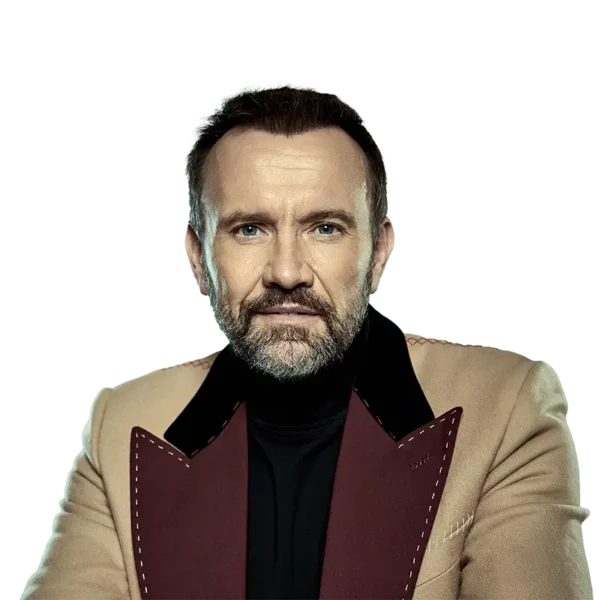
About Mauro
- Appointed Samsung’s inaugural President & Chief Design Officer in April 2025
- Leads Samsung’s global design org of 1,500 across mobile, display & appliances
- First-ever Chief Design Officer at both PepsiCo and 3M
- Built PepsiCo’s design function into a ~400-person global team over 13 years
- Award-winning author; wearable tech exhibited at the Louvre
Table of Contents:
- Why Maura Porcini left PepsiCo for Samsung
- Turning outsider status into a leadership advantage
- Why design in corporations is struggling
- Inside Samsung's new design manifesto
- Why AI needs an "ethical compass"
- Using AI to enhance originality rather than replace it
- How to drive transformation at a big company
- Rethinking tech design beyond minimalism
- The future of AI devices
- Episode Takeaways
Transcript:
A first look at Samsung’s blueprint to win the AI era
Note: Transcripts are automatically generated from episode audio, and are not fully corrected for spelling, grammar, and formatting.
MAURO PORCINI: Samsung Design Open Lab is an open laboratory with a lot of experiments mixed with some commercial products. The reality is, if you let AI do everything, then your company is going to progressively look more and more like the other company, because AI is going to become more and more like a commodity. The human inputs, the interaction between the human perspective and the AI perspective, are what is going to generate something that is original.
BOB SAFIAN: That’s Mauro Porcini, president and chief design officer of Samsung. Since Mauro joined Samsung last year, I’ve been eager to talk with him about the Korean consumer tech giant, its competition with Apple, and the impact of AI on its products. This week, as part of Milan Design Week, Mauro unveiled a slew of new ideas and experiments that give a glimpse of Samsung’s future, and of what may drive the tech future for all of us. So let’s get to it. I’m Bob Safian, and this is Rapid Response.
[THEME MUSIC]
I’m Bob Safian. I’m here with Mauro Porcini, president and chief design officer at Samsung. Mauro, welcome back to Rapid Response.
PORCINI: Ciao, Bob. Hi, everybody. It’s really a pleasure to be back.
Copy LinkWhy Maura Porcini left PepsiCo for Samsung
SAFIAN: You were last on the show in 2022, when you were chief design officer at PepsiCo. Last year, you moved over to Samsung as its first-ever chief design officer. So how different is the task that you’ve taken on from what you did at PepsiCo? You were the first chief design officer there also.
PORCINI: And I was the first at 3M as well. I’m saying this because the jobs are really similar, no matter the industry. I’m an industrial designer. I spent 10 years at 3M in tech, and then I made this first giant leap to go to a completely different kind of industry, in food and beverage. I had never worked in that industry. Then, one year ago, I took another giant step. It’s not just going back to the consumer tech industry, but moving to a completely different region of the world. Because designers observe people, their needs, their wants, and they try to build solutions, the methodologies we use, the approach we have, are transversal to any kind of industry. Obviously, the companies are different, the culture is different. I’m European. I worked for many years in the United States, and now I work in Korea — different worlds, but with very similar challenges.
SAFIAN: It’s probably a decade or more ago, as I recall, you took PepsiCo’s then-CEO Indra Nooyi on a trip to Seoul to study Samsung’s design. Does this feel like it’s full circle for you a little bit?
PORCINI: It is. Actually, even before that, I remember I was a student at university in the ’90s, and I was observing how Samsung was progressively transforming to become an iconic design leader in the world. So I had already been fascinated with Samsung. I hired people out of Samsung to join me, for instance, at 3M. And when I joined PepsiCo, as you just mentioned, I asked Indra if she wanted to go see some companies that were really seriously invested in design. So we took the plane and came all the way to Korea. So it is full circle.
Copy LinkTurning outsider status into a leadership advantage
SAFIAN: As an Italian in American business, and as a designer working with businesspeople, you’ve always been a little bit of an outsider in some ways in the communities you’re in. Now, as you get to Seoul and you’re the first non-Korean president in Samsung’s history, how much of being an outsider is good or bad? And how do you impact the culture without alienating the people who built it?
PORCINI: This idea of being suspended between different worlds — I grew up in Italy, in the north of Italy, with parents from the south, at a moment in time in Italy when the south and the north were really divided. I would go around my neighborhood, and it was clear that I did not belong there. But then when I went to the south on vacation during the summer, I for sure did not belong there either. So already then, when I was a child, I lived in this gray area, suspended between different identities. If you talk to the design world, often they’re like, “Well, but you’re a businessperson.” But then if you talk to the business world, they are totally like, “You are not one of us.” So you don’t belong there either. Often people are uncomfortable when they don’t have a specific label, when they don’t belong.
The message I want to send, especially to the new generations of people who are trying to define their identity, is that often in those gray areas, you can design your own identity and be unique and original. Already, when I moved as an Italian to the United States, there were many things that I didn’t understand. They were alien to me. They were weird to me, honestly. But you need to really analyze yourself, analyze the culture you’re facing, and understand what unique strengths you bring to the table. Here, it’s a culture that is very organized. There is this vision coming from the top, and then an army of people that can execute. If used in the right ways, it’s very powerful, because they are able to move really quickly.
Obviously, I was called to bring in a vision that adds to the one the company already had in design. So I really spent the past year trying to understand the strengths of the company and how I can bring something different. I’m still in the middle of it. I think you need to be very transparent about the fact that you will have missteps and make mistakes. But again, you also need to show as much as possible what you bring to the table.
Copy LinkWhy design in corporations is struggling
SAFIAN: I’ve seen commentaries on LinkedIn from designers talking about your move to Samsung and kind of finding hope in it. I’m curious what that hope is referring to.
PORCINI: Look, I was surprised by those comments too. Design in corporations is somehow struggling. The design community made huge promises in the first decade of this new millennium about the power of design thinking, and then in many instances, design thinking didn’t deliver. Design thinking is important because you need a methodology, you need a process, you need tools, exactly like a painter needs a brush. But then you need the right painter. You need Picasso, because if you give that brush to Picasso, you get something. If you give that brush to my accountant or my kid, you’re going to get something different. Instead, our design community talked too much about the brush, the bristles, the material, and how to design the brush. We forgot that, at the end of the day, what really makes the difference is the thinking of the design thinkers. Do we have the right empathy? Do we read the right signals? Do we have the right intuition? To innovate, you need the tool, you need design thinking, but you also need the right people with the right mindset.
SAFIAN: I was wondering how much of the reference to hope was referring to Samsung specifically. I’m struck that PepsiCo, at least historically, was viewed as the fighter brand compared to Coca-Cola. And now you’re at Samsung, which is enormous, but in consumer tech is kind of the fighter brand to Apple.
PORCINI: Right. The parallel is really interesting. When I joined PepsiCo, and I’m doing the same thing here now at Samsung, what I’m telling my teams is: Forget the other guys. We can’t design against a competitor. That’s really the wrong approach. We need to focus on people and really understand how we can create the most extraordinary solution for them. And when I say solution, I mean the best product, the best service, the best experience, the best communication, and storytelling. If you work against a competitor, you may end up being blind to a series of opportunities that are new to the industry, are different for the industry. If you just focus on the competitor, you may do very interesting things — don’t get me wrong. There are endless cases of companies that focused on beating the competitor and did it very, very well.
But if you really want to create long-term value for your organization, you build a culture that is really human-centered, a culture that is really thinking: What is the ideal world for the people I serve?
Copy LinkInside Samsung’s new design manifesto
SAFIAN: You’ve been at Samsung about a year, and you’re announcing this design manifesto for Samsung’s future this week as part of Milan Design Week. So can you give us a taste of that and how that came together?
PORCINI: The pillar of what we’re doing with design at Samsung is really making sure that designers are the voice of humanity in the organization. I identified four different territories, four categories we need to focus on. The first one is what I call live longer. Then there is live better, live loud, and live on. Longer means all those technologies, most of them wearable technologies, that we have to monitor your body and help you with your physical and mental well-being. Then there are all those technologies that are there for your safety — the safety of yourself, your loved ones, your pet, your home, your belongings. The second one, live better, is all about using technology to free up time to do what you love most. That dimension is literally about using robots and AI to increase the productivity of what you do, or ideally to do things on your behalf so that you can be free of technology and do whatever you want. With or without technology is up to you. It’s your choice.
The third dimension, live loud, is the world of creativity and self-expression. It’s about using technology to express yourself. It could go from creating content for social media all the way to, for instance, creating your start-up from the comfort of your living room using those technologies. Then the fourth dimension is what we call live on. It’s about transcending yourself and preserving memories. We are saving pictures and videos of the people we love. I have thousands and thousands of pictures and videos of my family members, and I have almost nothing of, for instance, my grandparents, especially when they were kids. So already today, when people are not with us, either because they are on another side of the world or maybe because they’re not with us in this world anymore, we can preserve their memories, their emotions, their knowledge.
But more than ever now, with AI, we can literally build digital twins of people. It will happen organically, because the more we share everything we do with AI devices and AI platforms, the more these platforms will learn about us and will be able to replicate us in some form. My parents are in their 80s. I hope they’re going to live for the next 50 years, but when they’re not with me anymore, if I have a moment of difficulty, I would love to have the possibility to ask my dad, “What would you do if you were me?” In all of this, you see that the technology is just a tool. It is at the service of humanity.
SAFIAN: When you come up with these four areas, to what extent do you start with, like, “Here are the products we have now, and we have to serve them,” versus, “Here are the questions, and how do I move the products into them?”
PORCINI: There are three horizons that we’re considering. One is the short horizon. You start from the products of today and try to advance them in an incremental way, even though, obviously, you always try to figure out if there is something breakthrough that you can implement quickly. Then there is a second horizon, where I need to figure out how I can do something that is more radical. But the area where the four categories apply the most is the long-term horizon. This is where you define the future portfolio of the company. There are products that maybe in the future won’t exist anymore, because robots will do a lot of things that other devices do today. So those devices will need to evolve, need to be redesigned. Let’s say in 10 years’ time, in a house where you have multiple kinds of robots — humanoids, utilitarian robots, and robots that are more about emotional companionship — our appliances will change. The robot will be the main interface between you and some of these appliances.
If AI is going to be in your house, how will your TV, your refrigerator, your speakers evolve? What will be their role? What will be the shape of these devices? Where will they be placed? Then you go back to today and start to influence the development of those products in that direction. This is influencing, by the way, eventually strategies of acquisitions, partnerships, or research that you can do.
Copy LinkWhy AI needs an “ethical compass”
SAFIAN: When you talk about having a digital twin of your parents to talk to, some people might find that like, “Ooh, that doesn’t necessarily make me comfortable.” I’m curious whether there’s any conflict within Samsung about how AI and robotics might impact the role of humanity. There must be a lot of discussion about processes and safety guardrails. How do you address all of that?
PORCINI: Look, I’m glad you are mentioning this because, essentially, when I talk about humanity, what I’m trying to push and pitch to the world — not just Samsung, but to the world in general — is the idea that we need an ethical compass. What we can control as business leaders — you, Bob, me, Mauro, all the people listening to us right now — is that we have a role here. No matter our titles, no matter what we do in life, we have a role in reminding the world that what we need is care, is love for humanity. There are designers that don’t care and there are designers that do, just as there are business leaders that don’t care and business leaders that do. It’s my responsibility, and an opportunity that I have because of the voice that I have and the platform these companies give me, to remind the world that in this conversation right now, we shouldn’t talk about AI yes, AI no, or robots yes or robots no.
They’re going to happen. We should talk about rules, policies, constraints, boundaries, yes. But even before that, we should talk about what is going to inform those policies and boundaries. And this is the love I talk about. I make the example of my parents because people can connect with that, because there is an obvious love connection between a son and a father and mother. There are a lot of conversations about the potential of AI, what AI can do or cannot do. But if we talked more about caring for each other, about loving each other, many of the problems we have — the hate that we find on social media, the conflicts that we see all around the world, the problems that we have with technology, the problems that we have with brands and companies — any kind of problem, you find the solution to that in this care for each other, in this love for each other.
This became, many years ago, a mission in life, a calling that I have. And when Samsung called me, I had always been fascinated by the world of consumer electronics. I did my thesis in the ’90s on wearable technologies. So it has always been a passion of mine. Technology is a tool, and you can drive it in one direction or the other. We should all be talking today about what the right direction is. Again, this care for people, for humanity, and making sure that technology is there in the service of people is fundamental.
SAFIAN: Mauro is both absolutely practical and totally aspirational, looking to bring love, as he puts it, into everything we do. So how does he extend that love to his team when managing in the age of AI? And what will the form factor of the future be for tech, whether wearables or otherwise? We’ll talk about that and more after the break. Stay with us.
[AD BREAK]
Before the break, Samsung’s Mauro Porcini explained why he doesn’t focus on Apple when looking to the future. Now we talk about how to transform a business in the age of AI, how form and function will shift in the tech of tomorrow, and what the tech world needs to borrow from the world of fashion, plus why experimentation is the one strategy we all need to embrace. Let’s jump back in.
Copy LinkUsing AI to enhance originality rather than replace it
SAFIAN: You now oversee a global team of, I don’t know, 1,500 designers across mobile, displays, TV, home appliances — everything. You’ve got hubs all over the world. How do you think about getting them up to speed? How do you apply the love there while also delivering the business of being more efficient and faster and all the other things that businesses have pressure to do?
PORCINI: As soon as AI started to be a thing, I remember that in my previous company, I immediately created a task force to jump on it and leverage it. At a moment when a lot of designers were pushing back like crazy on AI, we decided, no, this is an incredible opportunity. Today we’re using it extensively in so many different ways in the company, and it is really increasing productivity, meaning it’s accelerating the speed, but mostly it’s increasing the quality of what we do. I think one of the biggest values that AI brings to the table today is that it’s bringing in a very different perspective, eventually with AI biases.
SAFIAN: Yes. You could replace one bias with another if you’re not careful.
PORCINI: But what is interesting is not my perspective or AI’s perspective, but the blending between the two. This is when I talk about the interaction between human and AI. The reality is, if you let AI do everything, then your company is going to progressively look more and more like the other company, because AI is going to become more and more like a commodity. The human inputs, the interaction between the human perspective and the AI perspective, are what is going to generate something that is original, a third perspective. We live in a world that is very competitive, and obviously cost is a lever that companies have, but the quality of what you do, new ideas, and innovation are incredible levers as well.
SAFIAN: I’m sure not all your designers necessarily feel that way. How do you get them to see it?
PORCINI: The moment you try to transform anything in a company, you have resistance. The strategy I’ve been using over the years — again, not just in AI, because we mentioned at the beginning of this conversation that I was the first-ever chief design officer in these three multinational corporations — is that my life has always been about driving transformation. What I usually do is identify what I call the co-conspirators, people in the organization who get it. With them, I build proof points. I show that actually that thing can drive real value. Then I storytell the heck out of it, internally and externally. I use my personal social media, the social media of the company, interviews, platforms like this one right now, Bob.
Then I use a lot of informal communication within the company to celebrate the new approach, to celebrate what that approach can drive, and to celebrate the people — the co-conspirators — who have been driving this. This is how, progressively, more and more people are like, “Wait a second. I didn’t see the value there. I want to be part of it.” Then you start to scale it up.
Copy LinkHow to drive transformation at a big company
SAFIAN: Where are you now in that run at Samsung, or is it different in different places?
PORCINI: When we talk about me as a designer introducing a new approach, we are for sure at the occasional leap-of-faith stage. I had one full year to identify my co-conspirators, and we’re working on building the proof points, and things are progressing in the right direction. Milan Design Week is an example of how the company is letting me take multiple ideas that embody the new philosophy all the way to the world in public. So there is support, there is sponsorship from the top. They want to drive this evolution of design. I found my co-conspirators, and I’m landing the first projects and the first initiatives.
If you talk instead about AI, similar things, even though in some areas with AI, we’re already scaling up the use of AI in many different areas of the organization, while in other areas we are more in experimentation and trying things. But I think, once again, what is very important when you drive transformation is to be very, very clear about what your journey is going to be, and to understand that it is a journey that requires time. You need to stick to your plan, and you need to be very clear about the different steps you need to take. I’m coming here to Samsung with a very clear playbook for how to do it that worked for me in the past, and it seems that it’s working here as well.
SAFIAN: I was curious: You have the title of president. Is that something that helps the credibility, gives you more impetus within the organization to get all of this done? Or does that title represent that you’re, I don’t know, in charge of some P&L that’s different too?
PORCINI: Like any title in any company, it means that I’m positioned at a certain level in the organization, which is the highest level, close to the CEO. So it’s not about P&L, but it is about credibility. Mostly, it’s the message that Samsung is sending both to the company and employees, and then to the world, that they believe in design — the message, both internal and external.
Copy LinkRethinking tech design beyond minimalism
SAFIAN: What you’re doing at Samsung in some ways are messages that you’re trying to get out much more broadly, but obviously there’s business stuff at stake for Samsung. I’m curious what you think is at stake for Samsung right now and how you and the design group plug into it.
PORCINI: Look, AI is going to change the way we interact with all the devices that surround us. In the company, we have a mobile business — mobile phones and wearables. We have the whole world of television and sound systems, and then we have the whole world of appliances. In consumer electronics, these are the three big businesses. Each of these territories is evolving and transforming through AI. I’ll give you an example: how the television is evolving in the next few years — we’re not talking about the distant future — in the next few years, it’s moving from a device where you are passively receiving content to a device that essentially is your AI companion. How is the design of this device changing? The traditional television before AI is a frameless TV, the screen as thin as possible that you see on the wall. Is that going to be the design of the AI TV, or is it going to be different because this object needs to interact with you in a different way?
Even without considering AI, in an industry where in the past 15 years everything converged toward a very uniform, homogeneous design language — the language of minimalism, very essential, inspired by the Bauhaus, the idea of form follows function, and you strip out anything that is not essential — is that the design language of the future? Why is tech like this, but then you look at fashion, architecture, automotive, lighting, furniture, and you have so many different design languages? There is so much diversity and choice reflecting human diversity. Why, in tech instead, does everything look very, very similar?
SAFIAN: So you’re saying I could have a TV that looks very different from your TV in a way that’s not really available today, but might be economically feasible for Samsung to produce for me.
PORCINI: Yeah. Look, we are all different. Your living room is different from mine. Why do we need to have TVs that all look the same? I created this new formula to direct our design work that moves from form follows function to form and function follow meaning. What does it mean? It means that I’m going to blend form and function on the basis of what is meaningful for different people. This can manifest in multiple ways. One, the most obvious, that is going to happen no matter what I or Samsung or our design team decides, is that in user interfaces, through AI, we are going to mix form and function to create an interface for you that is different from the one that I’m going to have on my phone or my TV. So AI will create a perfect interface for you, and it’s going to happen very soon in the near future.
Already there, from a design standpoint — I don’t want to go too technical — but essentially you don’t have the rigidity of a system that you need to design up front and impose on people anymore. You need to design how form and function will blend in a way that is meaningful to people, but also makes sense for your brand and helps people not be overwhelmed and confused by total freedom. So what are the right boundaries? What is the right flexibility between the freedom that you give and the art direction that you have?
Copy LinkThe future of AI devices
SAFIAN: Because there’s a lot of discussion about what the best form factor for AI is going to be, and hardware and other things. It sounds a little bit like you’re saying there’s not going to be just one. There’s going to be different ones.
PORCINI: Good point. So I was saying one area is the user interface, which is going to be flexible by definition. The other one is the form of these devices. The more technology goes in the direction of wearability, fashion, and things that you wear — but also, we’re talking about television in the home too — the more you have technology that should be warmer, more human, more diverse, the more we need to think about more customization, or the logic of fashion. In furniture design, you buy a chair and often you have it available in different colors, materials, and finishes. The more this technology is going to be on your body, the more that logic of fashion will apply, whether it’s an earbud, eyewear, a pendant, or a pin. So even before we talk about whether it’s a pin or a pendant or an earbud or glasses, it’s before that. No matter what it’s going to be, it’s going to have different kinds of designs.
Form and function will align to what is meaningful to you. Now, to answer your question about what is going to be the right form factor, I think we’re all investigating different kinds of form factors because there are pros and cons to each of them. I think we need to start proposing them to people and see how people react, but we are literally in an experimentation phase. Any company that tells you, “Oh, I know perfectly what that is going to be,” is lying, because that’s not the history of innovation. We know very well that this is a phase of experimentation. So any company in the world working in tech right now, I’m pretty sure, is experimenting with many different kinds of form factors, and some of them are coming out and people are trying them as commercial products.
Some others are just informal concepts. We’re testing them in-house. At Milan Design Week, we are showing a variety of different form factors, from pendants to headbands that you put on your head to eyewear. But the reality is that we are showing multiple of them to say: It may be none of them. We are experimenting with multiple form factors. In the show in Milan, the goal is to communicate a vision and a philosophy that is based on two pillars. One is human centricity. It’s really elevating the quality of life, helping people live longer, better, loud, and on. The other pillar is the design language of human centricity. It’s what we call an expressive language, where form and function flex and blend to be meaningful to people. So then we show many different products, from future concepts of televisions, dressers, wearable devices, speakers, and kitchen experiences, all with AI behind them, enabling a different kind of experience.
Sometimes it’s very functional. Sometimes it’s very emotional. But there is always this blend of different approaches. Sometimes it’s very pop. You feel the K-pop culture of Korea in some of the installations. Sometimes it’s very zen. But this is exactly what we’re talking about: technology that flexes, both in intent and in its manifestation in the design language, to serve humanity. People are all different. And once again, we are in the phase of experimentation. The event is the Samsung Design Open Lab. It’s an open laboratory with a lot of experiments mixed with some commercial products that are already going in that direction, because I wanted people to feel what I felt when I came into the company.
After the first few weeks, they started to show me so many ideas, so many concepts, so many things, and I was like, “Oh my God, the world needs to see this.” Obviously, there is a lot of confidentiality, patents, and this and that, so it’s difficult to share everything we’re working on. But we figured out a way to share the energy of the experimentation, some of the concepts, some of the ideas. We don’t want anybody to focus on the specific form factor of the wearable, for instance. We want to say, look, the world is going in this direction. The most important thing is to focus on humanity. These are some examples of experiments that we’re doing, but this is really a phase of experimentation.
SAFIAN: Well, Mauro, this is great. I always love your enthusiasm and your energy about all this. Thanks for doing this today.
PORCINI: Thank you. Thank you for having me, Bob.
SAFIAN: Mauro is such a distinctive executive. He talks the language of business, but he also talks about love in a way that other business leaders just wouldn’t. What strikes me most may be the clarity of his frameworks — about how to spur change within an organization, about his pillars of product design. Despite all the uncertainty about the future with AI and with robots, he manages to create solid priorities and a compelling direction for movement. As he notes, deferring to AI needn’t be our choice. Originality is within each of us, and we all have a responsibility to shape what’s coming next. I’m Bob Safian. Thanks for listening.
Episode Takeaways
- Samsung design chief Mauro Porcini says his move from 3M to PepsiCo to Samsung proves design leadership travels well, because the job always starts with understanding people.
- Mauro argues that being an outsider can be a strength, and that great design comes less from worshipping process than from thinkers with empathy, intuition, and range.
- Instead of designing against Apple or any rival, he says Samsung should build around human needs, using four futures he calls live longer, better, loud, and on.
- On AI, Mauro pushes an ethical compass rooted in care, while insisting the best results come from blending human judgment with machine intelligence, not handing over the wheel.
- Looking ahead, he says AI will reshape everything from TVs to wearables, and the future won’t be one perfect device but many experimental forms tailored to personal meaning.