Serena Williams on winning in business
Serena Williams doesn’t just defy convention on the court. She’s also applying her competitive mindset to entrepreneurship and venture investing, recently rebranding her firm from Serena Ventures to Starfire Ventures. Serena joins Bob Safian to discuss how she identified the 16 unicorns now in her portfolio, what she looks for in founders, and how partnerships with companies from Nike to Ro fit into her broader vision. Recorded live at the Reckitt Catalyst event in Palm Beach, Serena also opens up about balancing business with family life—and why she still feels the pull of the tennis court.
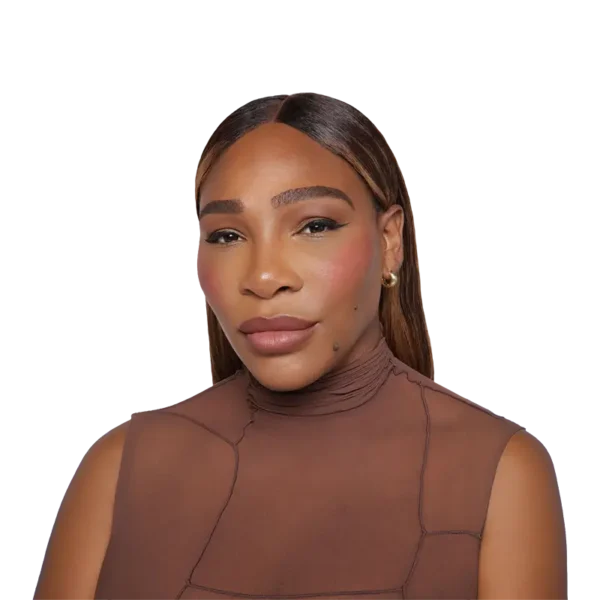
About Serena
- 23 Grand Slam singles titles—the most in the Open Era
- 4 Olympic gold medals
- 14 Grand Slam doubles titles with Venus Williams
- Minority owner, Miami Dolphins
- Backed 16 unicorns via Starfire Ventures
Table of Contents:
- Inside Serena Williams's venture firm
- Why Serena Williams backs underrepresented founders
- What Serena Williams has learned from previous ventures
- Why women's health remains one of the biggest untapped opportunities
- Do Serena Williams and Alexis Ohanian talk business?
- The long-term strategy of brand partnerships and sports ownership
- Serena Williams on returning to professional tennis and balancing family
- The daily hard work behind lasting success
- Episode Takeaways
Transcript:
Serena Williams on winning in business
Note: Transcripts are automatically generated from episode audio, and are not fully corrected for spelling, grammar, and formatting.
SERENA WILLIAMS: The main thing it takes to succeed over time is that you can’t underestimate the power of hard work. A lot of people think, oh, this company, boom, they’re now worth billions and billions of dollars, and it happened overnight. That may have been the case in very few stories, but there are so many other stories where it didn’t happen overnight. You have to work hard, and you have to put in the time every single day. Tough days, easy days, you still have to show up.
BOB SAFIAN: That’s Serena Williams, global icon, tennis champion, and a rising force in the world of venture investing. I sat down with Serena at the Reckitt Catalyst event in Palm Beach, Florida, to talk about what it takes to win as an entrepreneur in today’s competitive marketplace and how she’s trying to make a difference off the court. We talked about her work with Nike and Ro, the rebranding of her business as Starfire Ventures, and how she balances work and family. Plus, what’s motivating what she calls her sporadic return to tennis. It’s an engaging back-and-forth with a few firm volleys and some unexpected slices along the way. So let’s get to it.
I’m Bob Safian, and this is Rapid Response.
[THEME MUSIC]
I’m Bob Safian. I’m here with Serena Williams. Serena, it’s great to be able to chat with you today.
WILLIAMS: It’s so good to chat with you, Bob.
SAFIAN: We first met long ago when I was the editor of Fast Company. You spoke at an event alongside then-Nike CEO Mark Parker. I remember walking backstage with you, and you had these incredible heels on. You were already plenty taller than me without the heels, but you had these incredible heels, and I kept thinking, that’s got to be risky. That’s got to be dangerous. I’m not a professional athlete.
WILLIAMS: I like to take the risk.
SAFIAN: You just owned it.
WILLIAMS: That’s why I got into VC. I love risk.
Copy LinkInside Serena Williams’s venture firm
SAFIAN: You’re known for your sense of culture and fashion and also, of course, as a tremendous athlete. Fewer people know about Serena Ventures—
WILLIAMS: Right.
SAFIAN: Your business and investing on—
WILLIAMS: We’re now Starfire Ventures.
SAFIAN: Starfire Ventures.
WILLIAMS: Yeah. We’ve just rebranded ourselves. You know what? I felt like Serena Ventures is great, but I wanted it to be bigger than me. There are so many amazing people on the team, and there’s so much that we do. I felt like when you put a name on something, it can limit what you do. I want it to live on. I want this to be something that people look at years and years from now and just say they’ve done—
SAFIAN: You don’t think the name Serena is going to live on?
WILLIAMS: No.
SAFIAN: Surely it will.
WILLIAMS: In a different way. You know what? It’s going to live on in a different way. I think it just gives us some freedom to do so much more. And we kept the SV, so it’s still SV, because we also internally always say SV.
SAFIAN: So Starfire has backed something like 16—
WILLIAMS: Yeah, you got it right.
SAFIAN: —unicorns. Do you have an overarching philosophy as an investor, or is it more intuitive, instinctive?
WILLIAMS: Oh, it’s a little bit of both, but I would say it’s 90% philosophy. Then we do need some instinct. I do a lot on instinct, but I think my partner is definitely more, let’s follow things to a T, which is great. So we make a really good team in that way.
SAFIAN: When you and I were on stage with Mark Parker, you quipped that one day you would be the CEO of Nike.
WILLIAMS: Did I say that?
SAFIAN: You did.
WILLIAMS: That’s so crazy.
SAFIAN: You did.
WILLIAMS: Don’t tell Nike that.
SAFIAN: So operating a big brand is no longer your aspiration? You like being an investor more?
WILLIAMS: I wouldn’t write that off, but I could not live in Portland. So I think I may have spoken too soon.
SAFIAN: The weather there is just not up to your Southern Florida standards.
WILLIAMS: No. I need sun. But one keyword that you said was quip, so clearly I wasn’t serious about that.
SAFIAN: Investing, you feel like, is that more in keeping with your spirit, with your goals, than being an operator?
WILLIAMS: I’ve loved that for years. Oh my gosh, I think my first investment was 14 or 15 years ago. Now we’re institutionalized, with institutional investors on our cap table. It’s a lot of work, but it’s also rewarding when you see good results.
Copy LinkWhy Serena Williams backs underrepresented founders
SAFIAN: So today we’re at the Reckitt Catalyst Program in Florida. You’re the inaugural entrepreneur in residence.
WILLIAMS: Yes.
SAFIAN: Mentoring a group of founders who are here. You’ve said being a mentor helps you as much as it helps them. Are there things you’ve learned in the time down here?
WILLIAMS: What I do every day in VC, we don’t necessarily see a lot of companies and founders like this that are solving so many problems for underrepresented people. And it’s such a feel-good experience. Every now and then, you’ll get a company in the portfolio, like one in our portfolio is Esusu, that does feel good, does do good, and is still a unicorn. Those are amazing.
But realistically, you don’t see those every single day. We want to win. We want to make money for our LPs. But at the same time, it’s so good to be a part of something like Reckitt Catalyst. It’s just so exciting to be part of a bigger story and to help people.
SAFIAN: You mentioned that Reckitt’s got an emphasis on underrepresented founders. At SV, 70% or something of your portfolio is women or people of color as founders. How much of that is about financial calculation, that there’s a particular opportunity because those communities aren’t being seen? And how much of it is a broader imperative for you?
WILLIAMS: It’s a broader imperative. We see different companies that most people don’t get to see because they don’t open the doors. So our team, and the way I’ve hired our team, means a lot more women do feel comfortable coming to us. And by the way, a lot of those companies are doing very well right now. They wouldn’t have the opportunity to do well if we weren’t on their cap table.
For us, we invest in everyone. We invest in people that look like you. We invest in people who look like me. It’s just that we do see a lot of women and a lot of underrepresented founders because they know that we’ll hear their story. And we don’t invest in all of them, by no means. We are only investing in winners. If we don’t feel the company is going to return our fund, we’re not going to invest in them. That’s just how we look at it.
SAFIAN: This is not philanthropy.
WILLIAMS: No, this isn’t philanthropy. But women aren’t doing business as philanthropy, and people of color aren’t either. We’re doing business to make money. And it’s sad, but some people don’t understand that.
SAFIAN: It sounds like there’s opportunity there because other investors maybe aren’t open to these kinds of founders.
WILLIAMS: It’s not that they’re not open to that. I wouldn’t necessarily put another investor down. They just subconsciously don’t see it, or they subconsciously wipe it out. They’re just not thinking about it. But we’re thinking about everything. We’re thinking about the next billion-dollar company, the next trillion-dollar company, and how to be on those cap tables as well.
Copy LinkWhat Serena Williams has learned from previous ventures
SAFIAN: You’ve had some tough moments yourself as an entrepreneur. S by Serena isn’t around anymore. Wyn Beauty, which you launched with Ulta, didn’t get traction. How do you advise other entrepreneurs about the trouble spots? I mean, you certainly have always had to overcome trouble spots in your tennis career. How do you advise them about that?
WILLIAMS: S by was a choice. I made the decision to pause because not all money is good money. Our investor was a great person, by all means, a wonderful individual. But a lot of the things that I said as a VC investor weren’t taken seriously. And everything that I said would happen, happened. I was like, OK, this is not what I want. I’m going to take this off the market for now and pause.
For me, when something doesn’t work out for you, you’re able to sit in places like Reckitt Catalyst and give great advice to people. You can let them know to really get to know who you’re putting on your cap table.
SAFIAN: You can’t be an entrepreneur or a businessperson and win all the time.
WILLIAMS: No. I lost Grand Slams.
SAFIAN: I mean, that is the reality of it.
WILLIAMS: Yeah. But you always learn from that. And I always say I don’t even like the word failure because I don’t feel that anything is a failure as long as you keep trying.
SAFIAN: And I guess you also have to — I don’t know whether this is the right term — but you sort of have to expect that you’re going to fail sometimes. You don’t want to be going in there.
WILLIAMS: Yeah, I don’t know if that’s the right term, but I understand what you’re saying. It’s not expecting to fail, but expecting challenges, maybe. Expecting there to be a lot of tough challenges.
SAFIAN: And not being stopped by them when it happens.
WILLIAMS: Yes, and not being stopped by them.
SAFIAN: If your knee hurts, sometimes you can’t do what you want to do, but that doesn’t mean you’re never going to do it.
WILLIAMS: You can’t do it, but that doesn’t mean you’re never going to do it again. You know what I mean?
SAFIAN: I don’t know what I’m asking.
WILLIAMS: I’m not sure what that question is.
SAFIAN: I don’t know what we’re talking about here.
WILLIAMS: I’m not sure what in the world you’re talking about either.
Copy LinkWhy women’s health remains one of the biggest untapped opportunities
SAFIAN: So this Reckitt Catalyst, it’s focused on founders in the health and wellness space.
WILLIAMS: And the hygiene space as well, yes.
SAFIAN: I mean, your portfolio has included several health and wellness firms, if I have this right: Ritual, Factor, Will Perform. I know you’ve been a spokesperson for Ro, whose CEO, Zach Reitano, has been a guest on the show. What kind of role do you see for yourself in the health space overall? Why is it a focus area for you?
WILLIAMS: Yeah, I mean, we all need it. And I think if there’s one thing everyone needs, it’s health. Also in our current portfolio, we have Teal Health, which is really specializing in cervical cancer testing at home. It can be very uncomfortable when you go to the doctor to do that, but now you can do it at home. And we’re realizing that a lot of women just don’t do it because of the circumstances. MIDI, MIDI Health.
SAFIAN: Oh, sure. Yes.
WILLIAMS: Oh my goodness, yes. Another unicorn.
In particular with women’s health, I think a lot of that piece of the pie has been left on the ground. And that’s 50% of the population, so that’s a huge opportunity. If you want to think of it in monetary value, it’s huge. But in addition to that, just helping people is huge, and helping women, who have traditionally been forgotten.
Me being a woman as well, obviously I want my health and wellness too. I have two daughters. I want them to have the optimum health and wellness that they can have as well. And how do we get there?
SAFIAN: I mentioned your work with Ro. Did you have any second thoughts about being a face for GLP-1s?
WILLIAMS: Not at all. I feel like, the more we do research on GLP-1s and the more people understand, I always said it’s not — I mean, it does help you lose weight — but it is so much more than that.
When I first started with Ro, there were a lot of things that I couldn’t say, like, “Oh, I can’t say that it helps with other things as well,” because the testing still wasn’t out yet. But my blood tests are so much better. My heart — I didn’t even realize that I could have been a candidate for heart disease. But once I started GLP-1, my tests showed that I’m no longer a candidate for that.
And diabetes, and just so many different things, and also inflammation — it helps with that. I mean, it’s helping in so many different ways that I just felt like… Even at the time, I didn’t know some of that stuff. And some of the more controversial things that I won’t say it helps with — but those studies are coming out soon — it’s helping with those things too.
SAFIAN: Yeah, it’s like a miracle in so many ways, and for a lot of people.
WILLIAMS: It is a miracle for a lot of people. Yeah, so I’m a big believer in that. I’ve known Zach as well for many years. My husband did his round many years ago, before they became Ro. They were actually a different company at the time, and he invested in them. He invested in Zach, so I met him eons ago. Zach always wanted to work with me, and I always wanted to work with Zach because I loved his origin story about how he started Ro. I remember sitting in our old office and thinking, “This is amazing, man. One day the stars will align,” and it happened to align with GLP-1s. So we have a long history there.
Copy LinkDo Serena Williams and Alexis Ohanian talk business?
SAFIAN: You mentioned that your husband initially connected you. Alexis Ohanian co-founded Reddit. He’s also an early-stage investor in 776, and he helped found Initialized Capital. How much do you two talk about investing?
WILLIAMS: We don’t talk a lot about investing. As he says, we keep it church and state at home. He’s so busy. He works probably 20 hours a day, maybe more. So he’s just a workaholic, which is great.
SAFIAN: I was curious because I —
WILLIAMS: I like to leave our other time for other things.
SAFIAN: I was curious because I did a story once with Mark Zuckerberg and his wife, Priscilla, and they would have a weekly date, basically, where they would talk business.
WILLIAMS: Oh, nice.
SAFIAN: I don’t know whether that’s nice or not, but it was their way of sort of segregating it.
WILLIAMS: Well, if it’s like a weekly date, yeah. In other words, that’s the time when they talk business. Other times they can just be themselves.
SAFIAN: They can be themselves.
WILLIAMS: I like that. I never knew that.
SAFIAN: I’m glad I could share something with Serena that she might find helpful. Her life is so jam-packed, it’s daunting for even an outsider to grasp it. So how does she divide her time between work, family, and tennis? And does she have any advice about the future of the women’s sports business? We’ll talk about that and more after the break. Stay with us.
[AD BREAK]
Before the break, Serena Williams talked about her investing efforts at Starfire Ventures and what she gets out of being an entrepreneur in residence for Reckitt Catalyst. Now she talks about how she chooses brand endorsements, her ownership stakes in women’s sports teams, and the boundaries she embraces in juggling the demands of her personal and professional life. Plus, why she’s returned to tennis on what she calls a sporadic basis. Let’s jump back in.
Copy LinkThe long-term strategy of brand partnerships and sports ownership
Your Nike relationship makes me think about all the different brands that you’ve worked with over the years. To what extent was that a training ground for you as an investor? Not just Nike specifically, but overall, trying to decide which brands to work with and what—
WILLIAMS: Nike was always on my list. I remember I even wore Nike before I was signed with them because I was trying to hint, hint. I definitely wanted to be with them, and now I’m with them in a different way, in a bigger way.
SAFIAN: When you’re deciding on a brand you’re going to work with, do you research them the way you would research an investment?
WILLIAMS: Nowadays, absolutely. In the Nike days, I didn’t. It was just something that was iconic. It was Jordan. It was something you wanted to be with, and they were really elite. So I think a lot of athletes at the time felt that way.
But now, to answer your question, yes. Before I work with anyone, I’m doing so much research. My whole team is doing research about the brand, how it aligns with me, and whether it’s authentic. Do I use it? I always like to do things that are authentic to me because otherwise I feel like it’s just not going to be real, and I don’t like that.
SAFIAN: You’ve also invested in professional sports, women’s professional sports, particularly helping to launch LA’s Angel City in the NWSL. You’re now doing the same for the WNBA’s Toronto Tempo. You helped redefine women’s tennis as a business. Does it surprise you that it’s taking so long to get to parity in some of these other sports?
WILLIAMS: I was on a panel the other day, and we talked about how usually it’s like 30 years in women’s basketball. We’re literally at that 30-year mark from when the WNBA started, and now we’re seeing the fruits of that. I thought that was a really interesting point because I never thought of it like that. Then I started thinking about tennis and how we had Billie Jean King, and then 30 years later it became tennis. So I was like, “Oh, that’s interesting.”
Is there science or are there numbers to back that? I don’t know. I’m just telling you I was on a panel, and that’s what was said, and I found it interesting.
SAFIAN: I can imagine that some of these teams, I mean, you were so instrumental in pushing that opportunity open in tennis, to what extent are they coming to you for advice about how to make that leap now?
WILLIAMS: No. Although you said it, I didn’t. They should. I feel like there are a lot of things I could advise on. Is it right? Who knows? But usually what I say happens.
SAFIAN: What would you tell them?
WILLIAMS: I’m not going to get into that because I would like for them to come to me for advice, or I can go to them and give them some advice.
Copy LinkSerena Williams on returning to professional tennis and balancing family
SAFIAN: Fair enough. So you’ve got your investing work, SV, and your brand deals. And you’ve got your husband, and you’ve got your daughters. And amid all that, you’re returning to professional tennis. How do you make—
WILLIAMS: Very, very sporadically.
SAFIAN: Very sporadically.
WILLIAMS: Maybe I’m here, maybe I’m there. Who knows? Very sporadically.
SAFIAN: How do you decide how to spend your time?
WILLIAMS: I’m a very organized person. I’m an A-type personality. Most of my time is with Starfire, Serena Ventures. That’s where I spend 90% of my time. Outside of my kids, when I’m not with my children as a mom, I would say most of my time is spent with Ventures, and that’s just how—
SAFIAN: Are you really the school mom for Olympia’s school?
WILLIAMS: I was when she was in second grade, and I can’t believe that was already almost a year and a half ago. I loved being the school mom. That was great. I loved it.
SAFIAN: They grow so fast.
WILLIAMS: I still try to volunteer. In fact, this year I want to volunteer for the dance because I do have a dance background, believe it or not, and I would love to offer some help.
SAFIAN: I think I may have seen some videos of you dancing.
WILLIAMS: Yes.
SAFIAN: I may have seen them.
WILLIAMS: I love that part of the world. But now, with my partner at SV, I have a lot more time to do other things, like be more with my kids and to go back sporadically every blue moon. You never know.
And tennis, which has been really fun. It’s good to have those opportunities again because she’s amazing. She’s the Serena Williams of VC, so I love that she’s on our team: Beth Ferreira.
SAFIAN: As a type A, organized person, do you have a structure you use?
WILLIAMS: I do. I realize now I have a lot of boundaries, time boundaries. Even in training, when I went back for Wimbledon, I was like, listen, I’m willing to put this in: an hour here, two hours there, and that’s that. What happens, happens. This is what I’m willing to do. I’m not going back out there to win Grand Slams. I have a full-time job. But this is what I’m willing to do, and this is how I’m willing to show up.
It would have worked if my knee didn’t swell. But I had fun. It was about putting boundaries in place because I’m a mom now, and I think more than anything, my kids need me.
SAFIAN: And that discipline, though, I imagine it’s another one of-
WILLIAMS: I’m scheduled out. I’m scheduled out to the hour.
SAFIAN: Yeah. I was thinking of the Reckitt folks who you’re mentoring, teaching them to be disciplined too. Discipline has always been part of your life.
WILLIAMS: Yeah, discipline and boundaries, I think. Listen, I have boundaries. This is the time I need to put into my VC. This is the time I need to put into my kids. And those take a lot more than other things. So you’re setting those priorities.
SAFIAN: I talked on the podcast recently with Maria Sharapova, and she talked about how the competitiveness of business and being in the boardroom taps some of the fire of playing. But then she also said that nothing matches the adrenaline of being on the court. I wondered whether that’s part of the reason why you want to compete again, with everything else going on in your life.
WILLIAMS: No.
SAFIAN: What is it for you? Is it for your daughters? What’s the—
WILLIAMS: I would say it’s more for my kids than anything.
SAFIAN: To show them that you can?
WILLIAMS: Mostly for Olympia because she’s 8, and the other one’s only 2. Adira is only 2. But it’s nice for them both to get that. Adira is incredibly, wickedly smart. She even says, “I’m going to play tennis like mama,” even before I played at Wimbledon. So she gets it. But it’s nice for them to have that opportunity. And I could still play. I retired because I wanted to have children, many children. Then I had Adira, and I was like—
SAFIAN: But maybe two is as many.
WILLIAMS: Two is as many, right? I still had a lot in me, as you could see. It was just a different decision. So, yeah.
Copy LinkThe daily hard work behind lasting success
SAFIAN: For the listeners to this show — the businesspeople, the entrepreneurs, the investors — do you have any advice for them on how to think about their journey, their goals, and what it takes to succeed over time? What’s worthwhile? What do you need to do to stay grounded?
WILLIAMS: I think the main thing it takes to succeed over time is that you can’t underestimate the power of hard work. A lot of people think, “Oh, this company, boom, they’re now billions and billions of dollars, and it happened overnight.” That may have been the case in very few stories. But there are so many other stories where it didn’t happen overnight. You have to work hard, and you have to put in the time every single day. It’s very redundant, and you just have to show up every day. Whether it’s tough days or easy days, you still have to show up. You can’t underestimate the power of hard work.
SAFIAN: I want to say that I appreciate you showing up for this after what I know has been a very busy day, and thanks for doing it.
WILLIAMS: Thank you.
SAFIAN: It is a little surreal to spend time with Serena. She’s very human, and at the same time, she’s Serena. Her ambition is high in business, as in tennis, but she’s also earned perspective on both fronts. She’s using her status to make a positive impact on the world through women’s health, women’s sports, mentorship, and her commitment to her family is real. I saw her check in on her kids before and after our taping.
What strikes me most is the balancing act she’s engaged in and how hard it is to create time to just be herself. She mentioned wanting to volunteer for her daughter’s school dance. I hope she can. All of us need to make space for the things that feed our soul and our heart, whether that’s dance or tennis or something else. It gives us the strength to carry through the tougher moments and keep up that hard work.
I’m Bob Safian. Thanks for listening.
Episode Takeaways
- Serena Williams says the rebrand from Serena Ventures to Starfire Ventures was about building something bigger than herself, with room to outlast any one name.
- As an investor, Serena balances instinct with discipline, while keeping a sharp focus on backing winners and opening doors to founders others too often overlook.
- She frames setbacks as lessons, not failures, arguing that entrepreneurs need the right partners on the cap table and the resilience to push through hard stretches.
- In health and wellness, Serena sees women’s health as one of the biggest untapped opportunities, and she makes the case that GLP-1s can deliver benefits far beyond weight loss.
- Serena says boundaries and discipline are what make her packed life work, with most of her time going to Starfire and family, and tennis returning only on a very sporadic basis.