ChatGPT doesn’t want you to email your ex
The rhetoric around AI tends to swing between doomerism and idealism, but the reality is much more nuanced. In this special live episode, Pioneers of AI turns the tables; MIT Sloan professor Sinan Aral interviews host Rana el Kaliouby and gets her candid perspective on the current state of AI. Dr. el Kaliouby makes the case for human-centric artificial intelligence that augments humans, rather than replaces them. She also speaks frankly on the risks of a male dominated startup landscape, defends why AI needs EQ, and shares a piece of uncharacteristically critical advice she received from ChatGPT.
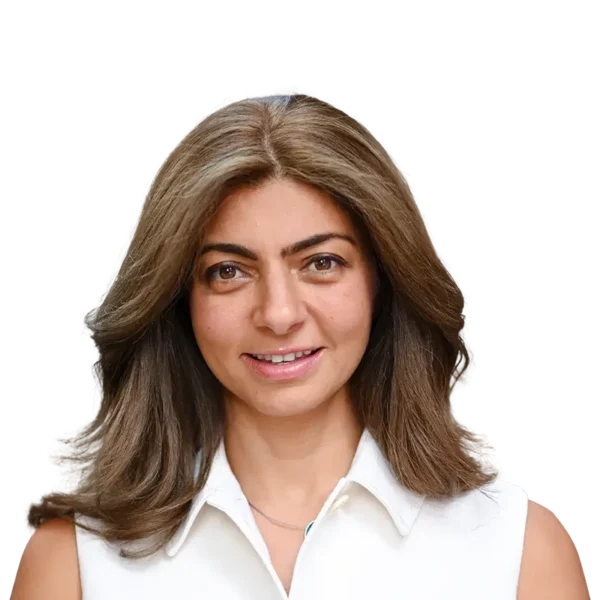
About Rana
- Founded MIT spinout Affectiva; sold in 2021
- Host, Pioneers of AI podcast
- Blue Tulip Ventures co-founder & managing partner
- Harvard Business School executive fellow
- Fortune 40 Under 40; Forbes Top 50 Women in Tech
Table of Contents:
- What building a company teaches you about investing in the next wave of AI
- Why human-centric AI is the investment thesis to watch
- How a lack of diversity can shape the AI products we all use
- Why emotional intelligence could become AI's biggest advantage
- What Rana's family reveals about two very different futures for AI adoption
- How AI coworkers could reshape org charts
- Why the next frontier of AI is understanding human emotion
- How to balance AI creativity and the risks of overreliance
- Where AI could have the biggest impact on health
- What leaders need to do now to prepare for AI
- Episode Takeaways
Transcript:
ChatGPT doesn’t want you to email your ex
Note: Transcripts are automatically generated from episode audio, and are not fully corrected for spelling, grammar, and formatting.
RANA EL KALIOUBY: Hi, everyone — it’s Rana. Today, we’re bringing you something a little different. Earlier this month, MIT Sloan professor, entrepreneur and VC Sinan Aral interviewed me at MIT’s BIG AI conference, which stands for Business Implications of Gen AI.
I had an awesome time. I got to share my take on the AI startup landscape, how AI is changing the future of work, and I got a bit TMI and talked about how I use ChatGPT as my dating coach. We had fun!
For today’s show, I’m really excited to share our conversation.
I’m Rana El Kaliouby, and this is Pioneers of AI, a podcast taking you behind the scenes of the AI revolution.
SINAN ARAL: All right. Welcome back to campus. I know you live in Boston, too. I just want to start with this transition that I think is very cool.
I want to check myself on a metaphor that I like to use. I’m also a startup founder turned venture capitalist, and the way I like to describe that experience is that when you’re building a startup, it’s like growing a single tree.
EL KALIOUBY: Right.
ARAL: You’re worried about where it’s going to get its nutrients. I’ve got to get these pests away from the tree. I’ve got to make sure it can see the canopy so it can get sunlight, and so on. Then when you transition to being an investor, you’re more worried about the forest.
So you see lots of different trees, and you’re like, in this part of the forest, which of those trees is going to succeed?
And how can these trees complement each other in a way that shares nutrients or something? Does this metaphor hold for you?
EL KALIOUBY: I love that metaphor.
Copy LinkWhat building a company teaches you about investing in the next wave of AI
ARAL: You went from Affectiva, and you’re now doing Blue Tulip. I want to know, not that I really care about the metaphor, but I am interested in whether it relates to your experience.
What I want to know is: How do you see these two different experiences of founding and investing, and what does each teach the other?
EL KALIOUBY: Yeah. First of all, I think it’s very helpful to be an investor who has walked in the shoes of being a founder, being an entrepreneur, being an exited founder. I find that a lot of founders really appreciate that experience — that I can talk about the challenges in fundraising.
I can talk about the challenges of having a team and hiring and firing and all of that. So there’s definitely a lot to be said for being an operator turned investor. For me, I sold the company in June of 2021. I could see that this was going to be a tipping point in AI.
I started my Ph.D. back in 2000, so I’ve been in this space for many, many years, as I know you have been, too.
ARAL: I started my Ph.D. in 2000 as well, so yeah, spot on.
EL KALIOUBY: Yeah. So I felt like, okay, I’ve done all this work for this moment in time. I thought a lot about whether I wanted to go back into building another startup, but I just feel like this is an opportunity to have impact at scale by parallelizing what I do and what I care about, and using capital to invest where I think there’s potential value and where it aligns with my thesis around AI.
ARAL: Do you think you could go back and start a company, or do you get the itch every once in a while?
EL KALIOUBY: I think I was in love with Affectiva. I have two kids, 22 and 17 now, and I started Affectiva when my daughter was 6 and my son was a newborn. We incorporated the company when my son was born, within a week of each other.
So I always joke that Affectiva was my third baby.
Sometimes they did compete for my resources. My kids probably have PTSD or something. Anyway, I feel like I have to fall in love with an idea that much again to start a company, and I haven’t found that idea yet.
So never say never, but for now I love investing. I love supporting founders on their journey. There’s something magical about this early stage.
ARAL: It’s energizing to talk to founders and to see the passion that each of them has for their specific project. Supporting that is a very rewarding experience.
EL KALIOUBY: Yeah, and being able to shape that journey, whether it’s through introductions or by sharing lived experience. So for now, I’m loving being an investor.
Copy LinkWhy human-centric AI is the investment thesis to watch
ARAL: So Blue Tulip is focused on AI, but it’s also focused on trying to invest specifically in more humanizing AI. Is that appropriate to say?
EL KALIOUBY: Yeah. Our investment thesis is what we call human-centric AI.
That’s AI that unlocks human potential, not necessarily replaces human abilities, and basically augments humans. We can debate that, because there are instances where jobs are going to be automated.
ARAL: We’re going to talk about that a little, for sure.
EL KALIOUBY: Sure. We also have this thesis that there are big problems in the world, and AI presents an opportunity to solve them. So we think about it as AI that’s good for people, good for the planet, and ethical and responsible.
ARAL: Yeah. I think that’s a reasonable North Star. One thing that I heard you say recently, which I think was spot on and is a big concern, is that you warned that AI risks becoming a boys club and widening the wealth gap for women.
Can you explain why you think that’s a risk, and where exactly the widening is likely to be seen first? Is it founding? Is it funding, product design, hiring, ownership, or just interacting with AI? What do you think?
EL KALIOUBY: All of the above. I recognize that this is not a very popular topic to bring up these days.
I get a daily digest of AI funding news, and one of these is TechCrunch. TechCrunch does a very interesting thing in how it announces new funding rounds. There’s usually a headline like, I don’t know, “raises $100 million at a $5 billion valuation,” and then a picture of the founders. I started noticing a pattern. It was usually two or three men in the headline.
Day after day, I was like, okay, this is interesting. The reason this concerns me is that, if you think about it, AI is creating massive economic opportunity. And it’s not just economic opportunity for the team founding these companies — it’s also about who’s investing, because ideally when these companies are successful, the investors are successful, too.
Actually, the way I think about it is: Who’s on my cap table as an investor?
It’s great to have wealthy older men on my cap table. Thank you for supporting me. But I also want to ensure that women are on these cap tables, too, so that we don’t fast-forward five years from now, or a decade from now, and find that we’ve exacerbated the gender wealth gap. So that’s something I care deeply about.
I’m not just investing in women. I actually feel very strongly that I have to invest in the winning companies.
ARAL: Sure.
EL KALIOUBY: But I also worry about what type of AI we’re building if it’s not inclusive. AI democratizes access, but we need to democratize the building part of it, too.
Copy LinkHow a lack of diversity can shape the AI products we all use
ARAL: How do you think that could manifest? Let’s say the majority of designers, programmers and leadership at AI companies are men, not women. What do you think that does to the product that comes out the other side and how it interacts and relates?
EL KALIOUBY: I think there are a lot of examples of that, but the one that is most visual may be that there’s a lot of investment going into humanoid robots.
ARAL: Yes.
EL KALIOUBY: There is a lot of potential opportunity — economic opportunity, but also use cases — in this space. I’ve spent a lot of time, really my entire career, thinking about how to marry emotional and social intelligence with cognitive intelligence.
I think the teams building these humanoid robots are obsessed with the IQ and functionality of the robot, and they’re not really thinking about how these robots are going to coexist with us. For example, I won’t name the company, but one of the leading humanoid robots is able to fold your laundry and organize your living room.
But if you look at it, I don’t want that robot in my house. It is scary, right? And that’s not the only way to build that. I interviewed this young woman, Grace Brown. Her robot is called Dr. Abby, and the company is called Ada. It has social capabilities. She has an emotional intelligence brain behind the robot.
It’s very warm. It’s accessible. It’s relatable. I think we need to balance both, and that’s one example where I wonder if the teams building leading humanoid robots are diverse — not just women, but diverse perspectives.
ARAL: Yeah.
EL KALIOUBY: I don’t know. Do you have any thoughts on that?
ARAL: You mentioned warmth as one of the factors. We did a global AI negotiations competition here at MIT where people submitted prompts for agents that would negotiate over nine different scenarios. They had to be flexible in negotiating across different situations, and it was AI negotiations.
So no humans were involved. You just set your bot, and then they negotiate. We didn’t expect that human emotional dimensions would be as important as they were in succeeding in completely automated negotiations. Warmth was one of the biggest determinants of success, and it was good for claiming value and creating value.
The reason it claimed more value was not because it was aggressively taking value. It was because it reached deals more often.
EL KALIOUBY: Interesting.
ARAL: When you looked only at the bots that reached deals, they actually claimed less value. But overall, they claimed more value because they were more successful in getting to a conclusion.
So I think we’re missing big swaths of social elements that need to be part of what we put into AI.
EL KALIOUBY: Yeah, totally. If you think about human intelligence, your IQ matters, but your emotional intelligence matters even more in business. The best managers and leaders have high EQ. The best partners, the best friends.
So it makes a lot of sense to me that this would be the case for AI as well, especially AI that is going to collaborate and work alongside us. If you think about AI coworkers and organizations, a lot of our organizations today are already hybrid, with AI agents working alongside humans. Emotional intelligence skills will matter for building trust.
Copy LinkWhy emotional intelligence could become AI’s biggest advantage
ARAL: Is this what you mean by relationship-intelligent AI?
EL KALIOUBY: It’s a broad bucket. I think there’s a concern that AI is replacing human connections and human relationships. There are obviously some examples of that.
But my view is that we can use AI to augment and amplify human relationships by injecting AI to help you. I track my steps, I track my sleep, but there’s no current way to really track your relationships and the quality and health of those relationships, or to have something proactive that can help organize and cultivate your network.
The best example I like to give is this: How many people here have watched The Devil Wears Prada, by the way? Sequel coming out soon. There’s a scene where Meryl Streep is at this gala, and this guy and his wife are walking toward her. She’s blanking on the guy’s name, and Anne Hathaway is behind her and leans in and tells her.
I’m like, that’s the chief of staff AI I want.
EL KALIOUBY: I want the AI in my mirror that can source what it sees with computer vision and perception, connect it to all your LinkedIn connections, understand the context of the conversation, and help you be a smarter, more connected, more empathetic human being.
ARAL: Story for another day, but that is the second startup that we founded, called Human, H-U-M-I-N. We built this to try to do this for relationships, pre-AI, and we sold the business to Tinder in 2016.
They were interested in the relationship aspect, and we were kind of at a point where we were either going to squander a little bit or exit successfully. So we took a strategic decision. It wasn’t exactly what we had envisioned when we started the company.
But as you know, as a founder and an entrepreneur, there are all sorts of things that can break your stride in different ways. So that was the goal, even if it wasn’t the exact endpoint we got to.
EL KALIOUBY: I think timing is also really key. I do believe now, with generative AI, you can take all this. Relationships are messy. Think about where your relationship data sits. For me, it’s my emails, my calendars, my WhatsApp, my DMs. It’s a mess. LinkedIn, Instagram, live conversations, my AI note taker, my own notes.
It’s all unstructured data, and it’s spread across disparate sources. Now AI can actually take all of that in and allow you to interrogate it conversationally. So I’m really excited.
We are investors in two companies that are building different pieces of this market. One is called GoodWord, and they’re doing it for consumers. The other is Via AI, which is a Boston-based company founded by David Chang, who’s a serial entrepreneur in the Boston ecosystem.
He’s very focused on the sales application. If you wanted a warm introduction to somebody at IDEO, it could say, “Oh, well, Rana knows Sinan,” and you can ask for one.
ARAL: This is very similar to a very old company called Visible Path. They did this back when email was the main source. One thing that we found hard was getting people to authorize all of those connections — LinkedIn, email and everything else.
We would get people in, and then we really had to work hard to get them to say, “Okay, now connect your LinkedIn. Now connect your email.” And people were like, “I don’t know about all that.”
EL KALIOUBY: Yeah. Trust is a big issue if you’re going to share all of your relationship data.
We’re going to take a break. More of this conversation in a minute.
[AD BREAK]
Copy LinkWhat Rana’s family reveals about two very different futures for AI adoption
ARAL: So you mentioned your kids, and we were talking earlier about the fact that you’re experiencing this amazing bifurcation. Both your kids are super smart and super successful. I’d love for you to talk about them for a minute, but one of them has wholeheartedly embraced AI and the other one completely will not touch AI. Is that true?
EL KALIOUBY: Yes. They’re sort of at opposite ends of the spectrum, which I think is a microcosm of the AI world we have today. So yes, my daughter Jenna is 22. She just graduated from across the river.
ARAL: Yeah.
EL KALIOUBY: She’s a food anthropologist, which I did not know was a thing, but it is. I think AI is not going to automate her job.
She is all about human connection. She’s building a third space in Cambridge where they host real conversations. It’s a cultural salon meets café, and she just will not use AI. Her argument is, “I have a smart brain. I have lived experience. AI doesn’t.” Not even ChatGPT to draft an email.
ARAL: Does she fear eroding her knowledge, or does she just think it’s not worth it?
EL KALIOUBY: She just doesn’t trust it, and she doesn’t trust that it will come up with something better than what she will do.
So I find that fascinating.
My son —
ARAL: She’s probably right, by the way.
EL KALIOUBY: You think?
ARAL: I think so.
EL KALIOUBY: Actually, part of me is like — because I believe strongly that AI is not going anywhere, obviously — and for her to be ahead of the curve, she needs to embrace the technology and play with it and experiment with it. But I love that she’s doubling down on humans. That’s what she’s betting on, and I love that.
My son, on the other hand, is 17. He’s a junior in high school, and he’s literally my AI teacher. I spend most of my waking hours immersed in the AI ecosystem, and he still is my teacher. He uses Manus AI to do everything.
He uploads his textbooks from school to NotebookLM, and it spits back a podcast, and that’s how he studies. He’s been using it to scan these Egyptology archives from the 1920s that are in Arabic, and he translates them. It’s just fascinating. He’s always trying new things.
So he’s all in, and it’s just so interesting to see both.
ARAL: Yeah. It’s disruptive in your life to adopt AI because you’ve been doing these things in a certain way, and there’s a retooling. We tell organizations this: that there’s going to need to be a retooling. You’re going to have disruption. You’re going to have to redesign process, retrain people, reskill and so on.
It happens at the individual level as well, because we had a way of doing something, and now when we’re going to say, “Okay, I’m going to try AI to augment this or do this differently,” we have to adapt ourselves.
Copy LinkHow AI coworkers could reshape org charts
ARAL: In terms of organizations, you’ve also talked about this idea of onboarding AI into the org chart. Can you tell us what that means to you? Which business functions are most ready to do that, and where do you think managers are underestimating the disruption?
EL KALIOUBY: Yeah. One of our investment theses is that AI is shifting how value is being created, and one way it’s doing that is through this idea of an AI coworker. The coworker could be a software agent, or it could be physical AI — an actual robot.
If you think about it, we actually have companies doing this. For example, I’m an investor in a company called Synthpop, another Boston-based company, and they are building an AI health care administrator.
The way they started was by automating a very simple task: patient intake. Then over time, because they’re embedded in the workflow, they expanded into more and more workflows. Their goal is to eventually automate the series of tasks that a health care administrator does.
Which means that, perhaps as a health organization, you won’t need as many health care administrators as you currently have. I believe you’ll still need human oversight, but it’ll look different. The task of a human health care administrator may become supervising a team of AI agents.
But the point is, a lot of organizations are now becoming a hybrid of humans and AI working alongside each other. I keep imagining: What does this future org chart look like? Because sometimes you might have a human manager overseeing AI, or maybe an AI manager overseeing a team of humans and AI.
So I think that’s exciting. I also think we totally underestimate, going back to the human element, what this looks like in practice. How do you build trust? How do you build accountability? How do you build clarity?
Even the question of who you delegate jobs to — what’s the framework for deciding which jobs go to AI versus humans? Who gets to do what?
I think we’re all grappling with that.
And then ultimately, how do you create culture? At Affectiva, for example — and I’m sure it was the same for your startup — company culture is so key.
ARAL: Yes. A hundred percent.
EL KALIOUBY: How do you do that when you’ve got a bunch of AIs and a bunch of humans?
ARAL: Yeah. Are AIs part of the culture? Are AIs influencing the culture? I never thought about the concept of having an AI manager. That one’s throwing me for a loop. I’m still trying to imagine having a conversation with my boss, who is an AI, about my pay or something.
EL KALIOUBY: I wonder if our cultural norms will shift. I’ve been on a few meetings — not one-on-ones, but maybe webinars or larger conversations — where people have been sending their note takers.
ARAL: Yeah.
EL KALIOUBY: They’re not coming to the meetings anymore.
ARAL: Is it a physical manifestation, or what is it?
EL KALIOUBY: No, they just send the bot.
ARAL: Okay.
EL KALIOUBY: Yeah, so it’s just there to get the TL;DR. It’s sitting there. And I wonder if that will become normal.
ARAL: It’s a little insulting, right? Because you’re spending your actual time.
EL KALIOUBY: I’m there. Yeah. So it made me think: Will we get to a point where this becomes culturally acceptable? Question mark.
Copy LinkWhy the next frontier of AI is understanding human emotion
ARAL: So Affectiva obviously is about human emotions, and I want to ask you about that. Language is a big part of how we learn and communicate, but it’s not the whole thing. In fact, all those clichéd statistics say it’s a small part.
EL KALIOUBY: Right.
ARAL: Of human communication. So I’m wondering how you think we’re going to unlock AI understanding that other 80 percent of communication that isn’t the thing it’s trained on. Is that possible? And what are the ways to do it?
EL KALIOUBY: I still think this is the next frontier in AI. You’re right: The majority of how humans communicate is not in the actual choice of words. It’s all nonverbal. It’s why we’re here in person. It’s this energy, your facial expressions, your vocal intonations. You’re nodding your head now.
All of these nonverbals are really powerful and important. But if you think about it, when you are engaging with most AI today, it is completely oblivious to these nonverbal signals. It doesn’t have computer vision running in real time that can look at your face and discern that you’re stressed, or in a hurry, or sad.
It can only tell that if you decide to share it in words. I do believe the next frontier — especially if you think about these AI agents, AI copilots or thought partners working alongside us, but also being in our homes and helping with our personal lives — is that they will need to have more context around how we are feeling, and integrate that data into how they answer.
I think we’ll get there. We’re starting to see, for example, Meta glasses starting to build some perceptual and visual intelligence. So we will get there eventually.
ARAL: I could see this as a double-edged sword, obviously. You could imagine that this is going to be great for building better relationships with AI. You can also imagine that this is a test bed for manipulation.
The more it understands our feelings, and the more it has certain objective functions that may or may not be aligned with us, the riskier it gets. One pet peeve of mine is this idea that somehow we haven’t gotten more creative in the last 20 years on the business model beyond engagement.
So do you worry about manipulation versus relationship building? How do we navigate that trade-off?
EL KALIOUBY: Yeah, I worry about manipulation. To your point, that has been around, right? It’s not new.
ARAL: A hundred percent.
EL KALIOUBY: So when I look at companies, I try to invest in companies that have thought about that and are almost self-regulating. They’re implementing their own guardrails around how to prevent manipulating people into making decisions that they may not otherwise make.
At Affectiva, for example, we often got approached to apply our technology in politics — political polling and whatnot. We felt very strongly that this could be very easily misused to manipulate people around who to vote for, et cetera.
We got approached by governments to use this in lie detection and surveillance. Again, we turned millions of dollars in funding and potential revenue down because we felt there were no guardrails. There’s no regulation. So it’s very easy for bad actors to use this data, and we just felt like we were not going to do that.
After a short break, why ChatGPT told me not to send a letter to my ex. Stay with us.
[AD BREAK]
Copy LinkHow to balance AI creativity and the risks of overreliance
ARAL: So I want to talk about innovation. One thing that we’ve been seeing in our results, and I think is now becoming an established set of research findings, is that human-AI collaboration can lead to what’s known as diversity collapse, where the outputs of human-AI collaboration look more similar to each other than if humans were doing the work on their own.
It’s faster, and it gets done in a more productive way in terms of output per unit time, but the outputs are more homogeneous than what we might expect or want. I also heard somebody say that because AI is trained on prior information, it is challenging for AI to produce a truly novel idea — something unrelated to what has ever been said in the past.
So I’m wondering how you think about that as a problem to solve, and what about design might address the novelty and innovation of what comes out the other end.
EL KALIOUBY: A couple of thoughts. First of all, we talk a lot about AI hallucination, but it’s both a feature and a bug depending on the task at hand.
If you are trying to do research around a topic where data exists, you don’t want the AI model to make up results. If it does, we call that hallucination. However, if you are in a creative context and you want to create a new logo or a new idea, hallucinating is actually good. That’s creativity.
So I think it’s important to be very clear about what the task is and whether it’s okay to hallucinate in that particular case. I don’t think a blanket model makes sense.
That’s one thought.
The other is that I’ve been thinking a lot about this, and one of our advisers at the fund is Natalie Monbiot, who is an expert on the virtual human economy. She thinks a lot about the division of labor between humans and AI: what makes sense for the human to do, what makes sense for the AI to do, and what this partnership looks like.
I still think that a lot of our creativity comes from lived experience. The best novels, for example, are rooted in people’s lived experiences. So I think that’s maybe where humans remain unique.
The way I’ve been using AI is that I’ll come up with an idea, then I’ll throw it to the AI, and it will evolve it a little bit. So I think this back-and-forth is interesting.
And then the other thing: I also think we’re not there yet, or at least I haven’t seen great examples of it. A lot of the way AI works today is one-on-one. We haven’t seen great examples where you embed an AI in a team in a way that really works.
Even at Blue Tulip Ventures, we’ve implemented an AI chief of staff. We call her Blue.
It’s interesting. It’s very productive. I can assign tons of tasks. But it’s not really integrated with our other team members yet. We haven’t quite figured that out.
ARAL: I’ve seen a few examples, and there are companies that are embedding agents and trying to break bottlenecks, trying to create relationships between people who could solve a problem.
I think that would be useful, especially in large companies where someone may not know that the solution to their problem sits with someone in the company they didn’t even know existed. But the AI can see that. That might be really powerful.
I know that a lot of people are starting to use AI as companions. Thinking about relational AI, and AI as a companion or a coach or a sounding board, how do we think about mental health? How do we think about the models maybe being too flattering, too agreeable or too emotionally persuasive?
Focus on the flattery part — the sycophancy. It indulges maybe. It doesn’t push back in a moment where a good friend would say, “You know what, Rana, I think it’s probably not a good idea to go down that road.” Instead, it may indulge the most dangerous or unproductive thought processes because it’s designed to say, “Oh yeah, great idea, Rana.”
Do you think that’s a concern, and how do you think we should think about that?
EL KALIOUBY: I do think that’s a concern. Zooming way back out, I love the idea of an AI thought partner. I don’t love the idea of a companion that takes the place of an actual partner or friend. That makes me feel very uncomfortable.
ARAL: Super creepy, right?
EL KALIOUBY: Correct. But you also have to think about the loneliness epidemic we live in. People are lonely, and they want connection. So there is a real problem here that needs to be solved.
Having a thing that is around 24/7, that is very patient with you, that makes you feel like you’re awesome all the time — there’s a value proposition there.
ARAL: Yeah. I rewatched the movie Her.
EL KALIOUBY: We’re in it, right?
ARAL: I couldn’t believe that it was from 2013. Spike Jonze wrote it a couple years before that, and I was like, wow, this is prescient beyond prescient. I highly recommend rewatching it, or watching it for the first time if you’ve never seen it.
EL KALIOUBY: Can I share a very personal example?
ARAL: Please.
EL KALIOUBY: On the whole “it’s always sycophantic” idea, I was asking ChatGPT a few days ago. I wanted to reach out to my ex-boyfriend — this is very TMI, by the way. Is this the livestream?
ARAL: This is great. Yes.
EL KALIOUBY: I saw this Mel Robbins thing, and you’re supposed to mail an actual letter, which I haven’t done in a bazillion years. So I drafted a letter, uploaded it to ChatGPT, and I was like, “I’m going to mail this today. Do you think this is a good idea?”
I thought, of course it’s going to say, “Amazing. Go for it.”
It was the clearest time ever that ChatGPT was like, “No way. Do not send this.”
ARAL: Wow.
EL KALIOUBY: This letter.
ARAL: What was the reason? Did it give a reason?
EL KALIOUBY: Yeah. Oh my God. It gave me a whole essay on why it was a bad idea. So I didn’t send it. I was like, “You’re supposed to be sycophantic.”
ARAL: That’s —
EL KALIOUBY: In my mind I was like, it must be a really, really, really bad idea, then, if even ChatGPT thinks so.
ARAL: I’m curious: Did it deliver the “don’t do that” advice in a sycophantic way, like, “Oh, you’re better than this”?
EL KALIOUBY: I’ll go back and check, but I don’t think so. It was very clear. Anyway, there you go.
Copy LinkWhere AI could have the biggest impact on health
ARAL: Along the lines of mental health, physical health and science is a domain where, when people ask me what moonshot amazing things might happen, the first thing that comes to my mind is the health space.
So where do you expect AI to have the most meaningful health impact? Is it diagnosis, drug development, patient engagement, administrative stuff like you were talking about, care delivery, or what areas of health and science?
EL KALIOUBY: I think all of these are really amazing, but I’m most excited about personalized medicine and medicine 3.0. This idea of what I call the trifecta of sensors, data, and then both predictive and generative AI — you bring all of that together, and you allow people to be CEOs of their own health.
I’m really excited for that. Again, I wear all sorts of sensors, but I wish — for example, if anybody here is building a continuous hormonal tracker, that would be amazing.
I feel like there’s always academic research coming out of medicine that isn’t always incorporated into what your doctor knows, but it could very well be incorporated into an AI.
If you think about functional medicine, which is based on this idea that your body’s systems are actually functioning together as one integrated system, today’s medicine doesn’t always think about them that way. So I think there’s a big opportunity there. I’m super excited.
ARAL: I love this concept of being your own health CEO, your own body CEO. That’s really interesting.
Given your experience as a founder and now as an investor through Blue Tulip, I want to know what you look for in founders. I’m sure you see a lot of deal flow. Of course, you’ve got the ideas on one side, but on the other side you’ve got the actual founder. Assuming for a minute that the founder is not an AI, what do you look for in a founder?
EL KALIOUBY: Conviction. That they really care and are passionate about the problem they’re solving, because the path is not going to be easy. If they’re committed to the problem, I think that’s important.
I look for a combination of things. Specifically, our fund thesis is that we look for defensible IP and defensible moats. Whether that’s in the algorithm, the data or partnerships — whatever form it takes — I want to see evidence that the founder has the technical depth, but also domain expertise.
So if they’re in the health space, even if they don’t have the domain expertise themselves, I want to see evidence that they’re going to bring that expertise on board.
And because things are moving so fast, I look for founders who are coachable.
I also look for founders who are really immersed in the sales process.
ARAL: Yeah.
EL KALIOUBY: They’re very close to the product and very close to the customer. But how about you? I’m curious.
ARAL: You know what? That’s funny you say that. Sometimes I like it when I ask for a deck and the founder says, “I’ve been too busy to write a deck. I’m actually building and selling the product.” That always resonates with me.
Obviously, moats are key for us. We have a whole hierarchy of different types of moats, which in this day and age is more important than in any other investing vintage.
For those investors out there, the horror stories of a feature release destroying entire swaths of startups in one release is probably the most important and easiest first pothole for an investor to know how to avoid. Because that will do significant damage to your portfolio if you’re not avoiding it at every cost.
EL KALIOUBY: Yeah. You can be defensible today, but how long will that last?
ARAL: Yeah, exactly. I also like a founder who is really willing to go deep on the actual thing they’re building. I appreciate founders who are on the product side and know the product they’re building, rather than just being a CEO and saying, “Let me get my product team in to tell you about the product.” That is always a bit of a red flag for me.
EL KALIOUBY: I like that.
ARAL: But there’s a lot of variation in founders, and I think you also have to embrace that not every founder is going to be the next archetype you imagine. There are a lot of paths to success and a lot of different personalities that can succeed as founders.
EL KALIOUBY: I think one of the things that is really fascinating — and we can take this offline, because I’d love your view on it — is that we’re seeing a lot of really young founders, especially through MIT and the MIT network, with zero business experience who are wicked smart, but they don’t really know how businesses work.
Versus folks who are on their third company or their fifth company and feel like they’ve seen it all. So that’s been interesting. How much value do we put on experience when some of the younger founders’ answers can be naïve? They haven’t really sold a product before, and we’re like, “It’s not going to work quite that way.”
ARAL: Yeah. That’s where coachability comes in, especially for those young founders. And for every three-time founder, that person was also a first-time founder at one point.
So seeing those people early and understanding what they might become is part of our job as investors.
Copy LinkWhat leaders need to do now to prepare for AI
One thing we know, as students of the history of technological revolutions, is that this is not just a technical revolution. It’s a sociotechnical and socioeconomic revolution.
We also know that success in these moments requires that for every 1x invested in the technology, there’s like a 7x to 10x investment in complements to the technology that are nontechnical — organizational changes, what we might call intangible investments.
So things like business process re-engineering, training, incentive redesign, performance evaluation redesign and so on. What advice would you give to CEOs about those kinds of intangible investments? What should they be focusing on to unlock the value of AI?
EL KALIOUBY: Definitely, mindset matters. I always tell companies we work with to have a mindset of exploration, even playfulness. Try new things. Even if they don’t work, it’s okay. Create a safe space for your teams to embrace that and experiment.
So I think that’s important. An exponential mindset is important too — really reimagining some of the ways you do work today. And then a commitment to reskilling. I think that’s essential.
ARAL: That exponential piece is really hard. Humans are so bad at that. It’s something we’re somehow going to have to get really good at, because the scale of the nonlinearity in this particular revolution is the most challenging part of it.
In the past, we’ve seen labor market disruptions from technology, but we’ve had time to adapt our institutions and processes, and even to reskill folks and reeducate and so on. This is happening so fast that the compressed opportunity window makes it very challenging to do all of those things.
All right, I want to end on this last question because we’re out of time. When you think about the future as it relates to AI, what’s the one thing that scares you the most? What’s the one thing that gives you the most hope? And on balance, are you more worried or hopeful?
EL KALIOUBY: The thing that scares me the most is AI’s impact on the fabric of our society, and going back to human relationships, I worry about that the most — and our mental health.
The thing that excites me the most is that I really think there’s an opportunity for AI to make us better versions of ourselves. I’m excited for that, in whatever version and form it takes — whether it’s healthier, happier, more connected or more productive.
And we are in a biased room, but I’m more hopeful than worried, because I feel like I have agency. Through the conversations I have on my podcast, who I have on the podcast, and where I decide to invest, I feel like I have agency — and I think we all do.
ARAL: That’s a great way to end. Rana El Kaliouby, thank you very much for a fascinating conversation. Thank you. I appreciate it.
Episode Takeaways
- Rana El Kaliouby says moving from founder to investor changed her from nurturing one company to scanning the whole forest, and let her back founders with real operator empathy.
- At Blue Tulip Ventures, Rana is betting on human-centric AI that augments people, while warning that a male-dominated start-up boom could widen both product bias and the gender wealth gap.
- She argues the next big leap is emotionally aware, relationship-intelligent AI, from warmer robots to assistants that help people build trust, strengthen networks, and collaborate more naturally.
- Rana sees AI coworkers reshaping org charts, health care, and daily life, as her own kids embody the split between total AI adoption and a deeply human-first resistance to the tools.
- She closes with a pragmatic optimism: leaders need experimentation, reskilling, and better guardrails, because AI could strain mental health and society even as it helps people become healthier and more connected.